








For decades, business was Ptolemaic where companies believed they were the center of the attention, and customers would find them. Today’s reality is Galilean. Customers are the center, and businesses must orbit around their needs. This shift is driven by Artificial Intelligence (AI). We are moving from search engines providing links to Answer Engines that provide direct solutions.
ChatGPT and Google Gemini are tools showcasing if you aren’t visible to AI agents, business efficiency doesn’t exist for new buyers. This isn’t about a website; it’s a high-stakes investment in survival. Choosing the right digital partner is now a CEO-level decision, no longer a marketing task. To thrive in 2026, you must stop being a destination and start being the answer the world is looking for.
Key Takeaways
- Customer-Centricity: Successful brands orbit the customer’s specific questions rather than waiting for customers to locate.
- AI Visibility: Businesses must optimize for Answer Engines (AEO) and Generative Engines (GEO) to stay relevant in an era where AI summarizes content.
- Performance Metrics: Speed is vital; aim for an Interaction to Next Paint (INP) score under 200 milliseconds to create a sense of snappiness.
- Human Experience: Google’s E-E-A-T rules prioritize real-world experience. Use original stories and photos to increase credibility.
- Mobile-First Reality: With 60% of e-commerce on phones, failing at mobile design leads to an 85% cart abandonment rate.
- Integrity-Based Partnerships: Work with agencies following the T.R.I. (Trust, Relationships, Integrity) model, granting you 100% ownership of your digital assets.
1. The Global E-Commerce Landscape and Economic Reality
The growth of online shopping continues to reach new heights, making an adequate digital presence a requirement rather than a choice. By the end of 2026, the global e-commerce market is expected to reach a staggering $6.88 trillion. This growth showcases how buying online is becoming the norm. In 2025, it is estimated that online sales will make up about 20.5% of all the money spent on shopping worldwide, and this number is projected to climb to 22.5% by 2028.
While substantial, they also tell a story about how people are changing. Inflation and economic pressure mean that customers are becoming more careful with their money. Every purchase must now earn its place in a person’s budget. Businesses can no longer rely on attendance alone; they must provide a perfect experience to keep a customer’s attention. About 91% of businesses now agree that their website is their most important tool for marketing.
Global E-Commerce Market Growth and Projections
| Year | Total Retail E-Commerce Sales Worldwide | Share of Total Retail Sales | Global Growth Rate |
| 2023 | $5.58 Trillion | 19.3% | 9.7% |
| 2024 | $6.00 Trillion | 19.9% | 8.4% |
| 2025 | $6.42 Trillion | 20.5% | 7.8% |
| 2026 | $6.88 Trillion | 21.1% | 7.5% |
| 2027 | $7.38 Trillion | 21.8% | 7.2% |
| 2028 | $7.89 Trillion | 22.5% | 6.9% |
The data indicates that while the speed of growth is slowing down slightly as the market matures, total online spending is still increasing every year. For a business, this means that even a small decline in how well their website works can lead to loss in revenue. Experts estimate that nearly $18 billion in sales is lost every year because people leave their shopping carts without finishing their purchase. When people feel stressed about the economy, they have less patience for a slow or confusing checkout process.
 Related article
12 Trust Signals Every Home Improvement Contractor Website Needs to Convert Visitors into Clients
Trust is the most valuable tool for any home improvement contractor. For years, the goal was to appear up on the first page of Google. Today, we have entered the age of AI search. People now ask tools like ChatGPT and Gemini for direct advice on who to hire. These programs not only rank websites […]
2. The New Search Ecosystem: From Clicks to Answers
The way the internet works is changing from a library of links to a giant answer machine. In the past, when someone typed a question into a search engine, they were given a list of websites to visit. Today, AI acts as a filter. It scours all those websites and gives a direct answer on the search page itself. This has led to the Zero-Click Search phenomenon.
By the beginning of 2025, over 58.5% of Google searches ended without the person clicking on a website. This happens because AI Overviews and answer boxes provide the information immediately. For a business, this can feel like a threat because it means fewer site visits. However, it is actually a massive opportunity to build trust. If an AI uses your business as the source for its answer, it tells the world that you are the expert.
The Impact of Zero-Click Trends on User Behavior
| Category of Search | Zero-Click Rate (2025-2026) | Primary Driver of Behavior |
| Mobile Search | 77.2% – 80% | Quick answers and voice search |
| Desktop Search | 46.5% – 60% | AI Overviews and snippets |
| News & Information | 69.0% | Instant facts and summaries |
| Local Business | 78.0% | Map actions and phone calls |
Great Decoupling is the term experts use to describe how search volumes are increasing while clicks to websites are going down. While people are searching more than ever, between 9 and 13 billion times a day, they are finding what they need without leaving the search results. This means businesses must shift their focus. Success is no longer tied to getting someone to your website; it is about being the answer that the AI chooses to show. If your name appears as the source of a helpful summary, you win the customer’s mind even if they don’t visit your home page that day.
 Related article
Contractor Website vs. Lead Generation Platforms: Why HVAC Companies Should Own Their Online Presence
Most HVAC business owners feel like they are caught in a trap. To keep their trucks moving and phones ringing, they feel that industry leading middleman websites like Angi, HomeAdvisor, or Thumbtack have a chokehold on their leads, having to pay for work. It feels like paying rent to a landlord who keeps raising the […]
3. Semantic SEO: Speaking the Language of AI
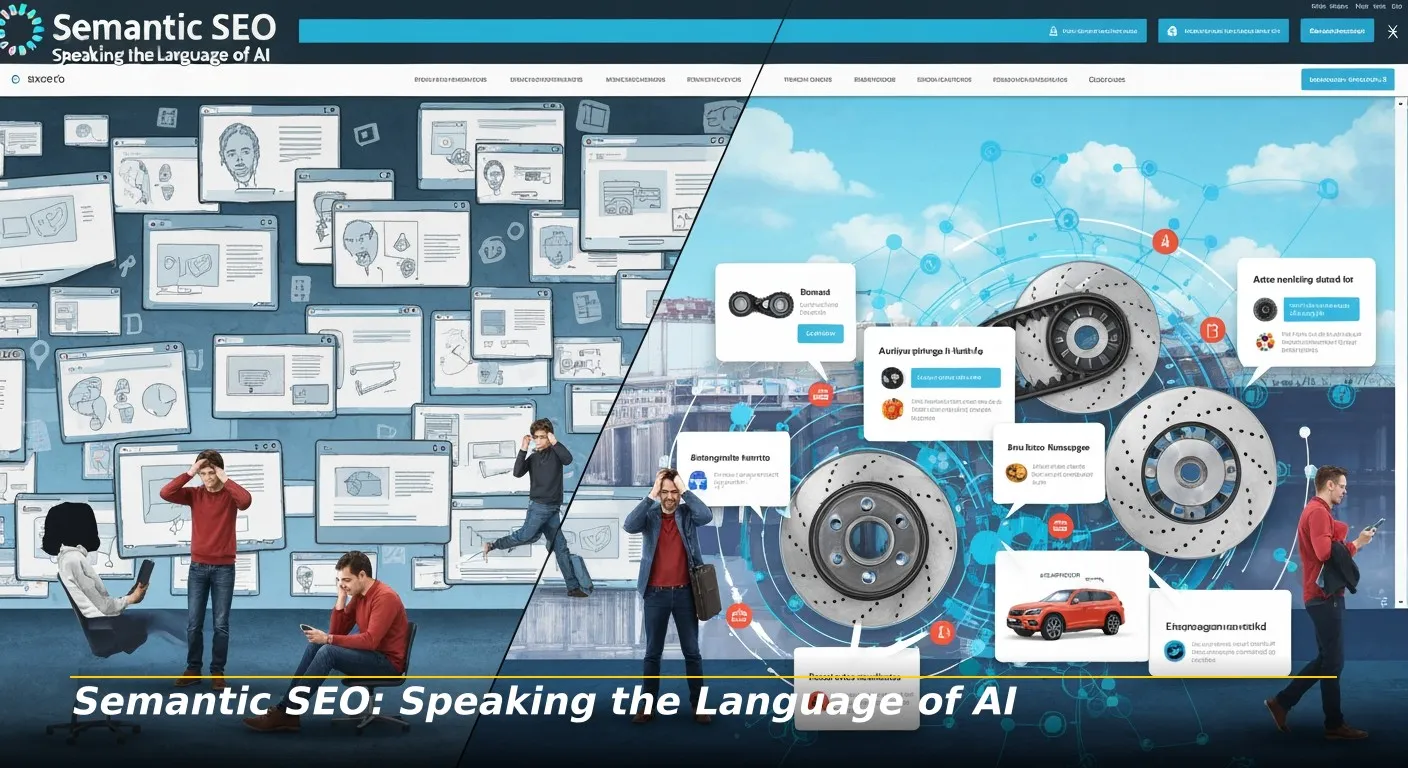
AI search engines use a technology called Natural Language Processing (NLP) to understand the true meaning of words.. Previously, a business would try to use a specific word over and over again to rank higher. This was called keyword stuffing. It made for very boring reading and didn’t help the customer much. Today, AI is much smarter. It looks for entities, distinct concepts and the relationships between them.
If a company is an auto repair shop, its website should not repeat the phrase “car repair.” Instead, it should show it is an expert by talking about timing belts, brake rotors, and transmission diagnostics. This signals to the AI that the business understands the entire topic. Doing so is called Semantic SEO, and it focuses on matching the intent of the user, what they are actually trying to achieve, rather than just matching words.
Semantic SEO vs. Traditional SEO Comparison
| Feature | Traditional SEO | Semantic SEO (Modern AI Era) |
| Primary Focus | Specific Keywords | Topics and Meaning |
| Goal | Rank for a single term | Build Topical Authority |
| Structure | Isolated Pages | Topic Clusters |
| Technology | Basic indexing | NLP and Knowledge Graphs |
| Search Interaction | Type and Click | Conversation and Answers |
By building Topic Clusters, a business creates a main page about a big topic and then several smaller pages that go into detail about specific parts of that topic. All these pages link to each other. This helps search engines understand context and hierarchy of said info, making the site much more likely to be featured in AI summaries. Imagine it as writing a book where each chapter helps the reader understand the overall story better.
 Related article
How a Professional Plumbing Website Builds Trust During Emergency Situations
The U.S. plumbing industry reached $191.4 billion in 2026, growing at a compound annual rate of 3.1% over five years. But behind that figure is a more intimate reality: every dollar of that growth passes through a moment of household panic. A pipe bursts at 11 p.m. A basement drain backs up on a Sunday […]
4. The Pillars of Digital Authority: E-E-A-T

Google uses a set of rules called E-E-A-T to decide which websites are trustworthy enough to show to users. These letters stand for Experience, Expertise, Authoritativeness, and Trustworthiness. Following these rules is the gold standard for how search engines judge a website’s value.
A. Experience: AI seeks proof that the person writing the content actually has real-world experience. This means sharing original stories, case studies, and real photos of a team in action. Generic content written by someone who has never done the job will no longer rank well. For example, a house painter should show before and after photos of their own work, not just use stock photos from the internet.
B. Expertise: A business must showcase high skill levels. This is done through author bios that show credentials, industry certifications, and links to other times the business has been mentioned as an expert. This proves you have the formal training to back up your claims.
C. Authoritativeness: This is about what the rest of the world thinks of the business. If other respected websites link back to yours, it acts like a vote of confidence. These links tell AI models that you are a leader in your field.
D. Trustworthiness: This is the most important part of the foundation. It includes having a secure website (using HTTPS), clear contact information, and being honest about how customer feedback is handled.
In late 2025, Google updated its guidelines to include a heavier focus on YMYL (Your Money, Your Life) topics. For industries like healthcare, finance, or legal services, proving accuracy and transparency is now mandatory. Poorly cited blog posts could be flagged as low-quality, causing a massive drop in visibility because the AI doesn’t want to give potentially dangerous advice.
 Related article
How a Website Builds Trust + Credibility for Remodeling and Renovation Contractors
A homeowner shortlists three kitchen remodeling contractors. All three come recommended by neighbors. Each holds a sound reputation in the community built over years of good work. She searches each one on her phone. The first has no website. Option #2 has a site that loads in five seconds and only shows stock photos. The […]
5. Technical Foundations: The Race Car Analogy

To win in the digital world, a website must be built for high performance. Experts often use the analogy of a professional car race to explain how this works. On-page SEO is the car itself, the code, the speed, and the content. Off-page SEO is the track, the market trends and the other websites that link to you. Marketing agencies are the pit crew that keeps the car running and watches the weather to make sure you stay in the lead.
Google measures how well a website “drives” using three specific numbers called Core Web Vitals. These numbers tell if a website provides a good experience for a human user.
Core Web Vitals Benchmarks
| Metric | Full Name | What it Measures | Target Score |
| LCP | Largest Contentful Paint | How fast the main content loads. | 2.5 Seconds or Less |
| INP | Interaction to Next Paint | How fast the site reacts to a click. | 200 Milliseconds or Less |
| CLS | Cumulative Layout Shift | How stable the page is while loading. | 0.1 or Less |
In March 2025, Google officially replaced FID with “INP” (Interaction to Next Paint). This new metric accurately measures how snappy a website feels because it tracks a page’s responsiveness throughout the entire time a user is on it. If a website is slow or jumps around while loading, users will get frustrated and leave. About 53% of mobile users will abandon a page if it takes longer than three seconds to load.
 Related article
Kitchen Remodeling Website Ideas: How to Showcase Projects, Styles, and Budgets to Pre-Qualify Leads
The way homeowners find kitchen remodelers has changed forever. For years, the key ingredient was showing up on a list of links on Google. But this year, people are using smart AI tools like ChatGPT, Gemini, and Perplexity to do their homework. Instead of clicking on ten different websites, they ask, “Who is the best […]
6. Mobile-First is Mandatory
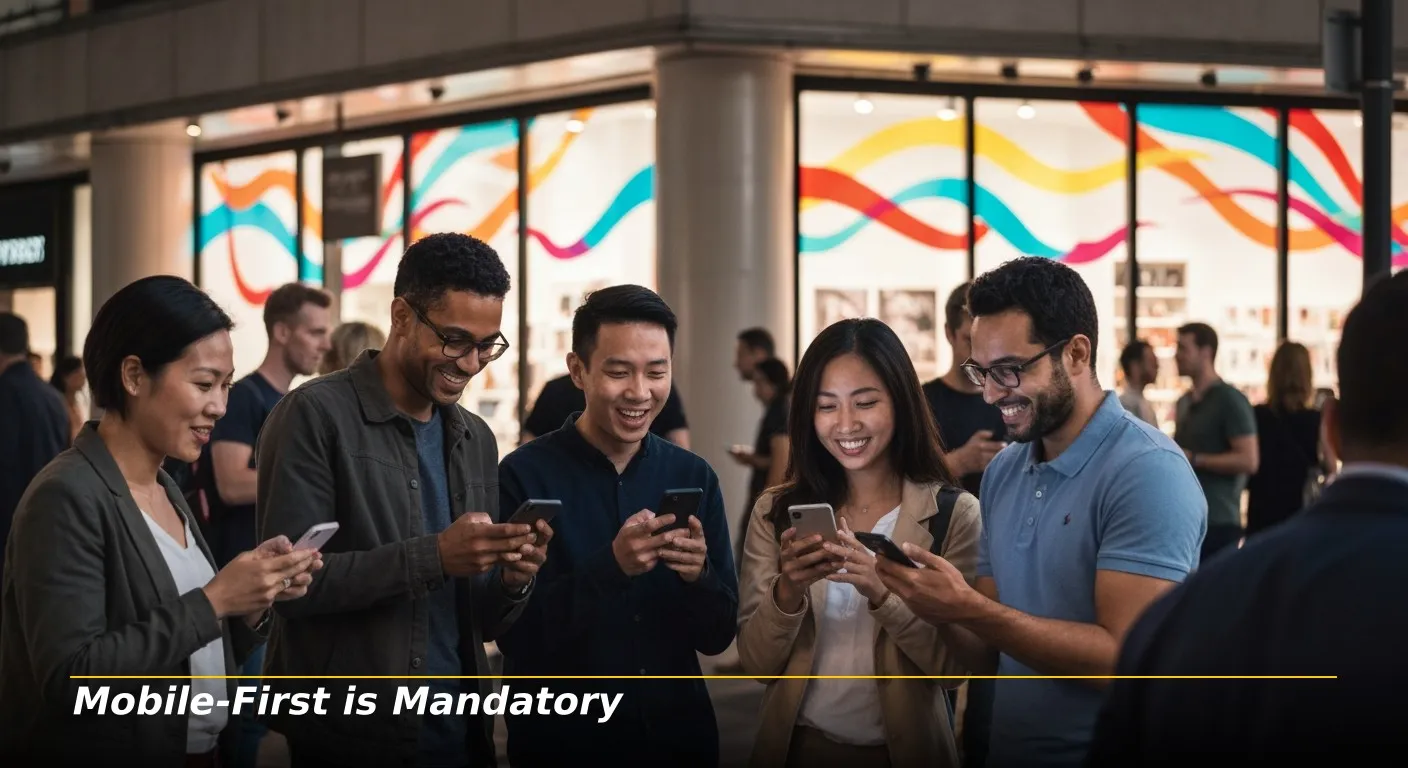
In 2026, the phone screen is the primary storefront for almost every business. Globally, over 64% of all internet traffic now comes from mobile devices. In regions like Africa, this number is nearly 80%. Transitional shifts such as these signal websites not working perfectly on a smartphone are guaranteed to lose most of its potential customers.
The conversion gap is the difference between how many people visit a site and how many people actually buy something. While 78% of e-commerce traffic comes from mobile phones, people on desktop computers are still twice as likely to finish a purchase. It is usually because businesses haven’t made it easy enough to buy things on a small screen.
Mobile Commerce Revenue and Share (2017-2028)
| Year | Global Mobile Commerce Revenue | Share of Total E-Commerce |
| 2017 | $500 Billion | 40% |
| 2021 | $1.40 Trillion | 49% |
| 2024 | $2.07 Trillion | 57% |
| 2025 | $2.51 Trillion | 59% |
| 2026 | $2.74 Trillion | 60% |
| 2028 | $3.35 Trillion | 63% |
The data highlights that mobile shopping is not a trend; it is the dominant way people interact with brands. However, mobile users are much more likely to abandon their shopping carts than people using computers. The abandonment rate on mobile is roughly 80% to 85%, compared to about 70% on a desktop. This is often because checking out on a small screen is frustrating, or surprise costs including shipping and taxes are hidden until the very last step. Successful businesses in 2026 are using one-tap payments and clear pricing to fix this.
 Related article
The Contractor’s Website Checklist: 15 Features That Turn Visitors into Paying Customers
A contractor’s website is no longer a digital brochure. This year, it’s the most influential salesperson in the business. 84% of homeowners leverage Google and AI answer engines to research a contractor before making contact. 58.5% of searches now end without a click because AI provides answers directly on the results page. When the user […]
7. B2B vs. B2C: Lessons from the Leaders
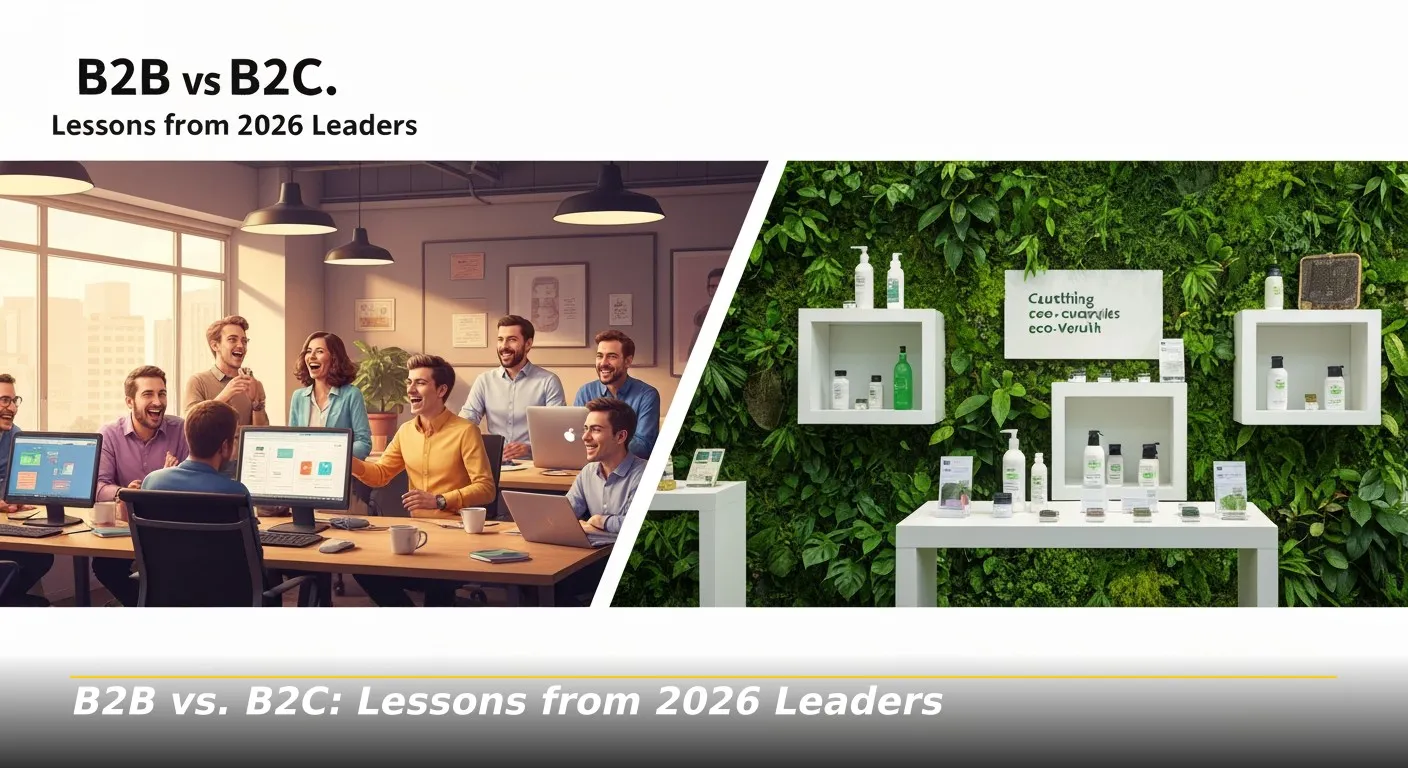
One of the most common mistakes in marketing is implementing the same approach for every business model. The way a person buys a pair of socks is completely different from the way a company buys a new software system. In 2026, the most successful brands are those that blend creativity with logic.
A. The B2B “I.T. Squad” Success (Dell Technologies)
Dell Technologies faced a challenge: almost 50% of business decision-makers were skeptical of traditional I.T. ads. To build trust, they launched a comedy series on Reddit called “The I.T. Squad,” featuring experts solving real-world problems. This campaign resulted in 72 million impressions and a 200-fold increase in brand credibility. By using humor, they proved they understood the daily grind of their customers.
B. The B2C “Move to Zero” Impact (Nike)
Nike focused its 2025-2026 strategy on sustainability, which is a major driver for younger buyers. By sharing real data, like products made with 75% less carbon, they built deep brand affinity. They used interactive digital experiences and AR filters to make saving the planet feel fun and participatory. Authenticity won over customers who usually avoid traditional marketing.
C. Differences Between B2B and B2C Marketing
| Criteria | B2B Marketing | B2C Marketing |
| Purchase Driver | Data, Logic, Value | Emotion, Price, Convenience |
| Decision Process | Multiple Stakeholders | Individual or Family |
| Sales Cycle | Long (Months to Years) | Short (Minutes to Days) |
| Content Type | Case Studies, Whitepapers | Social Proof, Videos, Reviews |
 Related article
The Importance of a Fast-Loading Website for Plumbing Businesses
A homeowner runs Google Ads. He pays $75 for a click from a homeowner searching “emergency plumber near me” at 2 AM. She lands on his website. It takes five seconds to load. They hit the back button and call the next result. That money was essentially spent for nothing. This scenario plays out dozens […]
8. Reputation Management: The Word-of-Mouse Effect

In the age of AI, your reputation is no longer just something that is nice to have; it is a primary source of data for the robots that recommend businesses. AI search tools scan review sites to determine which companies hold the right to be featured in their answers. If you have low ratings, the AI might simply filter you out of the conversation.
About 92% of consumers read online reviews before they buy something. Furthermore, 75% of a website’s credibility is based on its design. If a site looks old or has bad reviews, the AI might decide not to show it to people at all. Doing so creates a vicious cycle where a negative reputation leads to less visibility, which leads to even fewer customers.
The Importance of Design and First Impressions
| Stat Category | Key Data Point (2025-2026) | Strategic Implication |
| Judgment Time | 0.05 Seconds | Trust must be established instantly. |
| Design Feedback | 94% of first impressions | Visuals are more important than content at first. |
| Credibility Source | 75% from web design | High-quality design equals a high-quality brand. |
| Return Rate | 88% won’t return after bad UX | One bad experience can lose a customer forever. |
AI not only looks at Google Reviews. It pulls information from Facebook, Yelp, industry sites, and even social media chatter on places like Reddit. Having a positive and consistent presence across many different platforms signals to AI models that your business is authoritative and trustworthy.
 Related article
The Minnesota Small Business Website Checklist for 2026 (SEO + Conversions + Accessibility)
The digital landscape of this year for small businesses in Minnesota is more competitive and regulated than ever before. With state GDP growth currently at 1.6 percent (ranking 40th in the nation) and the highest corporate tax rate in the country at 9.8 percent, Minnesota business owners must ensure their digital presence is an efficient […]
9. The Future: AI Agents and Agentic Search

As we move forward, AI is shifting from simply answering questions to actually doing work on behalf of humans. This is called Agentic AI. In the past, a person would search for a flight, compare prices, and then buy a ticket. In the near future, they will tell their AI agent, “Find me a flight to London for under $800 next Tuesday and book it for me.”
Think of it like a smart robot friend. Instead of you asking the robot, “What’s the weather?” and then picking your own coat, you tell the robot, “Prepare me for a rainy day.” The robot checks the weather, finds your raincoat, and puts it by the door. That is what an AI agent does with internet information.
This change means that the AI agent becomes the new “customer.” To be visible to these agents, businesses must have data that is very easy for machines to read. This is done through Schema Markup and Structured Data. Think of it as putting labels on all the items in your digital store so a robot can find them instantly. If an AI agent cannot easily read your prices, your availability, or your reviews, it will never recommend your business to the person it is helping.
Why Shoppers Leave (Friction Points)
| Reason for Leaving | % of Shoppers Affected |
| Extra costs too high (shipping, taxes) | 39% – 48% |
| Had to create an account | 19% – 25% |
| Delivery was too slow | 21% |
| Too long/complex checkout process | 18% – 22% |
| I didn’t trust the site with my card | 19% |
To win in 2026, businesses must focus on removing these friction points. This includes offering Guest Checkout options, being transparent about shipping costs early in the process, and ensuring the site feels secure and modern.
 Related article
Website Redesign in Minnesota: A “Before You Rebuild” Audit Checklist (Strategy, SEO, Tracking, Migration Risks)
The digital landscape for Minnesota businesses in 2026 is defined by a shift toward AI search overviews, elevating website redesigns to high-stakes endeavors. Many leaders impulsively prioritize aesthetics, yet ignoring the overarching strategy and technical migration plan risks a catastrophic loss of organic traffic and local visibility. This audit provides a pedagogical framework to ensure […]
10. Vetting Your Partner: Finding a Galilean Guide

Because the digital landscape is flooded with people claiming to be experts but are not, a business must use a rigorous screening process to find a legitimate marketing firm. A good partner should embody the T.R.I. values: Trust, Relationships, and Integrity.
A. Trust: A good partner is completely transparent. They do not hide behind mysterious explanations. They view the design process as a team effort where they explain what they are doing and why.
B. Relationships: They are more interested in your long-term goals than your immediate budget. They want to be your virtual marketing team rather than just a vendor who disappears after the site is built.
C. Integrity: They tell you what you need to hear, even if it is uncomfortable. If your goals are not realistic for your budget, an honest partner will tell you that upfront instead of taking your money and failing later.
Critical Questions to Ask Before Signing
- Domain Ownership: “Will I legally own my domain name and website content?” You should always have 100% ownership of your digital property. Be very careful with anyone who wants to rent you a site on their own platform. If you don’t own the domain, you don’t own your brand’s future.
- The Eat Your Own Cooking Test: Search for the agency on Google. If they say they are SEO experts but do not rank on the first page for their own services in their own city, they lack the skill to help your business.
- Guarantees: “What percentage of keywords can you guarantee will rank in the top 10 within 6 months?” A professional firm can usually guarantee that 60% to 80% of your keywords will show progress in that time.
- Consolidation: “Do you handle design, hosting, SEO, and maintenance all in one place?” Having one team manage everything saves time and prevents technical errors that happen when too many different people are touching the same code.
Conclusion: Adapting to the AI Revolution
The move from a business-centric to a customer-centric digital world is the only way to survive the AI revolution. By building your digital presence around what the customer wants and the AI tools they use, it moves your business closer to the center of the online universe. Success in this new era is not about having the most money; it’s about how fast one can adapt and how much trust you can build with both humans and machines. Focus on being fast, honest, and helpful, and your business will thrive.
 Related article
How Your Contractor Website Should Prepare for Minnesota’s Spring Search Surge: A Seasonal SEO Checklist
Minnesota’s construction season is compressed into roughly six months, meaning the digital competition for spring projects is heavily front-loaded. By the time the ground thaws in April, the most in-demand contractors are already booked. Homeowners who fill those schedules started their search in February, and the contractors who captured them had websites that were optimized […]
FAQs About Winning the Digital Frontier
1. What is the difference between a “Brochure Website” and an “Effective Growth Website”?
A brochure website is like a digital paper flyer; it talks about your business and doesn’t change much. It is often hard to find and doesn’t do much work for you. An effective growth website is meant to solve the customer’s problems. It loads instantly on mobile, answers questions directly, and is designed to turn visitors into leads using specific triggers and high-speed performance.
2. Why is it so dangerous to “rent” my website instead of owning the domain?
Your domain and website are your digital real estate. Over time, their value grows as you build trust with search engines. If you rent a site on a provider’s platform for a low fee, you are building their asset, not yours. If you ever want to move your site to a different company, it results in a loss of all your hard work, your search rankings, and your history.
3. Does AI content help or hurt my search rankings?
Google does not punish AI content just for being AI, but it does look for the Experience factor. AI can summarize facts, but it can’t share a personal story about how you fixed a difficult problem or show a photo of your actual team at work. Purely AI-generated content with no human touch is being de-prioritized in 2026 because it lacks the unique value that people (and search engines) crave.
4. Should I hire a solo freelancer or an established agency for my project?
A solo freelancer is often a jack of all trades but a master of none. Modern websites require deep expertise in various areas: coding, graphic design, AI strategy, and security. An agency provides a pit crew where specialists in each area work together. This ensures your site is more than a pretty face, it’s also technically perfect and strategically ready to grow your business.
5. How long does it actually take to see results from SEO and AI optimization?
Digital marketing is a marathon, not a sprint. While paid ads work instantly, organic visibility (SEO) usually takes 4 to 6 months to really kick in. This is the time search engines need to crawl your site, verify that you are a stable and trustworthy expert, and recognize that people find your content helpful.
6. Can my small business really compete with big-name corporate competitors?
Absolutely. Large companies are like elephants—they are slow to change and have a lot of red tape. Your small business is the digital mouse. You can adopt new AI strategies faster, provide more personalized customer service, and target specific neighborhoods or markets that the big guys ignore. In the digital world, speed and relevance often beat an unlimited budget.
7. Why is Website Accessibility (ADA) now considered an SEO factor?
Websites that are easy for people with disabilities to use are also much easier for AI agents and search engines to read. Accessible sites rank for roughly 27% more keywords because they have a cleaner structure that machines can easily interpret. By helping everyone access your site, you are also making it much more visible to the robots that rank your business.