







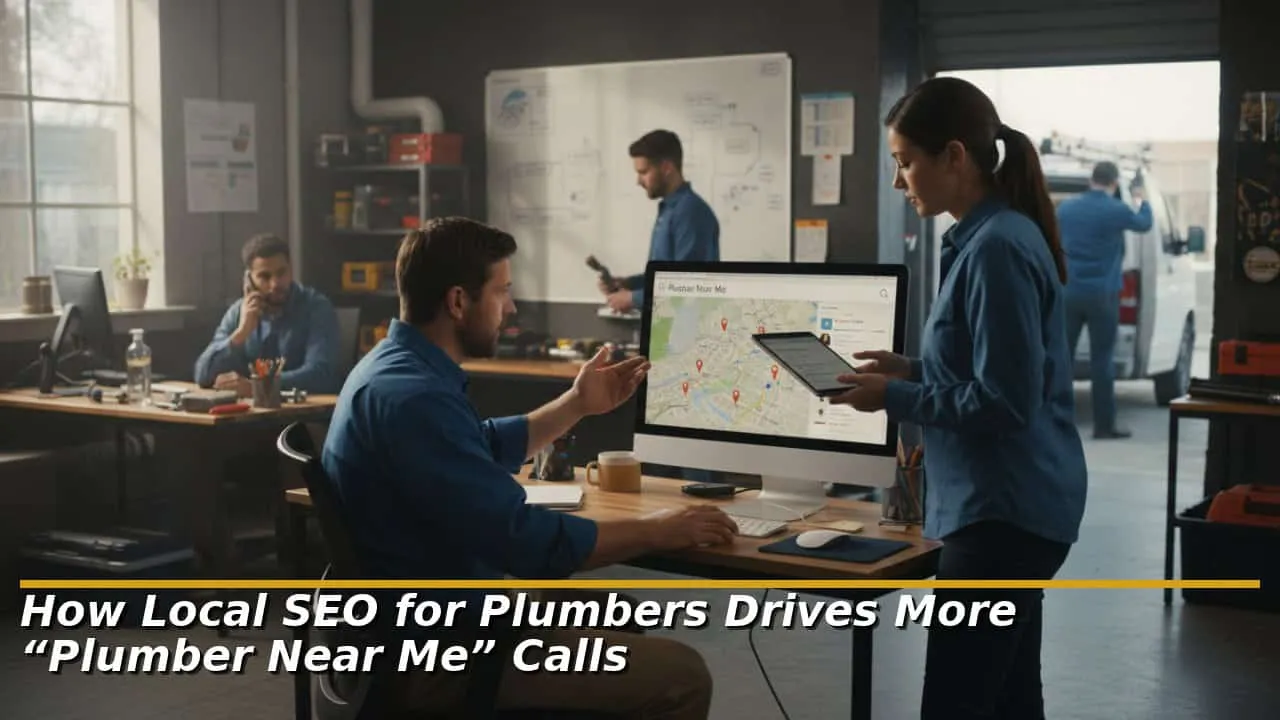
It’s 9 PM on a Tuesday. A homeowner’s kitchen drain backs up. They grab their phone and type: “plumber near me“. The search results appearing in the next three seconds determine which plumber gets the call greater than any accolades or ads being run.
More than 800,000 people search “plumber near me” on Google every month in the U.S. alone. Of those, 88% will call or visit a business within 24 hours of their search, according to SeoProfy’s local search research. And 78% will hire the first company that responds. The math is logical: local search visibility is the single highest-leverage asset a plumbing business can build.
This article breaks down exactly how local SEO works for plumbing contractors, what the Google MapPack requires, and why businesses dominating local search this year are pulling jobs from competitors who are still relying on word of mouth and paid ads alone.
Key Takeaways
- 44% of all clicks for local plumbing queries go to the Google Map Pack 3 results
- Businesses in the 3-Pack receive 126% more traffic and 93% more actions than listings in positions 4 through 10
- Local SEO leads cost $0.50 to $2.00 each, compared to $15 to $50 for Google Ads
- AI search platforms convert at 14.2%, five times higher than traditional organic search
- Review velocity matters as much as volume: 2 to 3 reviews per week beats 40 reviews in a single month
1. Why “Plumber Near Me” Searches Convert So Fast
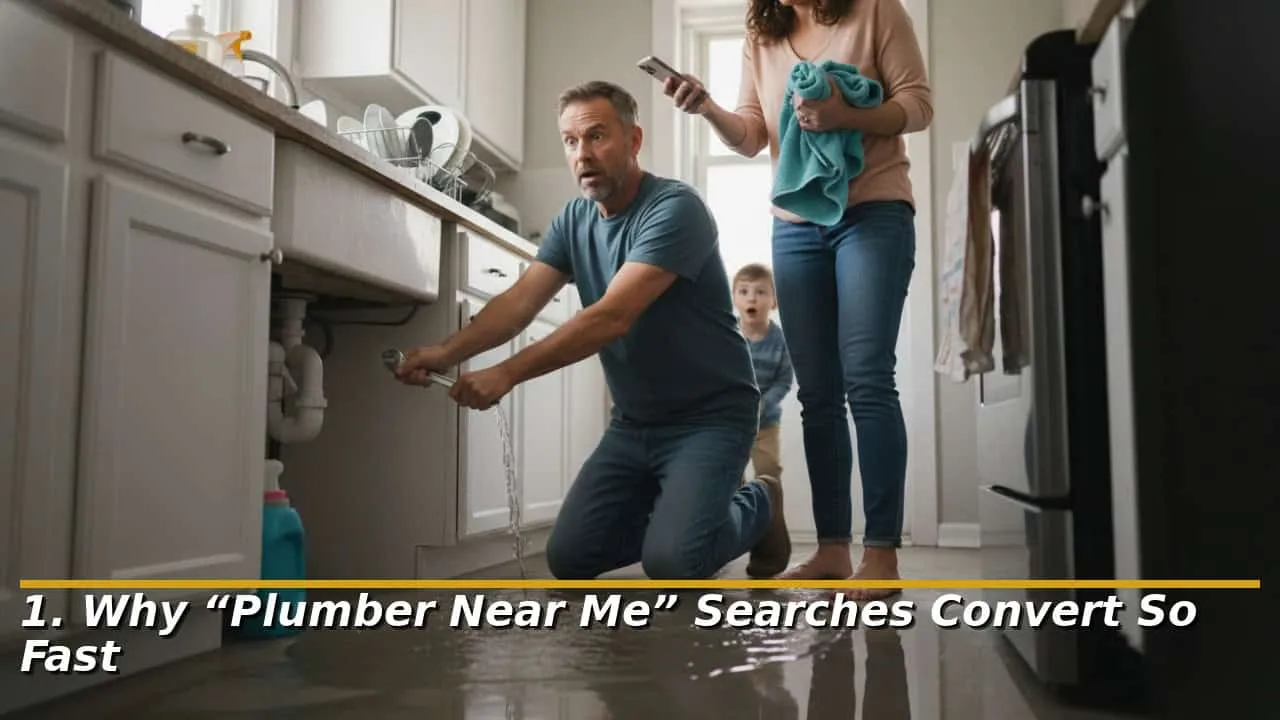
Not all search traffic is equal. Homeowners researching a bathroom remodel will browse for weeks. Those with water running across their floor have already made their decision: they’re calling the first plumber they trust. That compression of the sales funnel is what makes local plumbing search so valuable.
According to Ignite Visibility, 80% of leads generated through local SEO convert into paying customers. That rate dwarfs what most paid advertising channels deliver since local searchers aren’t browsing out of curiosity. They have a specific problem, a specific location, and a specific need for someone to solve it now.
Over 70% of plumbing searches happen on mobile devices. When a user types location-based queries on their phone, Google’s algorithm scores results on three factors: relevance (does this plumber serve this type of job?), distance (how close are they?), and prominence (how trusted is this business based on reviews and citations?). The contractors who engineer all of those signals into their digital presence are the ones who own the phone.
 Related article
How a Professional Plumbing Website Builds Trust During Emergency Situations
The U.S. plumbing industry reached $191.4 billion in 2026, growing at a compound annual rate of 3.1% over five years. But behind that figure is a more intimate reality: every dollar of that growth passes through a moment of household panic. A pipe bursts at 11 p.m. A basement drain backs up on a Sunday […]
2. How the Google Map Pack Controls Your Call Volume
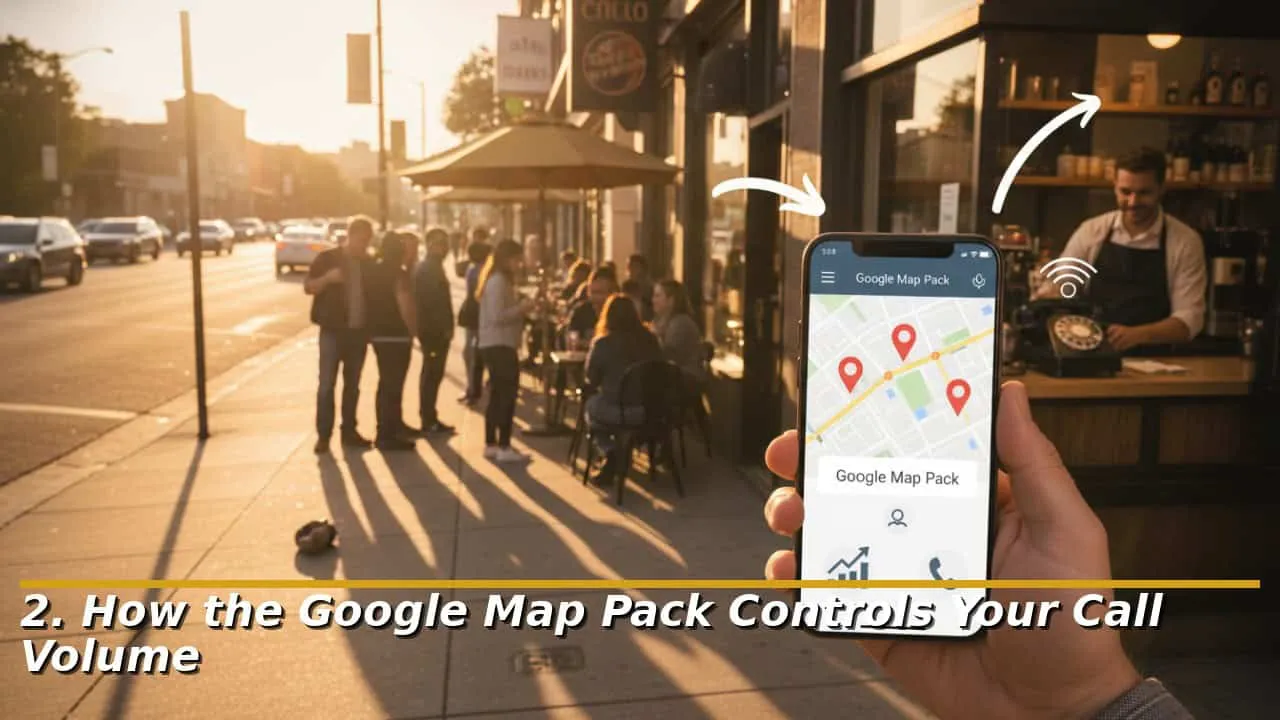
The Local 3-Pack is the block of three business listings appearing at the top of Google’s results for any location-based search. It is the most valuable piece of digital real estate a plumbing contractor can occupy. Research from SeoProfy shows that businesses in the 3-Pack receive 126% more traffic and 93% more actions, including calls and website clicks, than businesses ranked between positions 4 and 10.
For plumbers specifically, 44% of all clicks on a local search result page go directly to one of those three Map Pack listings. 71% of total clicks go to either map or organic results combined, bypassing paid ads entirely. This means that a plumber who is not in the top three map positions is competing for the scraps after the 3-Pack has already captured the majority of the intent.
Plumbers in the top three organic positions receive 54.4% of all clicks. When a contractor appears in both the Map Pack and organic results simultaneously, they dominate the page.
| Visibility Position | Share of Clicks | Relative Call Volume |
|---|---|---|
| Google Map Pack (Top 3) | 44% of local clicks | 126% more than positions 4-10 |
| Organic Position 1-3 | 54.4% of organic clicks | 5x more calls than page 2 |
| Positions 4-10 | Remaining map clicks | Baseline |
| Page 2 and below | Less than 1% | Negligible |
 Related article
The Importance of a Fast-Loading Website for Plumbing Businesses
A homeowner runs Google Ads. He pays $75 for a click from a homeowner searching “emergency plumber near me” at 2 AM. She lands on his website. It takes five seconds to load. They hit the back button and call the next result. That money was essentially spent for nothing. This scenario plays out dozens […]
3. The 5 Core Elements of Local SEO for Plumbers

Ranking in the Map Pack requires a coordinated strategy across five areas. Neglecting any one of them creates a gap that competitors will fill.
A. Google Business Profile (GBP) optimization: According to Whitespark’s Local Search Ranking Factors report, your GBP primary category is the single most important ranking decision you will make. Choose specifically: “Emergency Plumber” outperforms “Plumber” if emergency services drive revenue. Complete every field, upload real job photos weekly, and respond to reviews. A fully optimized GBP receives around 200 clicks or interactions per month and generates up to 7 times more engagement.
B. Local keyword targeting: Combine service terms with geography: “emergency drain cleaning in Rochester” or “water heater repair Minneapolis.” AI search engines also respond to conversational queries, so include natural-language content like, “how much does it cost to fix a burst pipe?” on FAQ and service pages.
C. Structured service pages: Each major service, including water heaters, leak detection, sewer repair, and drain cleaning, needs its own dedicated page optimized for local intent. Implement Local Business and Service schema markup to help Google and AI engines verify what you do, where you do it, and that you are a legitimate local entity
D. Review velocity and substance: 90% of consumers read online reviews before calling a local business, according to WebFX research. But the way reviews arrive matters as much as how many you have. Data from Sterling Sky’s 2025 case study shows a measurable ranking lift when businesses cross specific review thresholds, and that 2 to 3 reviews per week over several months signals greater credibility than 40 reviews collected in a single campaign. Encourage customers to mention the specific service and neighborhood in their review.
E. NAP consistency: Your Name, Address, and Phone number must be identical across your website, GBP, Yelp, Angi, and every directory where your business appears. Any mismatch lowers the confidence score Google uses to rank you.
 Related article
How Your Contractor Website Should Prepare for Minnesota’s Spring Search Surge: A Seasonal SEO Checklist
Minnesota’s construction season is compressed into roughly six months, meaning the digital competition for spring projects is heavily front-loaded. By the time the ground thaws in April, the most in-demand contractors are already booked. Homeowners who fill those schedules started their search in February, and the contractors who captured them had websites that were optimized […]
4. Local SEO vs. Paid Ads: The Real Cost Comparison

Many plumbing contractors run Google Ads as their primary lead generation strategy. Ads work, particularly for new businesses desiring calls immediately. But the economics shift dramatically once local SEO is established.
Local SEO leads typically cost between $0.50 and $2.00 each. A well-optimized Google Ads campaign for plumbing keywords costs anywhere from $15 and $50 per lead. More importantly, local SEO is a compounding asset: the authority you build this month makes next month’s rankings easier to hold. Ads stop generating leads the moment payment ends.
The practical approach for growth-focused plumbing businesses: use Google Local Service Ads for immediate visibility while building SEO authority in parallel. LSAs also carry a Google Guaranteed badge, adding a trust signal converting well for emergency searches. Leverage both channels, but treat local SEO as the long-term engine and ads as the short-term accelerant.
| Channel | Cost Per Lead | Lead Quality | Longevity |
|---|---|---|---|
| Local SEO (Map Pack) | $0.50 to $2.00 | High, local intent | Compounds over time |
| Google Ads (PPC) | $15 to $50 | High, immediate intent | Stops when budget stops |
| Google Local Service Ads | $25 to $75 | Very high, Google Guaranteed | Stops when budget stops |
| Word of Mouth | Near zero | Very high | Inconsistent volume |
 Related article
How Website Design Impacts Lead Generation for Plumbing Companies
A homeowner finds water pooling under her kitchen sink at 7 AM. She searches for a plumber on her phone. Three results appear. The first is clicked on. Their site is slow to load, the phone number is buried at the bottom, and the photos look like they were taken in 2009. They hit the […]
5. Two Plumbers, Same Market, Different Results
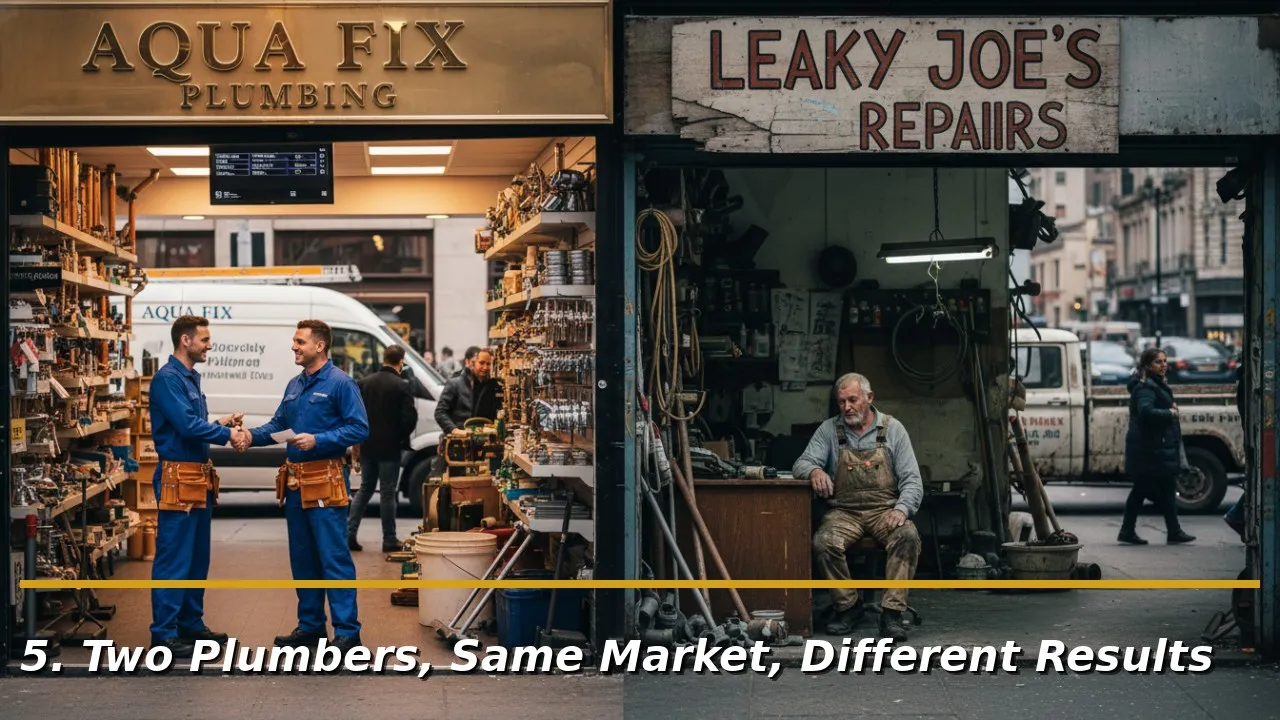
Consider two plumbers operating in the same city.
A. Plumber A has been in business for 22 years, delivers excellent work, and has a basic website. Their GBP is claimed but rarely updated. They have 18 reviews, all collected in year one. They rely on repeat customers and occasional Google Ads.
B. Plumber B launched three years ago. Their GBP primary category is set to “Emergency Plumber.” They upload photos from jobs twice a week. They have 94 reviews averaging 4.8 stars, with new ones coming in every few days. Their website has a dedicated page for every service and every neighborhood they cover. Their load time is 1.8 seconds on mobile.
When a potential client in their shared service area types “plumber near me” at 10 p.m. on a Saturday, Plumber B appears in the 3-Pack. Plumber A does not appear at all. Plumber B captures the call. Plumber A spends more on ads to compensate for the visibility gap. The gap compounds.
This is not a story about the quality of work. It is a story about who built the infrastructure of trust that search engines reward.
6. Five Steps to Rank Higher in the Google Map Pack

A. Set the right GBP primary category: This is the most impactful single change plumbers can make. Be specific. “Emergency Plumber” or “Drainage Service” will outperform the generic “Plumber” category for high-intent queries.
B. Build review velocity, not inflated volume: Ask for a review after every completed job. Two to three per week over months is more credible to Google’s algorithm than a spike. Prompt customers to mention the service type and their neighborhood.
C. Publish Google Posts weekly: Google interprets regular posting as a signal of an active, reliable business. Share project updates, seasonal tips, or emergency availability notices. AI engines factor business activity signals into local recommendations.
D. Create neighborhood-specific landing pages: A page titled “Emergency Plumber in [Suburb Name]” with local content, embedded maps, and customer testimonials from that area reinforces your geographic relevance to Google and AI search platforms.
E. Audit and sync your citations: Implement a tool like BrightLocal or Whitespark to ensure your NAP data is consistent across 100 or more directories. Inconsistencies erode the entity trust required for Map Pack visibility.
Conclusion: Local SEO is the infrastructure determining which plumbing businesses grow and which ones plateau. As search behavior continues shifting toward mobile queries, AI answer engines, and zero-click results, the contractors who own the Map Pack will capture the majority of the market. Those who don’t will spend greater resources on ads to compensate for the visibility gap, with diminishing returns over time.
The good news: the work compounds. Every review collected, every service page published, and every citation corrected builds an asset that generates calls month after month without an ongoing ad spend. For plumbing businesses ready to stop renting visibility and start owning it, local SEO is where to invest.
Is your business showing up when it counts?
Search “plumber near me” from your own phone right now. If your business isn’t in the top three results, you’re losing calls to competitors every single day. Audit your Google Business Profile, check your review velocity, and measure your mobile load time. Those three actions alone will show you exactly where your local SEO is leaking leads. If you need help with these, call our Minnesota SEO company today at (612) 590-8080
FAQs About How Local SEO for Plumbers Drives More “Plumber Near Me” Calls
1. How long does local SEO take to produce results for plumbers?
Technical fixes, ideally correcting NAP inconsistencies and completing your GBP, have measurable improvements in map visibility within 30 days. Meaningful ranking gains in competitive markets typically take 3 to 6 months of consistent effort. Review velocity, content publishing, and citation building are compounding signals: the work you do in month one makes month six easier. Unlike ads, this asset does not easily expire.
2. Do I need a website if my Google Business Profile already drives calls?
Yes, and the reason is increasingly important. AI platforms like ChatGPT and Perplexity use your website as their primary source for local business citations, reportedly accounting for 58% of AI-driven local recommendations. A GBP alone cannot host Local Business schema, dedicated service pages, or the depth of content that AI engines need to confidently recommend your work. A professional, fast-loading website is not a supplement to your GBP, but the foundation that makes your GBP more authoritative.
3. How many reviews does a plumber need to rank in the Map Pack?
There is no universal threshold, but Sterling Sky’s 2025 research found a measurable ranking lift when businesses crossed 10 verified reviews. Additionally, the quality of reviews, meaning how much detail they contain and whether they mention specific services and locations, matters more than the total count. A business with 40 detailed, recent reviews will consistently outrank one with 200 vague star ratings and no text.