


Minnesota Restaurant Website Checklist: Menus, Reservations, Local SEO (Twin Cities + Greater MN)
The digital landscape for Minnesota restaurants has shifted. It is no longer enough to have a simple website stating your hours and phone number. Today, websites are your most important marketing tool. For restaurant owners in Minneapolis, St. Paul, and throughout Greater Minnesota, this serves as the primary gateway for a dining population that is increasingly research focused. Research indicates that 77 percent of diners visit a restaurant's website before deciding to eat there. If it's poorly designed, 70 percent of those potential guests will be turned off and choose a competitor instead.
In the current market, your digital storefront must be optimized for both traditional search engines and new AI discovery tools. This includes providing clear data that machines can read and a seamless experience for humans. For Twin Cities restaurants, the competition is fierce, especially in culinary hubs like the North Loop or Northeast Minneapolis. In Greater Minnesota locations, such as Duluth, Rochester, or St. Cloud, the challenge is often capturing the attention of local regulars and out of town visitors. Our checklist provides a professional framework to audit and improve your site for maximum conversion.
Key Takeaways
- First Impressions Matter: 77 percent of diners visit your website before choosing a table, but 70 percent leave if there’s difficulties using.
- Kill the PDF Menu: Search engines cannot read PDFs effectively. Switching to HTML menus is the easiest SEO win for any restaurant.
- Pricing Law Compliance: Minnesota law now requires all mandatory fees, such as health surcharges, to be included in the advertised menu price.
- Winter Accessibility: Mobile buttons must be large enough for cold or gloved fingers, meaning a minimum size of 48 pixels is necessary.
- Maps are King: Complete Google Business Profiles earn 42 percent more driving direction requests, essential for local discovery and revenue.
| What Diners Want | What Most MN Restaurant Sites Deliver | Impact on Revenue |
|---|---|---|
| Mobile-friendly HTML menus | Static, unreadable PDF downloads | High bounce rates on mobile devices |
| Total price transparency | Hidden "wellness" or service fees | Loss of trust and legal compliance risk |
| Instant online booking | "Call for reservation" hurdles | 20 percent lower guest retention rates |
| Real-time holiday hours | Outdated or missing hours | Frustrated guests and no-shows |

Related article
Website Redesign in Minnesota: A “Before You Rebuild” Audit Checklist (Strategy, SEO, Tracking, Migration Risks)
The digital landscape for Minnesota businesses in 2026 is defined by a shift toward AI search overviews, elevating website redesigns to high-stakes endeavors. Many leaders impulsively prioritize aesthetics, yet ignoring the overarching strategy and technical...Step 1) Menus That Drive Orders (Digital Menu Mastery)
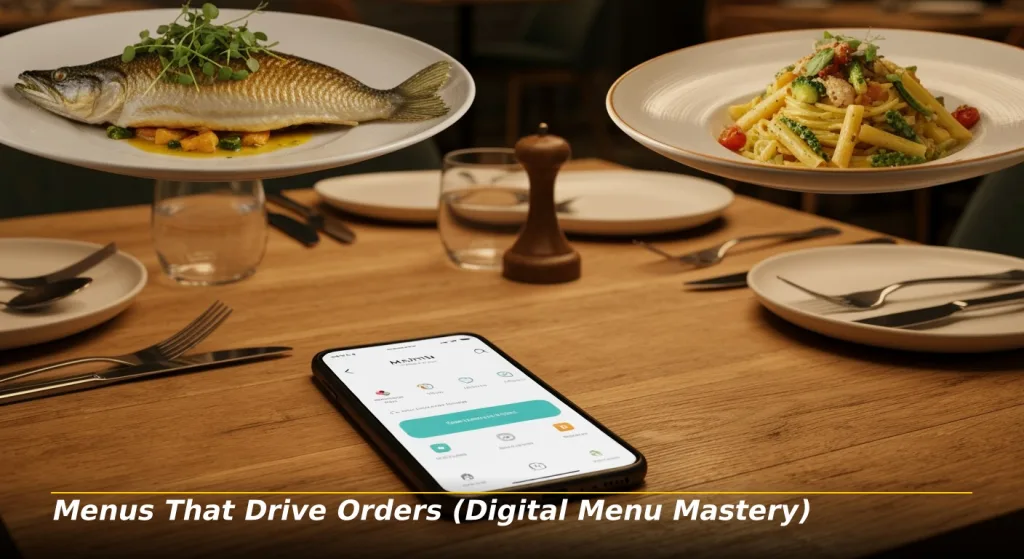
Your menu is the core of your business, and on your website, it should be a conversion starter. When a diner searches for a specific dish, like,"best walleye in Duluth" or "gluten-free pasta in Edina," search engines look for text on your page to answer that query. If the menu is a PDF, search engines see a blank box. By using HTML text, you allow every dish, description, and price to be indexed and discovered.
1. Mobile-First Menu Layout:
- Ensure your menu categories are visible above the fold on a smartphone.
- Utilize large, tappable targets for categories and individual items.
- Implement high-contrast text to ensure readability in all lighting conditions.
2. High-Res Photos with ROI:
- Every signature dish should have a professional photo.
- Leverage consistent lighting to create a cohesive brand look.
- Add alt-text to images (e.g., "Pan-seared walleye with wild rice at a St. Paul restaurant").
3. Pricing Clarity and Legal Compliance:
- Minnesota's price transparency regulations (SF 3537) are now in effect.
- You must include all mandatory fees in the advertised price. For instance, if you have a 5 percent health surcharge, a $20 entree must be listed as $21.
- Clearly state that the price includes these fees to build guest trust and avoid legal penalties.
4. Dietary Filters for Health-Conscious Diners:
- Provide clear icons for gluten-free, vegan, and nut-free options.
- This is especially vital in Rochester, where medical visitors often have strict dietary requirements.
| Menu Page Element | Poor Execution | High-Conversion Execution |
|---|---|---|
| Format | PDF Download | Searchable HTML Text |
| Pricing | "Prices subject to change" | All-inclusive total pricing |
| Visuals | No photos or blurry shots | High-resolution dish galleries |
| Mobile UX | Pinch-to-zoom required | Responsive, single-column flow |

Related article
Winning the Digital Frontier: A Strategic Blueprint for Growth and Partner Selection
For decades, business was Ptolemaic where companies believed they were the center of the attention, and customers would find them. Today’s reality is Galilean. Customers are the center, and businesses must orbit around their needs....Step 2) Reservation Systems (From No-Shows to Full Tables)
Restaurants in the North Star State have experienced a rise in reservation no-shows, particularly in the Twin Cities. This has led operators to rethink their booking strategy. Reliable reservation systems should make booking simple while ensuring that guests actually show up.
1. Prominent "Reserve Now" CTAs:
- Place a Book Now or Reserve button in the header of every page.
- Use a sticky footer on mobile, so the reservation button is always visible.
2. Real-Time Availability:
- Your system should include available times for different party sizes instantly.
- Guest checkout is essential. Do not force users to create an account to book a table.
3. SMS Confirmation and Reminders:
- Text reminders can reduce no-shows by 50 percent during winter months.
- Include an easy cancel or reschedule link in the text to encourage communication if plans change.
4. Integration with POS Systems:
- Systems like Toast Tables allow you to see guest data and order history directly.
- This helps recognize regulars and provide personalized service.
| Platform | Best For | Notable Pricing/Fee Structure |
|---|---|---|
| OpenTable | High-traffic discovery | Monthly fee plus per-cover charges |
| Resy | Upscale urban branding | Flat monthly subscription fee |
| Tock | Events and tasting menus | Flat fee with zero per-cover charges |
| Toast Tables | Existing POS users | Low-cost add-on for Toast customers |
| Simple Host | Budget-conscious locals | Flat monthly rate with no fees |

Related article
WordPress Web Design in Minnesota: Best Stack in 2026 (Hosting, Security, Plugins, SEO Schema)
As we navigate the fiscal landscape of 2026, Minnesota small businesses face a unique set of digital challenges. With a state corporate tax rate of 9.8 percent (the highest in the nation) and a slowing...Step 3) Local SEO (Dominating "Restaurant Near Me" in Minnesota)
Local SEO is how you win the Google Map Pack, which is the list of three restaurants appearing at the top of a search result. For a business in a neighborhood like Lowertown in St. Paul or Canal Park in Duluth, this is your most valuable digital real estate.
1. Google Business Profile Optimization:
- Claim your profile and fill out every field.
- Add special hours for holidays and local events like the State Fair or winter festivals.
- Upload new photos weekly. Profiles with 30+ photos get 35 percent more clicks.
2. NAP Consistency (Name, Address, Phone):
- All information must be identical on your website, Google, Yelp, and Facebook.
- Implement the same formatting (e.g., always use "St." or always use "Street").
3. Location-Specific Pages:
- If you have multiple locations, create a unique page for each (e.g., "Our Edina Location").
- Include local landmarks in your text to help search engines understand your location (e.g., "Two blocks from US Bank Stadium").
4. Review Management:
- Respond to 100 percent of your reviews.
- Professional responses to negative reviews show potential guests you care about their experience.
| Local Signal | Restaurant Example | Expected Ranking Boost |
|---|---|---|
| GBP Photos | 30+ high-quality images | 42 percent more direction requests |
| Review Responses | Replying to all reviews | Higher trust and search prominence |
| Schema Markup | Menu Item and Opening Hours | Rich snippets in search results |
| Neighborhood Keywords | "North Loop" or "Canal Park" | Improved "near me" relevance |

Related article
A Strategic Guide to Selecting a Great Website Designer
When you're a small to mid-size business owner or organizations, a website is more than just an online brochure; it's a foundational pillar for your identity, operations, and growth. In the AI era, a professional,...Step 4) Homepage That Converts Hungry Minnesota Diners
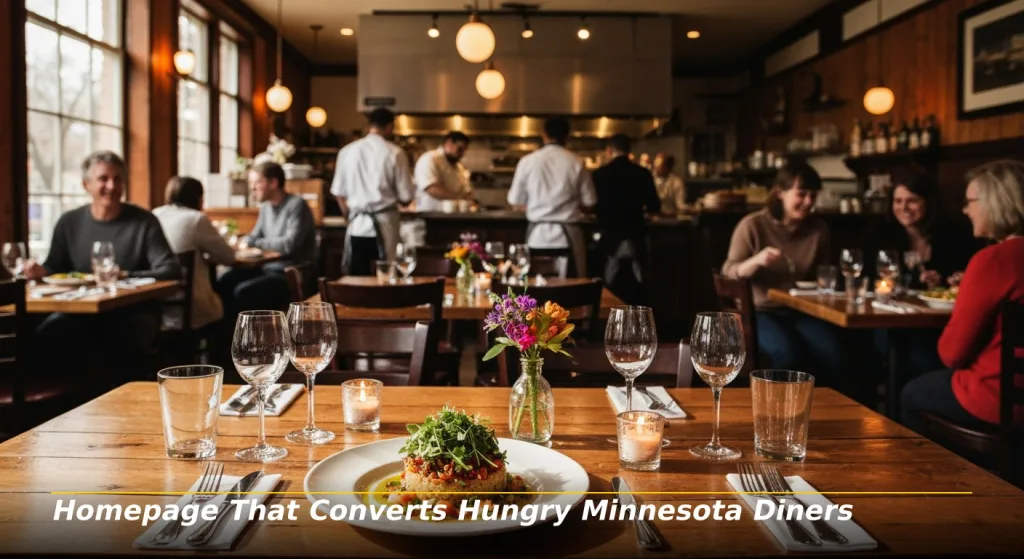
Your homepage has one job: to get a hungry person to the table. Most users decide within three seconds if they are going to stay on your site or leave.
1. The Hero Section:
- Leverage a high-quality photo of your best-selling dish or dining room atmosphere.
- Include one clear button: Reserve a Table or Order Online.
2. Social Proof and Trust:
- Display your star rating (e.g., "4.8 Stars on Google").
- Mention any local awards, similar to,"Best Brunch in the Twin Cities."
3. Essential Information Above the Fold:
- Address, phone number, and hours should appear without scrolling.
- For mobile users, ensure the phone number is a click-to-call link.
4. Atmosphere through Media:
- A short video of the kitchen or dining room can portray vibes faster than text.
- Ensure all video files are compressed so they do not slow down your page load speed.
| Homepage Feature | Poor Execution | High-Conversion Execution |
|---|---|---|
| Primary CTA | Hidden in a menu | Large button in the hero section |
| Social Proof | Not mentioned | 4.7 star rating displayed |
| Location | On a "Contact" page | In the footer and header |
| Imagery | Low-quality phone shots | Professional food photography |

Related article
How CMS Websites Offer Budget-Friendliness and Strategic Flexibility for Businesses
Content Management Systems (CMS) empower small to mid-size businesses (SMBs) to build and grow their online presence affordably and efficiently. To better understand, a report on how CMS platforms offer cost-effectiveness and remarkable adaptability, enabling...Step 5) Mobile Optimization for Minnesota Winters
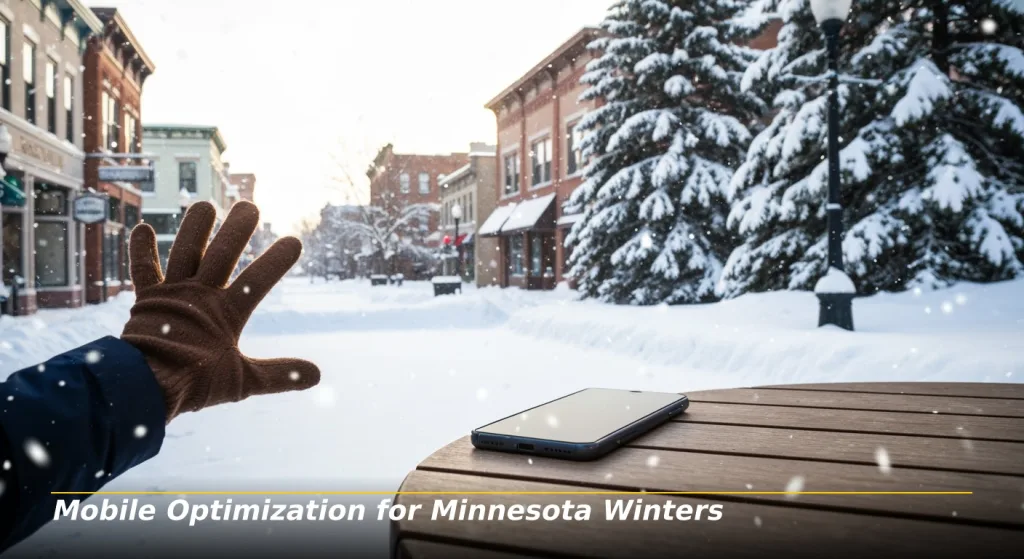
Mobile traffic accounts for over 60 percent of restaurant searches. In Minnesota, this traffic peaks during the winter when diners are looking for quick information while on the move.
1. The Gloved Finger Rule:
- Interactive elements must be large enough to be pressed easily.
- Aim for a target size of 48x48 pixels.
2. Page Speed for Cold Weather Search:
- Users on mobile data networks in cold weather have less patience for slow sites.
- Your site should load in under 2.5 seconds. Every second of delay reduces conversions by 7 percent.
3. High Contrast for Snow Glare:
- Implement dark text on a light background or very bright text on a dark background.
- This ensures your menu is readable even when a guest is looking at their phone in bright, snowy conditions.
4. GPS Integration:
- Provide a direct link to Google Maps for one-tap navigation.
- This is critical for restaurants in complex areas like downtown Minneapolis skyways or Rochester subway systems.
| Mobile UX Factor | Minimum Standard | Minnesota Winter Benefit |
|---|---|---|
| Button Size | 48 x 48 pixels | Ease of use for gloved fingers |
| Load Speed | Under 2.5 seconds | Reliability on mobile data |
| Text Contrast | 4.5:1 ratio | Readability against snow glare |
| Map Integration | One-tap "Directions" | Fast navigation in cold weather |

Related article
Why Custom Website Design is a Wise Business Investment
A strong online presence is essential for small and mid-size businesses (SMBs) today. A website acts as your virtual storefront, 24/7 sales representative, and above all, the first impression for potential customers. With rapid expansion...Step 6) Content That Builds Loyalty (Beyond Menus)
Building a loyal following in the Twin Cities and Greater Minnesota requires keeping your brand in front of guests even when they are not at your table.
1. Chef's Specials and Seasonal Stories:
- Highlight local ingredients like wild rice, walleye, or Honeycrisp apples.
- Write about the local farmers or suppliers you use to build community trust.
2. Event Calendars:
- List live music, wine tastings, or holiday specials.
- Keep this updated. A calendar that shows events from last year tells a guest your business might be closed.
3. Tiered Loyalty Programs:
- Create levels (ex., Member, Silver, and Gold) to reward frequent diners.
- Offer exclusive perks like early access to New Year's Eve reservations or private tasting invites.
4. Gift Card Integration:
- Make it simple to buy digital gift cards directly on your site.
- This is a critical revenue source, especially during the holiday season.
| Loyalty Model | Mechanism | Best Use Case |
|---|---|---|
| Tiered Membership | Spend-based levels | Fine dining and upscale casual |
| Subscription | Monthly fee for perks | Coffee shops and bakeries |
| Points Based | 10 points per $1 spent | Fast-casual and pizza shops |
| Seasonal Perks | First access to events | High-demand neighborhood gems |

Related article
Establishing a Winning Real Estate Agent Website in the AI Era
The real estate industry has turned to almost entirely digital. Nearly every home search starts online, and clients expect instant, personalized information. In this environment, a real estate agent’s website is no longer an optional...Step 7) Technical Foundation (Speed, Security, Analytics)

The technical health of your site is the foundation for everything else. If it appears weak, your marketing efforts will fail.
1. Security and PCI Compliance:
- Your site must have an SSL certificate (HTTPS).
- For online ordering, use a third-party processor so you do not store guest credit card data on your own server.
2. Schema Markup for AI Discovery:
- Utilize Restaurant schema to tell search engines your name, address, price range, and cuisine.
- Use Menu Item schema for your digital menu. This helps AI tools like Gemini and ChatGPT answer specific questions about your food.
3. Analytics Tracking:
- Use Google Analytics 4 to see how many people are clicking your reservation button.
- Track the Conversion Rate of your site to measure the success of your improvements.
| Technical Must-Have | Free Tool to Check | Pass/Fail Criteria |
|---|---|---|
| Mobile Speed | Google PageSpeed Insights | Under 2.5s Load Time |
| SSL Certificate | Hubspot Website Grader | HTTPS:// (Secure) |
| Structured Data | Google Rich Results Test | Zero Schema Errors |
| Uptime Status | Uptime Robot | 99.9 percent Availability |

Related article
A Guide to Finding a Good Online Marketing Agency
To build a commanding online presence, especially as a mid-size business or organization, a variety of factors need to come together and be executed effectively. Understanding your audience and connecting with them requires a high-performing...Step 8) Common Minnesota Restaurant Website Mistakes
Even the best restaurants make mistakes that plummet their digital conversion rates. Avoiding these four pitfalls will put you ahead of 80 percent of your competition.
1. The PDF Trap:
- PDFs are the biggest mistake in restaurant SEO.
- They are not accessible for people with visual impairments, being impossible to read on a phone without zooming.
2. Inconsistent NAP Data:
- If your Facebook says you are on "Main St" and your website says "Main Street," Google may get confused.
- Audit your listings quarterly to ensure perfect consistency.
3. Ignoring the Guest Voice:
- Not responding to reviews is a signal to guests that you are not paying attention.
- Even a simple "Thank you for joining us" goes a long way in building loyalty.
4. Slow Mobile Performance:
- Large, uncompressed photos of your dining room can slow your site to a crawl.
- Use modern image formats like WebP to keep your site fast.
| Mistake | Impact | The 10-Minute Fix |
|---|---|---|
| PDF Menu | Zero SEO for dishes | Rebuild as HTML text |
| Wrong NAP | Lower Map rankings | Sync all local citations |
| No Mobile CTA | High bounce rate | Anchor a "Book Now" button |
| Outdated Hours | Frustrated guests | Update Google Business Profile |
30-Day Minnesota Restaurant Website Action Plan
| Timeline | Focus Area | Success Metric |
|---|---|---|
| Week 1 | Technical Audit | Mobile speed score of 90+ |
| Week 2 | Local SEO & GBP | 20 new photos and NAP sync |
| Week 3 | Menu & Reservations | PDF to HTML transition |
| Week 4 | Content & Loyalty | Launch email or SMS signup |

Related article
Why Content Marketing is Your Small Business's Superpower in the AI Search Era
Artificial intelligence (AI) is completely changing how search engines work, shifting the focus from simple keywords to understanding what people really want to find. For small businesses, this new digital landscape is a massive opportunity....FAQs Minnesota Restaurant Website Design Checklist
1. How does Minnesota’s "Junk Fee" law (SF 3537) affect my digital menu?
Starting in 2025, Minnesota law requires all mandatory fees must be included in the total advertised price. This includes health and wellness surcharges or automatic service fees. On any site, you must list the all-inclusive price. You can still itemize the fee on the guest's receipt, but initial prices shown on your menu must represent the total cost the customer is required to pay, excluding government taxes.
2. Why is my restaurant not appearing in "near me" searches in St. Paul?
Proximity is only one factor in "near me" searches. Google also searches for relevance and prominence. If your website does not mention your specific neighborhood (like "Mac-Groveland" or "Highland Park") or if you have fewer reviews than your neighbors, you may rank lower. To fix this, incorporate neighborhood keywords into your homepage and actively encourage guests to leave reviews on your Google Business Profile.
3. What is the benefit of adding landmarks to my website copy for SEO?
Search engines and AI discovery tools use landmarks to confirm your geographic relevance. For a Rochester restaurant, mentioning proximity to the Mayo Clinic or Peace Plaza helps you rank for travelers searching for "food near Mayo Clinic." In Duluth, mentioning the Aerial Lift Bridge helps you capture tourism traffic. It provides a geographic anchor confirming your location to search algorithms.
4. How do I make my website more accessible for diners with visual impairments?
The most important step is moving away from PDF menus, which are generally not readable by screen readers. Beyond that, ensure all images have descriptive alt-text and that your website has a high contrast ratio. Using clear, structured headings (H1, H2, H3) also helps assistive technology navigate your content more efficiently.
5. Can I run my own loyalty program through my website, or do I need an app?
While many established chains use apps, independent Minnesotan restaurants can successfully run loyalty programs through their websites. Modern POS systems provide web-based loyalty portals where guests can sign up and check their points balance. This is often more effective than an app because it requires no download, reducing the barrier to entry for your guests.

Phong Nguyen
Phong brings the perfect combination of business acumen and technical expertise to digital marketing. Armed with a Bachelor of Arts degree from St. Olaf College, a master’s in business administration in Marketing from the University of St. Thomas, and SEO/GEO from “The School of Hard Knocks,” Phong founded ProWeb365.com in 2009 to help Minnesota businesses and non-profit organizations succeed online.
For over 15 years, Phong and his team’s strategic approach has combined data-driven marketing with conversion-focused design, delivering measurable results that directly impact his clients’ bottom line. Are you ready to experience what innovative digital marketing can do for your business in the age of AI search engines? Contact Us today!