







The home care sector in Minnesota is currently navigating a period of profound transformation characterized by acute workforce shortages and intensifying regulatory oversight. As agency owners and directors across the Twin Cities, Rochester, and Duluth seek to stabilize their operations, the digital presence of a home care agency has elevated from a secondary marketing tool into a primary infrastructure for clinical trust and recruitment.
This year, the industry faces a projected peak in demand for long term services while simultaneously managing a turnover rate that exceeds seventy-five percent. The digital experience offered to families must balance the high stakes of medical safety with the empathetic requirements of a family in crisis.
This report outlines an exhaustive framework for creating a Minnesota-centric website that meets the rigorous standards of the Department of Health and the Department of Human Services while optimizing for the latest advancements in artificial intelligence search engines.
Key Takeaway
- Regulatory transparency is the primary trust signal, requiring agencies to clearly display Minnesota Department of Health license numbers and differentiate between basic and comprehensive service designations.
- Recruitment must be prioritized as highly as client acquisition, utilizing dedicated caregiver pages with transparent wage data and clear career ladders to mitigate the eighty percent turnover rate.
- Accessibility is a legal mandate this year, updating adherence to WCAG 2.1 AA standards to accommodate older adults and stressed family decision-makers during high arousal moments.
- Technical optimization through localized schema and Electronic Visit Verification (EVV) transparency builds dual layer trust with both search algorithms and prospective clients.
1. The Foundation of Minnesota Regulatory Transparency

For a Minnesota home care agency, a website serves as the first point of verification for state compliance. Under Minnesota law, home care providers are defined as an entity regularly engaged in delivering at least one home care service directly in a client’s home for a fee.
This year, the visibility of licensure has become a critical differentiator as the Department of Human Services (DHS) implements a two-year pause on new home and community-based services licenses to focus on the oversight of existing providers. Agency directors must leverage this scarcity by having their established regulatory status a centerpiece of their digital branding.
Distinguishing between a Basic and Comprehensive Home Care License must be articulated with precision to avoid consumer confusion and regulatory misalignment. Basic licenses typically encompass services such as assistance with dressing, self-feeding, oral hygiene, and medication reminders. In contrast, Comprehensive licenses allow for professional medical services, including registered nurse tasks and specialized therapies.
| Service Dimension | Basic Home Care License | Comprehensive Home Care License |
|---|---|---|
| Personal Care Assistance | Included (Dressing, bathing, grooming) | Included (All basic services) |
| Medication Services | Verbal or visual reminders only | Full management and administration |
| Nursing Tasks | Not permitted | Included (RN and LPN services) |
| Therapies | Not permitted | Included (PT, OT, Speech, Respiratory) |
| Delegation | Not applicable | Tasks delegated to unlicensed personnel |
| Payer Eligibility | Private pay, certain waivers | Medicare, Medicaid, and private insurance |
To enhance trust, the website should integrate a direct link to the Minnesota DHS Licensing Information Lookup (LIL) tool. This allows prospective families to verify the agency’s active status and view public records such as correction orders or maltreatment investigation memorandums. Transparency regarding these records, even when including past corrections, can actually bolster trust if the agency provides a narrative on how those issues were resolved through updated policies and procedures.
Strategic Licensure Display
- Footer Integration: The MDH license number should be visible on every page of the site to maintain persistent credibility.
- Compliance Pages: Dedicated pages should explain the meaning of Comprehensive versus Basic to educate the consumer.
- Credential Links: Direct hyperlinking to state verification portals reduces the friction for families performing due diligence.
 Related article
Establishing a Winning Real Estate Agent Website in the AI Era
The real estate industry has turned to almost entirely digital. Nearly every home search starts online, and clients expect instant, personalized information. In this environment, a real estate agent’s website is no longer an optional brochure; it’s a central engine for lead generation, brand credibility, and business growth. This guide outlines practical and actionable strategies […]
2. The Integrated License and HCBS Designations

Many providers this year are moving toward an integrated license model, incorporating a Home and Community-Based Services (HCBS) designation to their existing home care license. This designation allows providers to deliver basic support services identified under Minnesota Statutes, section 245D.03, without holding a separate 245D license. This is essential for agency websites to clarify that the designation does not substitute for core home care requirements, but rather, enhances the breadth of the care plan.
| Integrated License Components | Regulatory Standard | Website Narrative |
|---|---|---|
| 144A Requirements | MDH Home Care Statutes | Focus on clinical safety and health |
| 245D Basic Supports | DHS HCBS Standards | Focus on community integration |
| Background Studies | NETStudy 2.0 | Emphasize universal staff vetting |
| Bill of Rights | Integrated MDH/DHS Rights | Highlight client empowerment |
| Monitoring | MDH Compliance Staff | Showcase external accountability |
The digital content must reflect this integrated nature by showcasing a “Whole Person” approach to care. Doing so involves explaining how the agency manages both the medical needs of the client (under the 144A license) and their social or community needs (under the 245D designation). Failure to provide this distinction can lead to regulatory identity risk, where families or referral sources misunderstand the scope of the agency’s authority.
 Related article
The Minnesota Small Business Website Checklist for 2026 (SEO + Conversions + Accessibility)
The digital landscape of this year for small businesses in Minnesota is more competitive and regulated than ever before. With state GDP growth currently at 1.6 percent (ranking 40th in the nation) and the highest corporate tax rate in the country at 9.8 percent, Minnesota business owners must ensure their digital presence is an efficient […]
3. Caregiver Recruitment and the Minnesota Staffing Crisis
The direct care workforce shortage in Minnesota has reached a critical stage, with hundreds of job titles remaining unfilled across the state. This year, agency owners must recognize that their website’s Careers section is likely more important for growth than the Services section. Turnover rates in the industry have hit upwards of 80percent, creating a cycle of hire, train, and rehire draining agency resources.
To combat, caregiver pages must move beyond generic Apply Now buttons. They must showcase transparency regarding compensation, culture, and career trajectories. In Minneapolis, the average caregiver hourly wage is approximately $19.64, but top earners can make over $26. Providing these benchmarks directly on the website helps set realistic expectations and attracts higher quality applicants who are comparing multiple agencies.
| Regional Market | Average Hourly Wage | High-End Hourly Wage |
|---|---|---|
| Minneapolis | $19.64 | $26.07 |
| St. Paul | $19.71 | $24.50 (est) |
| Waconia | $22.59 | $28.00 (est) |
| St. Cloud | $19.35 | $23.00 (est) |
| Minnesota (Statewide) | $19.05 | $23.32 |
- Recruitment Content Hierarchy
- Immediate Wage Disclosure: Displaying the starting rate prominently reduces applicant drop off.
- Benefit Specifics: Highlighting health insurance, retirement plans, and mileage reimbursement.
- Career Ladders: Visually depicting the move from Personal Care Assistant (PCA) to Certified Nursing Assistant (CNA) or Registered Nurse (RN).
Mileage reimbursement is a specific point of interest for Minnesota caregivers who often travel between suburban areas like Bloomington and Plymouth or rural regions. In 2026, the IRS standard business mileage rate is 72.5 cents per mile. Agencies emphasizing their adherence to or exceeding this rate can differentiate themselves as “Employers of Choice” who care about the financial well-being of their staff.
| Reimbursement Category | Rate (This Year) | Compliance Context |
|---|---|---|
| Standard Business Mileage | 72.5 cents / mile | IRS and Minnesota State Standard |
| State Vehicle Declined | 65.5 cents / mile | For state agency employees |
| Specially Equipped Vans | 81.5 cents / mile | For wheelchair accessible vehicles |
| Medical / Moving Rate | 20.5 cents / mile | Specific tax contexts |
| Charitable Rate | 14 cents / mile | Volunteer context |
 Related article
WordPress Web Design in Minnesota: Best Stack in 2026 (Hosting, Security, Plugins, SEO Schema)
As we navigate the fiscal landscape of 2026, Minnesota small businesses face a unique set of digital challenges. With a state corporate tax rate of 9.8 percent (the highest in the nation) and a slowing state GDP growth of 1.6 percent, every marketing investment must yield measurable returns. For most local service providers and retailers […]
4. The Psychology of Family First UX and the 7-Second Rule
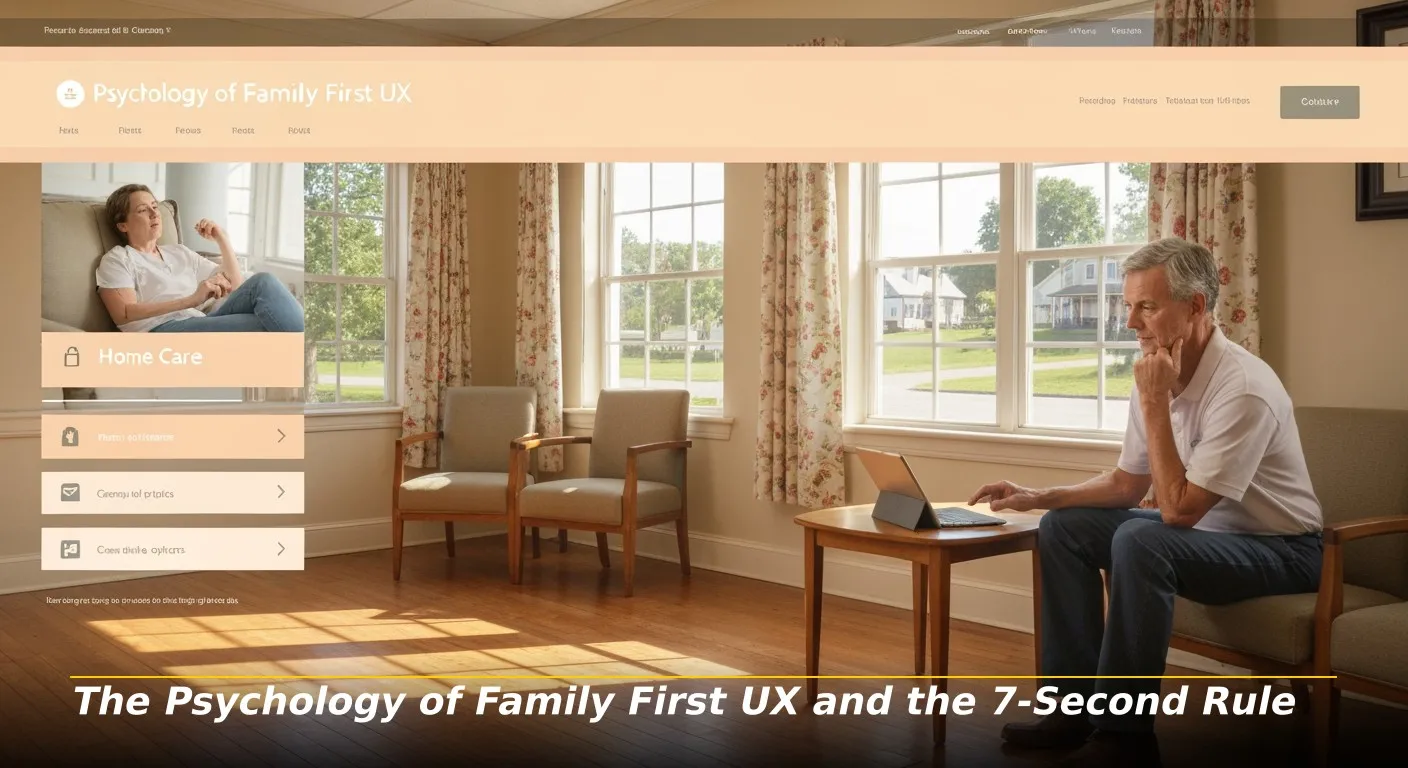
When a family member visits a home care website, they are normally in a state of crisis. Whether it’s a hospital waiting room at the University of Minnesota Medical Center or navigating a sudden decline in a parent’s health in the rural town of Bemidji. Research suggests that websites have approximately seven seconds to establish enough trust for the user to stay on the page. This entails a UX design that prioritizes emotional safety, clarity, and rapid access to contact information.
The decision-making process for families often follows a seven-step model that includes identifying the problem, gathering information, and evaluating options. Websites should be structured to guide the user through these steps. For instance, the homepage should not begin with “We are the best agency,” but rather,”Is your loved one struggling to stay safe at home?” This aligns with the user’s internal monologue and identifies the shared goal of comfort and dignity.
UX Design Pillars for Families
- Emotional Resonances: Using real photos of caregivers and clients rather than generic stock photography.
- Direct Communication: One click calling and immediate Request a Consultation forms.
- Resource Hubs: Providing educational content that addresses Warning Signs of needing care.
Accessibility for aging adults is not merely a best practice, it is an essential component of the family first UX. Many primary decision makers are spouses who are seniors themselves, or adult children who may have vision impairments. Following WCAG 2.1 AA guidelines ensures that the site is usable for everyone.
| Typography Element | Accessibility Standard | UX Implementation |
|---|---|---|
| Body Font Size | 16px (12pt) Minimum | Use 18px or 20px for better legibility |
| Line Spacing | 1.5 to 2.0 | Increases ease of reading for stressed eyes |
| Color Contrast | 4.5:1 Minimum | Ensure dark text on light, matte backgrounds |
| Text Alignment | Left Aligned | Easiest for the human eye to track |
| All Caps | Avoid for body text | Harder to read and perceived as shouting |
 Related article
Winning the Digital Frontier: A Strategic Blueprint for Growth and Partner Selection
For decades, business was Ptolemaic where companies believed they were the center of the attention, and customers would find them. Today’s reality is Galilean. Customers are the center, and businesses must orbit around their needs. This shift is driven by Artificial Intelligence (AI). We are moving from search engines providing links to Answer Engines that […]
5. Technical Optimization for AI and Traditional Search

This year, the way people find home care is changing. Families are no longer using Google Search, they’re asking AI agents for recommendations. To be visible in these results, sites must be technically structured for machine readability. This involves the use of Local Business Schema and high-performance technical metrics.
Local Business Schema allows search engines to understand the agency’s specific service area, operating hours, and licensing credentials. For one serving the Twin Cities, this means listing every city from Minnetonka to Woodbury within the Area Served property of the schema code.
Essential Schema Properties
- Legal Name and Address: Must match the MDH license exactly.
- Telephone: Should include the local area code (612, 651, 763).
- Opening Hours: Clarifying 24/7 on call status versus office hours.
- Geo Coordinates: Providing latitude and longitude for precise map placement.
| Schema Property | Strategic Value | AI Impact |
|---|---|---|
| Medical Business | Defines the specific industry niche | Improves relevance in medical queries |
| Knows About | Highlights expertise (e.g., Dementia, Trach) | Feeds AI knowledge graphs |
| Aggregate Rating | Pulls in reviews for rich snippets | Increases click through rate |
| Opening Hours | Shows real time availability | Critical for Open Now searches |
| Area Served | Defines geographic boundaries | Boosts local pack rankings |
Website speed is another critical technical Trust Signal. When a page loads slowly, users perceive the agency itself as being unreliable or disorganized. In the context of home care, where every minute matters during a hospital discharge, fast-loading mobile sites are the baseline for conversion.
 Related article
A Strategic Guide to Selecting a Great Website Designer
When you’re a small to mid-size business owner or organizations, a website is more than just an online brochure; it’s a foundational pillar for your identity, operations, and growth. In the AI era, a professional, functional, and user-friendly website is even more essential. It helps you build credibility, expand your reach, and serves as a […]
6. Electronic Visit Verification (EVV) as a Trust Factor
 Electronic Visit Verification (EVV) is a federal mandate requiring providers of personal care and home health services to electronically document their visits. While this is a regulatory requirement, it should be promoted on the agency’s website as a point of clinical accountability. Families want to know that the care they are paying for is actually being delivered.
The Minnesota EVV system verifies six specific data points, including the type of service, identity of the caregiver and client, and exact start and end times. By explaining this technology on the website, agencies can demonstrate a Zero Tolerance approach to fraud and a commitment to transparent care delivery.
EVV Transparency Elements
- Software Partner: Highlighting the use of secure platforms like HHAeXchange or Alora.
- Family Portals: Mentioning if families can see real time Clock In alerts.
- HIPAA Compliance: Ensuring all digital visit verification is encrypted and secure.
| EVV Requirement | Data Point Verified | Family Benefit |
|---|---|---|
| Service Type | What task was performed | Clinical accuracy |
| Client Identity | Who received the care | Personal safety |
| Date and Location | Where and when | Proof of presence |
| Caregiver Identity | Who provided the care | Staff accountability |
| Start / End Time | Duration of the visit | Billing transparency |
| Device Verification | Smartphone or Tablet use | Modernized care tracking |
 Related article
A Guide to Finding a Good Online Marketing Agency
To build a commanding online presence, especially as a mid-size business or organization, a variety of factors need to come together and be executed effectively. Understanding your audience and connecting with them requires a high-performing website and a trusted SEO/GEO partner working synergistically. Selecting optimal tools, optimizing your site, and rigorously vetting partners, you can […]
7. Navigating Background Checks and Vetting Processes
One of the most frequent questions from families relates to the safety of the caregivers entering their homes. The North Star State has one of the most robust background check systems in the nation, involving the Bureau of Criminal Apprehension (BCA) and the NETStudy 2.0 applicant portal.
The website must go into detail about this vetting process. Mentioning that the agency conducts national criminal history checks, OIG exclusion list checks, and Nurse Aide Registry searches provides a profound sense of security. This year, with the implementation of the Clean Slate Act, which expunges certain records, it is ever so important for agencies to emphasize their rigorous, multi-layered screening approach.
| Background Study Step | Agency Action | Cost and Compliance |
|---|---|---|
| Applicant Registration | NETStudy 2.0 Portal | Mandatory for all direct care staff |
| Fingerprinting | IDEMIA/IdentoGO | Required for criminal history check |
| Study Fee | $44.00 per applicant | Paid by the provider agency |
| Results Notice | Mailed within 3 days of DHS receipt | Eligible or Set-Aside status |
| Ongoing Monitoring | Quarterly or Annual revalidation | Part of broader program integrity |
 Related article
Why Your Brand is THE Most Powerful Asset in the AI Era
As AI begins to reshape browsing, so too is the digital landscape for small to mid-size businesses (SMBs). To go along with the tide, investing in brand strength is crucial for customer acquisition and sustainable growth. Traditional SEO focused on keywords and rankings. Pivoting with AI, search engines now provide instant answers, reducing website clicks. […]
8. Leveraging State and Community Resources

A high-performing home care website serves as a gateway to the broader Minnesota care ecosystem. Agency directors should integrate information about the Minnesota Board on Aging and the Minnesota Aging Pathways (formerly Senior LinkAge Line). This provides value to the user and signals the agency is a knowledgeable partner surrounding the in-state care continuum.
For veterans in Minnesota, there are specific programs including the VA Aid and Attendance benefit, which can help pay for home care services. A dedicated Veterans page on the website can guide eligible families through the application process in partnership with County Veterans Service Officers (CVSO).
Community Resource Links
- Minnesota Aging Pathways: For Medicare counseling and housing options.
- Alzheimer’s Association MN-ND: For specialized dementia support.
- Disability Hub MN: For younger individuals needing home care services.
| Veteran Support Program | Benefit Description | Eligibility Requirement |
|---|---|---|
| Aid & Attendance | Monthly payment added to pension | Requires ADL assistance |
| Homemaker Companion | Direct VA reimbursement for care | Enrolled in VA Health Care |
| Respite Care | Temporary break for family caregivers | Clinical need for supportive care |
| State Veterans Homes | Skilled nursing in residential settings | Honorable discharge, MN resident |
| Adult Day Centers | Social and medical day support | Varies by facility location |
 Related article
Why Content Marketing is Your Small Business’s Superpower in the AI Search Era
Artificial intelligence (AI) is completely changing how search engines work, shifting the focus from simple keywords to understanding what people really want to find. For small businesses, this new digital landscape is a massive opportunity. Content marketing, which is all about creating valuable online content, has become a powerful tool that offers a better return […]
9. Avoiding Common Digital Pitfalls

Many home care agencies in the Gopher State fail to convert visitors because of simple, avoidable mistakes. One of the most common is the Missing Human error, where a website is filled with stock photos but contains no images of the actual leadership team or office staff. In a reputation-based business-like home care, faces matter.
Another frequent pitfall is the neglect of mobile optimization. This year, over half of all global website traffic comes from mobile devices, and 61% of users are more likely to contact a local business if their site is mobile friendly. If a daughter is searching for care from a parent’s bedside, she needs a site that loads instantly and has a large, clickable Call button.
Website Design Common Errors
- Lack of dedicated service pages: Every major service (Respite, RN, PCA) should have its own URL for SEO.
- No careers page: Failing to treat applicants as customers leads to staffing shortages.
- Weak metadata: Missing title tags and meta descriptions prevent Google from ranking the site locally.
 Related article
The Small Business Guide to Winning Customers Through AI Search Optimization
The internet is constantly evolving, and AI in search engines is being used to find business for customers. For small to mid-size business owners, understanding and adapting to these technological advances is crucial for growth. Here, this article will serve as a guide to all things AI search and strategies on how to use this […]
10. The Future of Home Care Marketing in Minnesota

As we look toward the remainder of this year and beyond, the integration of artificial intelligence into home care operations will become a standard expectation. AI is already leveraged for smarter scheduling, documentation assistance, and risk alerts. Agencies that highlight their use of these technologies on their websites will be seen as forward thinking and efficient.
The State of Home-Based Care report indicates that referral conversion rates have declined this year, meaning agencies must be more effective at closing the gap between an inquiry and a Start of Care. High-achieving websites act as a friction reduction machine, providing all the information a family needs to move forward without having to wait for a return phone call.
Conclusion: The digital strategy for a Minnesota home care agency must be as robust as its clinical strategy. By centering the website on regulatory transparency, caregiver empowerment, and family-first user experience, owners can navigate the current workforce and licensing challenges with confidence.
Websites adhering to MDH standards, leverage BCA vetting protocols, and respect the psychological state of its users will not only rank higher in search results but will also build the enduring trust necessary to serve Minnesota’s vulnerable populations.
 Related article
How CMS Websites Offer Budget-Friendliness and Strategic Flexibility for Businesses
Content Management Systems (CMS) empower small to mid-size businesses (SMBs) to build and grow their online presence affordably and efficiently. To better understand, a report on how CMS platforms offer cost-effectiveness and remarkable adaptability, enabling small to medium businesses (SMBs) to scale and evolve with market demands, can be found below. A CMS provides accessibility […]
FAQs About Home Care Website Design
1. How does the current licensing pause in Minnesota affect new home care providers?
The Department of Human Services has implemented a two-year pause on new home and community-based services licenses beginning this year. This means the state is not currently accepting new applications for certain 245D service lines. Doing so makes existing licenses significantly standout while emphasizing the importance of maintaining compliance for current providers.
2. What specific data points must my agency’s EVV system collect to be compliant?
The system must electronically verify six points of data for every visit: type of service performed, individual receiving the service, date of the service, location of service delivery, individual providing the service, and time the service begins and ends.
3. Are there different background check requirements for agency owners versus caregivers?
Yes, all direct and indirect owners with an ownership interest of five percent or more must have a valid fingerprint-based background study conducted through NETStudy 2.0 before a license can be issued or revalidated. This is part of a broader high-risk provider screening effort implemented by the state this year.
4. What is the 7-second rule and how does it apply to my agency’s website?
The 7-second rule is a psychological principle stating that a visitor decides whether to trust a website within the first few seconds of landing on it. For home care, this means your homepage must immediately communicate safety, professionalism, and empathy through clear headlines and authentic imagery.
5. How does the Minnesota Clean Slate Act impact our caregiver hiring process?
Effective this year, certain misdemeanor and felony records are automatically expunged from the BCA’s public criminal history system after a clean period of two to five years. However, violent crimes and offenses against children remain visible, and agencies must still use the DHS NETStudy 2.0 system for a more comprehensive vetting that includes non-public data relevant to vulnerable adult safety.