


Minnesota’s Building Season: 7 Months. Here's How to Books Jobs Year-Round
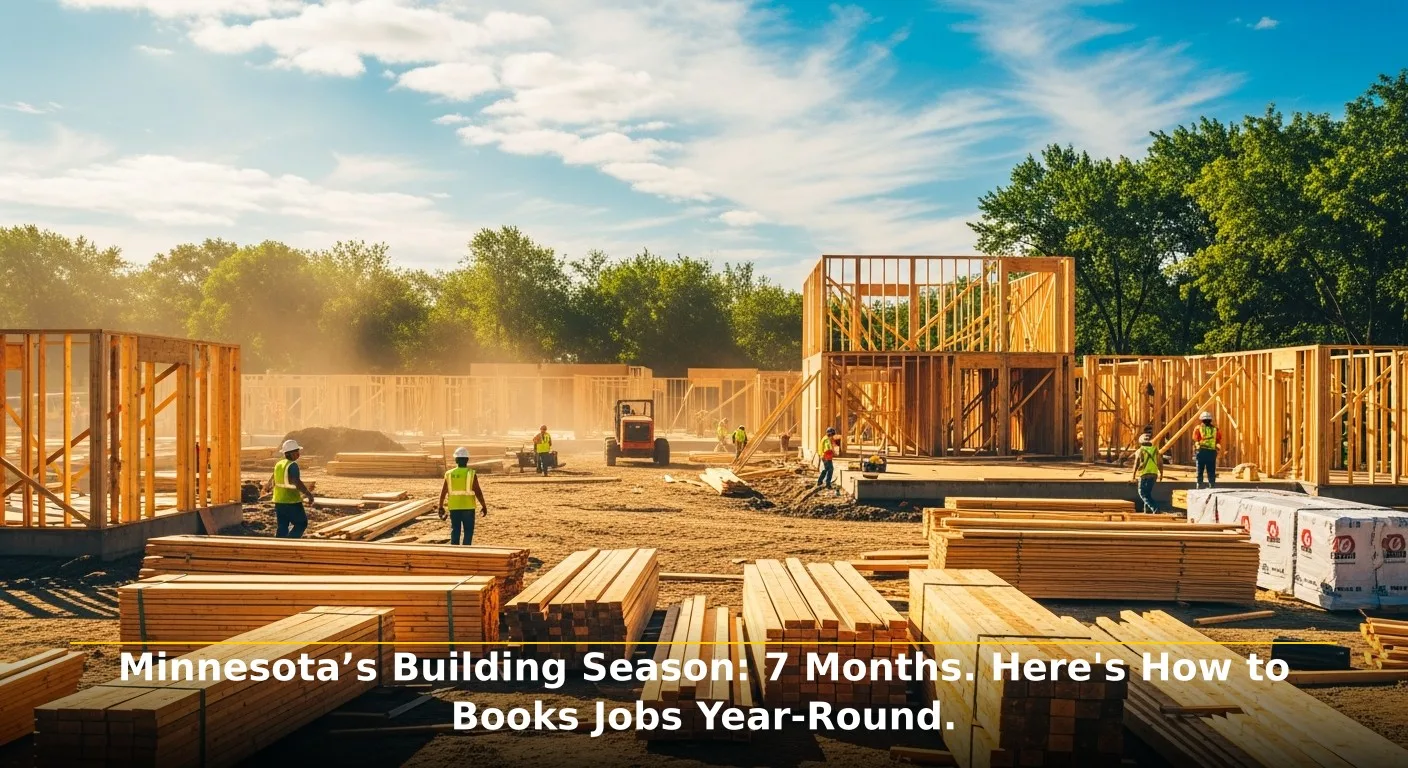
Minnesota’s contractors work within one of the tightest build windows in the country. Exterior construction is effectively limited to May through October by frost depth, frozen ground, and road weight restrictions that delay material deliveries into mid-spring. That leaves just five months where physical work stalls but overhead keeps running, skilled workers look for stability elsewhere, and the all too familiar feast-or-famine cycle tightens its grip.
The good news is that the digital marketplace does not follow the same calendar. Homeowners are eager to plan projects in January and February, research contractors through the winter, and make hiring decisions months before the ground thaws. In 2026, we report that 84% of homeowners will use online search and AI answer engines to validate a contractor before making contact. What if you owned a high-authority website capable of converting winter research behavior into a summer backlog? What if your business could avoid the revenue gap that defines the Minnesota building industry? You are just one website away!
Key Takeaways
- Minnesota's exterior build season generally spans May through October, leaving a five-month gap where revenue stalls for contractors without a digital strategy.
- The spring planning window opens right after the New Year, months before ground breaks, when homeowners are finalizing designs and budgets.
- More than 80% of homeowners validate a contractor online before calling, and 30% eliminate any business without a professional website from consideration.
- SEO-generated leads average $74 each and convert at 18-24%, compared to $135 or more per shared lead on aggregator platforms.
- In Year 2 of a dedicated SEO strategy, effective cost per lead can drop below $10 as content compounds in authority at zero marginal cost.
1. Why the Build Season Creates a Revenue Problem
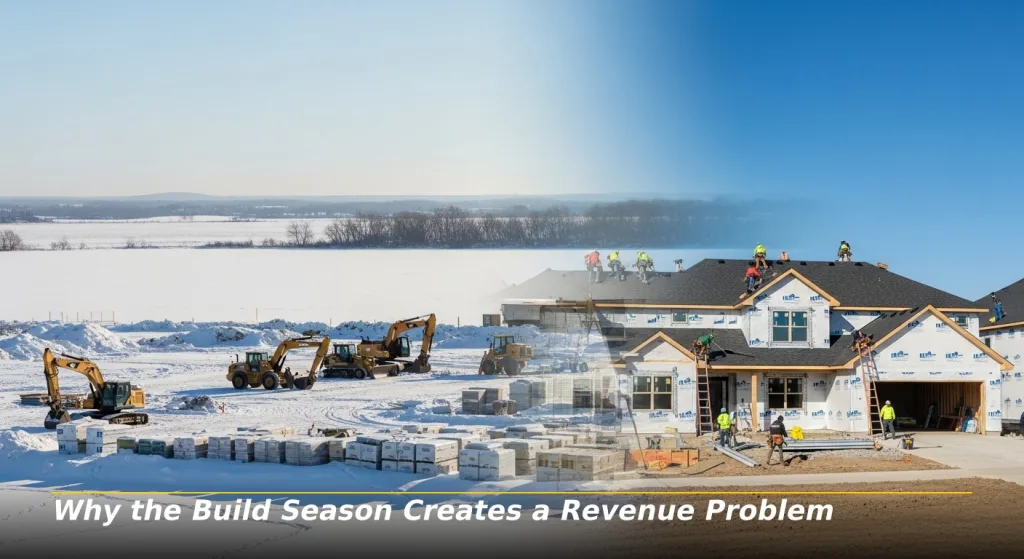
Primarily, Minnesota’s physical constraints are significant. The North Star State’s frost line runs three to five feet deep, making winter excavation and foundation work impractical for most residential projects. Seasonal road weight restrictions, typically running from early March through mid-May, limit the transport of heavy materials and compress the usable build window further. As a result, roofing, siding, decking, and most exterior projects are only reliably available between May and October.
Financially, the consequences of that compression are equally significant. Construction firms operating on a summer-only model spread peak-season earnings across 12 months of overhead. Layoffs during the winter make it harder to retain skilled tradespeople, who seek year-round stability rather than seasonal employment. Nearly a quarter of construction workers fail to return after the holiday break, on average, forcing owners to rehire and retrain each spring before the backlog can begin. Without winter contracts already in hand to offer certainty, holding onto top technicians becomes very difficult.
Contractors who rely on a word-of-mouth business development strategy alone face the harshest version of this problem. When the hammers stop swinging, the referrals dry up. Meanwhile, a website that generates planning-phase leads during the winter hibernation is the only tool that separates revenue generation from active construction activity.
Related article
The Minnesota Contractor's Spring Website Checklist: 15 Updates That Turn Spring Searchers into Booked Jobs
In Minnesota, late February marks the end of the deep freeze and the beginning of the most competitive search cycle of the year. Crews may not break ground until May, but the digital race for...2. When do Homeowners Actually Plan Spring Projects?

Most contractors assume homeowners will start thinking about their projects and call when the snow (eventually) melts. The data tells a far different story. The real planning window begins when calendars turn to January. Homeowners use the winter months to finalize designs, get financing in place, and begin researching contractors. To break ground in spring and finish before summer's end, material lead times and city permit approvals usually mean decisions need to be made by the end of February at the latest.
A vast majority – more than 80% - of homeowners who plan spring exterior or heating and cooling projects begin their research early in the calendar year. Peak search hours fall between 6 p.m. and midnight, when offices are closed but homeowners have evening idle time to research thoroughly. Almost 70% of potential customers search for pricing context before they are willing to invite anyone into their home, but only 15% find the clear answers they are looking for. This is your opportunity! Contractors whose websites provide budgeting guides, project timelines, and permit explainers fill that gap and earn shortlist consideration before the competitive rush begins.
Early-season leads are also the most profitable. These shoppers are organized, realistic about timelines, and less likely to pressure contractors on price. Conversely, late-season leads arrive flustered after visible damage or urgency, with tighter timelines and less budget flexibility. Capturing the winter researcher is not just about filling the slow-season calendar. It is about filling the summer schedule with the best clients.
A Minnesota Contractor’s Calendar: Digital vs. Physical Season Timeline
| Month | Physical Build Activity | Digital Opportunity |
|---|---|---|
| November- January | Minimal to none | Homeowners researching for spring; publish planning guides |
| February | None | Peak planning window; homeowners finalizing budgets and designs |
| March | Pre-season prep | Competition heats up; early SEO content ranks and converts |
| April-May | Ramp-up begins | Booked contractors starting jobs secured months earlier |
| June-October | Full build season | Emergency searches and late-season demand; reviews from active jobs |

Related article
The Contractor's Website Checklist: 15 Features That Turn Visitors into Paying Customers
A contractor's website is no longer a digital brochure. This year, it’s the most influential salesperson in the business. 84% of homeowners leverage Google and AI answer engines to research a contractor before making contact....3. How Can a Website Capture Winter Planning Searches?

A. Ranking for Conversational Planning Queries
Homeowners in the planning phase do not search for general service terms. They ask specific questions, like "How much does a deck addition cost in Minneapolis," "when should I book a roofer for spring," or "what permits do I need for a bathroom addition in St. Paul." A website that answers those queries with structured, locally specific content earns the researcher's trust before a competitor ever enters the picture. As mentioned, more than 80% of consumers believe a website gives a business more credibility than a social media presence alone. What’s more, contractors who publish educational content in January are already ranked by the time February researchers arrive.
B. Visibility in AI Answer Engines
Search behavior is shifting significantly toward AI-driven answers from engines like Gemini and Perplexity, which synthesize recommendations from multiple verified sources rather than returning a list of links. These platforms prioritize websites with structured schema markup, answer-ready content formatted beneath question-based headings, and consistent business information verified across multiple platforms. A website built only as plain-text paragraphs is effectively invisible to these fact-checking engines. A website built with LocalBusiness schema, FAQ schema, and Service markup is the kind of source AI engines cite when a homeowner asks for a contractor recommendation by voice or conversational query.
C. The Answer-First Content Structure
To be extracted and cited by AI engines, each FAQ answer should be structured as a concise, factual 50 (or so)-word block placed immediately beneath a question-formatted heading. This "Atomic Answer" format allows AI models to clip the relevant answer and present it as the definitive response to a homeowner's question. Pricing guides structured this way, project timeline explainers, and permit requirement summaries for specific Minnesota municipalities all qualify. Each one serves a dual purpose: helping a homeowner plan and establishing the contractor as the local authority on that subject.

Related article
12 Trust Signals Every Home Improvement Contractor Website Needs to Convert Visitors into Clients
Trust is the most valuable tool for any home improvement contractor. For years, the goal was to appear up on the first page of Google. Today, we have entered the age of AI search. People...4. Fact: Year-Round Marketing Produces Compounding Returns

A. Lower Cost Per Lead Than Any Aggregator
Leads from platforms like Angi or HomeAdvisor are shared among multiple contractors and typically cost $135 or more per lead. SEO-generated leads arrive exclusively, directly to a contractor's own brand, at a friendlier average of $74 each. They convert at 18 to 24% because the homeowner chose to find the contractor rather than being matched by an algorithm. In the second year of a consistent SEO strategy, the effective cost per lead can fall to well under $10, as the content library continues to attract traffic with no additional spend. That compounding return is not available from any paid channel.
B. Predictable Backlogs and Better Workforce Stability
A contractor with signed contracts and deposits collected in January and February can offer their best workers the certainty of a confirmed spring start, which is the most effective employee retention tool available. Better material supplier rates, preferred subcontractor availability, and reduced reliance on last-minute hires all follow from a predictable pipeline. More than half of homeowners choose a service provider within four hours of beginning their search. Being the first contractor a winter researcher finds, through a well-ranked, well-built website, is what converts that four-hour window into a signed contract two months before the season opens.
C. Visual Proof That Works While You Are Offline
A full 56% of contractors report that high-quality photos and videos of real work are their most effective tools for landing new clients. Instead of recycled stock photos, a website with detailed project galleries, before-and-after sets with location captions, and original photography of local crews in real Minnesota neighborhoods continues building trust at midnight on a Tuesday in December while you are sleeping. Profiles with compelling visuals are up to 42% more likely to generate direction requests and roughly 35% more likely to receive clicks over competitors using generic stock imagery. Every job completed during the active season is an opportunity to add a project story that earns trust during the next off-season.
Conclusion
A seven-month build season is a physical constraint and provides plenty of built-in stressors. But it does not have to be a financial stressor. The homeowners who will fill a Minnesota contractor's summer schedule in 2026 are researching and making decisions right now, in the winter months when job sites are quiet and competitors are offline. A high-authority website with locally specific planning content, structured FAQ schema, and real-life project proof captures that demand and converts it into signed contracts before the spring rush begins.
Every winter month without a performing website is a month of handing your leads over to a competitor with proper online tools. The content published in January ranks in February, converts in March, and fills the summer calendar with the most organized, highest-value clients of the year. You can still start building that asset now, and watch as the seven-month season becomes a deadline, not a limitation.
Your competitors are booking spring jobs right now. The homeowners choosing them found them online months ago. Build the website that makes sure they find you first next year. Call our Minnesota web design company today at (612) 590-8080.

Related article
A Guide to Finding a Good Online Marketing Agency
To build a commanding online presence, especially as a mid-size business or organization, a variety of factors need to come together and be executed effectively. Understanding your audience and connecting with them requires a high-performing...FAQs About Minnesota’s Building Season: 7 Months. Here's How to Books Jobs Year-Round
1. When does the Minnesota construction season officially start?
Exterior work typically becomes viable in late April or May, after the frost leaves the ground and road weight restrictions are lifted. However, the digital hiring season begins in January. Contractors who are not capturing online leads by February are already behind the contractors whose spring schedules fill up before March.
2. Do homeowners really plan projects during winter?
Yes, consistently. Approximately 84% of homeowners use the winter months to research projects and validate contractors, and many aim to have contracts signed by March to secure preferred spring start dates. The planning phase is where the summer schedule is built, not during the construction season itself.
3. What kind of content attracts the best off-season leads?
Content that answers the questions homeowners are actively asking: project budgeting guides with local pricing context, step-by-step explanations of the permit process for Minneapolis or St. Paul, and before-and-after project case studies from the previous season. These pages rank for planning-phase searches and establish the contractor as THE credible local expert before any competitor is considered.
4. How long does it take for a contractor website to generate leads?
Once content is updated, it can begin ranking and attracting traffic within four to eight weeks with consistent effort. By March, when homeowner search volume peaks, a well-structured website with local SEO and FAQ schema in place will already have established the authority needed to appear in both traditional search results and AI-driven recommendations.
5. Is SEO worth the investment compared to paid ads or aggregator platforms?
Over the long run, YES by a significant margin. Paid ads and aggregator leads stop the moment your spending on them stops. SEO builds a permanent asset that compounds in value. By Year 2, effective cost per lead can drop to $7 as existing content continues to attract traffic. Leads also arrive exclusively, converting at 18-24% rather than competing with four other contractors for the same homeowner.

Phong Nguyen
Phong brings the perfect combination of business acumen and technical expertise to digital marketing. Armed with a Bachelor of Arts degree from St. Olaf College, a master’s in business administration in Marketing from the University of St. Thomas, and SEO/GEO from “The School of Hard Knocks,” Phong founded ProWeb365.com in 2009 to help Minnesota businesses and non-profit organizations succeed online.
For over 15 years, Phong and his team’s strategic approach has combined data-driven marketing with conversion-focused design, delivering measurable results that directly impact his clients’ bottom line. Are you ready to experience what innovative digital marketing can do for your business in the age of AI search engines? Contact Us today!