







For Minnesota roofing contractors, a cheap twenty-nine-dollar-a-month DIY template website is a financial drain costing six figures in lost revenue. While drag-and-drop platforms promise simplicity, their slow load times, restricted search engine optimization capabilities, and generic designs actively repel high-value local leads. Rebuilding on a fast, professional, and AI-crawlable framework like WordPress allows local roofers to triple their conversion rates, command premium pricing, and rank ahead of transient storm chasers. By owning your digital footprint, you capture exclusive direct-to-consumer replacements and secure long-term business equity in the competitive Twin Cities market.
Key Takeaways
- DIY website templates feature bloated code and slow speeds, causing over half of mobile homeowners to abandon the page.
- Closed architectures restrict advanced schema markup, blocking your business from appearing in forty-five percent of AI-powered local searches.
- A professional, one-second loading website converts at eleven percent, compared to a sluggish three percent on cheap template sites.
- Generic layouts lack crucial local trust signals, making you appear less credible than out-of-state storm-restoration crews.
- Investing in professional design and absolute ownership of your website generates hundreds of thousands in exclusive annual revenue.
Part I: The Performance Problem: Your Site Is Too Slow

1. The Three-Second Rule
When a homeowner searches for a roofing contractor on a mobile device (which now accounts for over 58%of all construction industry traffic) they expect your site to load immediately. Studies indicate that fifty-three percent of mobile visits are abandoned if a page takes more than three seconds to load. Furthermore, the probability of a mobile visitor bouncing increases by thirty-two percent as page load time triples from one second to three seconds. A typical DIY template site regularly takes three seconds or more to load, meaning you are losing half of your opportunities before your page even renders.
2. Heavy Code Bloat
DIY web builders are built for drag-and-drop convenience, not for search engine performance. To be user-friendly, they load heavy background code (including unoptimized JavaScript) even if you do not use those features on your page. Those on closed template platforms cannot fully control scripts, lazy-loading behaviors, or server-side caching. This heavy, rigid architecture places your business at an immediate performance disadvantage before you have even written a single paragraph of content.
 Related article
Digital Marketing for Roofing Contractors: Website Features That Drive More Calls
Two roofing contractors each spend $2,000 a month on Google Ads. Both target the same keywords, serving the same market. One averages 22 booked jobs a month. The other,11. This difference is not their ad spend, bid strategy, or service area. It is what happens after someone clicks their ad. One contractor’s website converts. The […]
Part II: The Search Engine Optimization Ceiling: Why Templates Can’t Rank

1. The Hidden Code Problem
DIY platforms promise effortless search engine optimization by providing basic fields to fill in metadata, page titles, and autogenerated sitemaps. Beneath the surface, search engine crawlers struggle to index this content properly. A website built on a rigid, unoptimized template is the digital equivalent of placing a billboard in the middle of a desert. If search engines cannot efficiently crawl and catalog the layout, your business will remain invisible in local search results.
2. Critical Limitations of Closed Builders
Closed systems enforce strict operational boundaries that actively choke your local rankings:
- Sitemap Inefficiencies: Platforms autogenerate sitemaps without allowing you to customize, exclude, or prioritize high-value pages, leading to massive crawl inefficiencies.
- Schema Restrictions: Closed builders lack the flexibility to implement advanced, nested schema markup, increasingly vital for capturing AI-driven search results.
- Unreliable Indexing: Robots.txt and canonical tag settings are frequently locked down or inconsistent, occasionally blocking critical local landing pages from being indexed entirely.
- Rigid Architecture: You are locked out of htaccess (Hypertext Access) files, robots.txt, and complete HTML, CSS, or JavaScript optimization, preventing custom URL structures and clean hierarchies.
3. Google’s Core Updates and AI Crawling
Google’s latest core updates heavily prioritize page speed, crawl efficiency, and semantic clarity. Closed template builders trap metadata in rigid, client-side rendering structures that search engines and AI crawlers often skip to save computing power. If your site’s code is unorganized, artificial intelligence engines and traditional search engines will bypass your platform, prioritizing local competitors who own their source code.
 Related article
How Local SEO Helps Roofing Companies Dominate “Roof Repair Near Me” Searches in Minnesota
A hailstorm moves through the western Twin Cities suburbs on a Tuesday afternoon. By evening, homeowners in Maple Grove, Rogers, and Plymouth are searching their phones for “roof repair near me.” The three roofing companies that appear at the top of the Map Pack take calls for two weeks. Those not appearing watch a season’s […]
Part III: The Conversion Gap: Why Templates Don’t Sell

1. The Brochure Trap
Most roofing contractor websites function as digital brochures. They display a generic logo, some basic bullet points, and a few stock photos, despite actually selling. A professional contractor website is the single most influential salesperson in your business. Over eighty-four percent of homeowners conduct extensive online research using search engines and AI tools before making contact. If your site cannot prove your local authority in the first five seconds, visitors will disperse and hire competitors who do.
2. The Conversion Reality
The gap between a basic and professional site represents the difference between a major business liability and a lead-generation machine. While standard DIY websites struggle to convert even three percent of their visitors, a top-performing, custom-built contractor website converts eleven percent of traffic into qualified, exclusive leads.

At a three percent conversion rate, you must generate one thousand visitors to secure thirty leads. At an eleven percent conversion rate, that number lowers to two hundred seventy-three visitors to capture those same thirty leads, making your digital marketing three times more efficient.
3. What Homeowners Actually Want
Homeowners visiting your website are not window shoppers. They have already scanned multiple competitors, read local reviews, and narrowed down their choices. Once arrived, they expect specific, helpful data like service details, actual local project photos, verified reviews, and transparent pricing. Surveys show sixty-nine percent of homeowners search for pricing before calling, but only fifteen percent find a helpful answer. Those providing clear, helpful answers on their website win the job.
 Related article
How a Roofing Website Builds Trust with Homeowners After Storm Damage
A hailstorm passes through a Minneapolis suburb on a Friday afternoon. Once evening rolls around, the homeowner has water staining on her ceiling and an insurance claim she does not know how to file. On her phone, she frantically researches, “emergency roofer near me” and opens the first two results. One shows a stock photo, […]
Part IV: The Credibility Deficit: Generic Layouts Kill Trust

1. Looking Like an Amateur
Frugal website templates are utilized by thousands of businesses across the country. When a Minnesota homeowner visits your site and sees the exact same layout, stock imagery, and formatting they have seen on five other contractor sites, they do not consider you as an established professional. Visible platform branding (such as “Proudly created with Wix”) further erodes credibility, signaling to premium property owners that your business is underdeveloped or temporary.
2. Missing Local Trust Signals
Minnesota homeowners are notoriously practical and skeptical of contractors, especially in the wake of severe storms. To build instant trust, your digital platform must display prominent, local trust signals:
- Your active Minnesota license number displayed clearly in your website’s header and footer.
- Detailed, verifiable information regarding your roofer surety bond and general liability insurance.
- A physical, local street address (no PO Boxes) proving you are a permanent part of the community, not an out-of-state storm chaser.
- High-resolution, real project portfolios showing actual jobs completed in recognizable Minnesota neighborhoods.
- Live-updated, verified customer reviews from local property owners.
If these signals are unclear because your generic template does not support them, skeptical homeowners will move on to someone they can verify immediately.
 Related article
Which Website for Roofing Contractors Generates More Leads: DIY or Pro?
The roofing industry is one of the most competitive spaces in local home-related website searches. For a roofing contractor, the digital landscape has shifted from a simple list of links to a complex ecosystem where AI companions now provide direct recommendations. Homeowners facing a sudden leak or storm damage no longer just browse; they ask […]
Part V: Rented Land: The Trap of Closed Platforms
1. Locked In
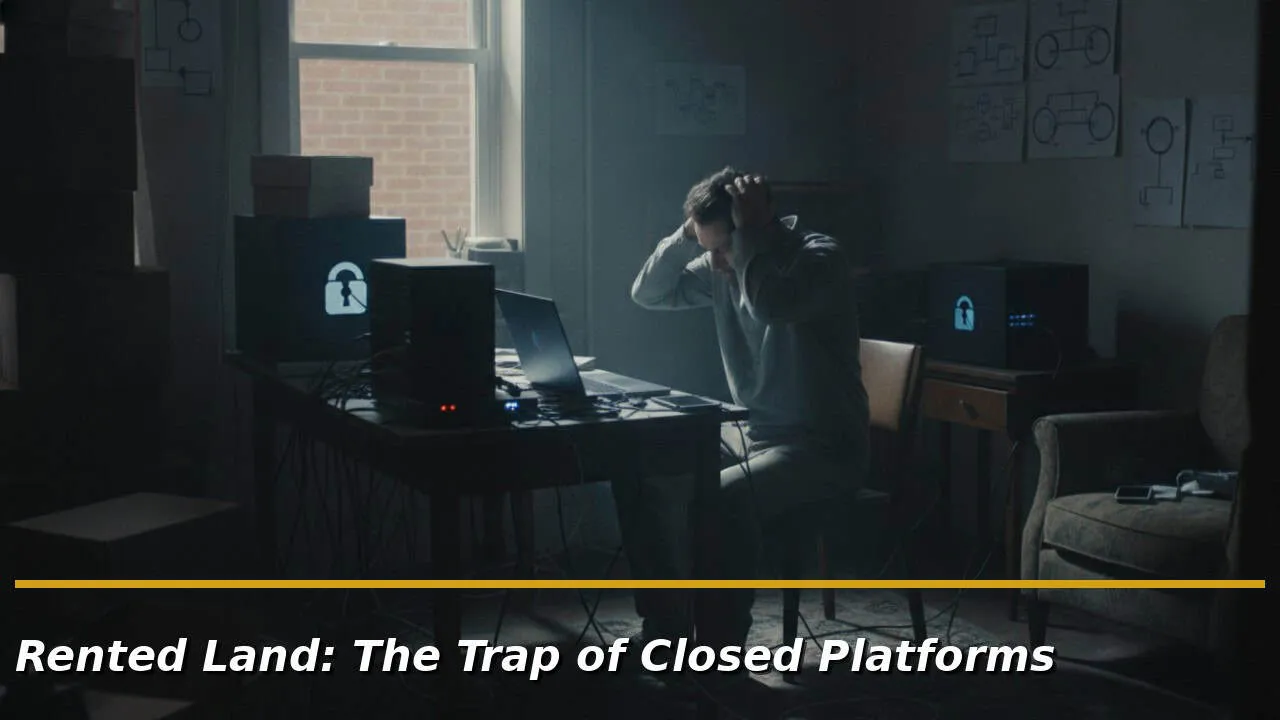
Most DIY builders operate on proprietary, closed architectures. This means you do not actually own your website. Design files, database, category hierarchies, and even domain configurations are tied directly to their servers. If you outgrow the platform or decide you want to work with a professional developer to scale your marketing, you cannot migrate the site. You must discard it completely and rebuild your digital footprint from scratch.
2. The True Cost of Rebuilding
The twenty-nine-dollar monthly fee is a marketing illusion. As your business scales and you require advanced features to handle inbound leads, the hidden subscription costs accumulate:
- Fees for custom domains and professional email hosting.
- Charges for premium plug-ins, lead capture forms, and integrated schedulers.
- Costs to remove platform branding and increase traffic limits.
- The ultimate cost of starting over and paying thousands of dollars for a professional rebuild once you realize your template is holding your business back.
 Related article
SEO vs. Angi vs. HomeAdvisor vs. Thumbtack: Which Generates Better Leads for Contractors?
For years, third-party lead aggregators (Angi, HomeAdvisor, and Thumbtack) dominated the home services market, acting as the primary bridge between homeowners and contractors. As we move into the AI age, that dominance is being challenged. Rising platform costs, deteriorating lead quality, and the compounding value of organic search have shifted the calculus. This analysis cuts […]
Part VI: The True Opportunity Cost: The Financial Math

Let’s compare the actual numbers to see how website performance impacts a Minnesota contractor’s annual revenue, modeling five hundred website visitors per month:
| Metric / Channel | Sluggish DIY Website | Professional Contractor Website |
| Monthly Visitors | 500 | 500 |
| Website Conversion Rate | 3 percent | 11 percent |
| Inbound Monthly Leads | 15 leads | 55 leads |
| Average Roofing Ticket | 15,000 dollars | 15,000 dollars |
| Closed Jobs (25% Close Rate) | 3.75 jobs | 13.75 jobs |
| Monthly Revenue | 56,250 dollars | 206,250 dollars |
| Annual Web Revenue | 675,000 dollars | 2,475,000 dollars |
By investing in professional web infrastructure, you capture an additional one million eight hundred thousand dollars in exclusive, high-ticket annual revenue. Professional website(s) are not a commercial luxury, but instead, a critical piece of business infrastructure.
| Metric | Historical Standard | Current Industry Benchmark | Strategic Performance Goal |
| Mobile Traffic Share | 35 percent | 58.4 percent mobile traffic | Optimize layouts for mobile tap targets |
| AI Search Discovery | 6 percent discovery share | 45 percent discovery share | Ensure schema-compliant data structures |
| Google Search Share | 83 percent discovery share | 71 percent discovery share | Keep Google Business Profile active |
| Consumer Acceptance | 17 percent reject below 4.5 stars | 31 percent reject below 4.5 stars | Maintain structured review requests |
| Average Lead Quality | Shared leads at 3 percent conversion | Exclusive leads at 11 percent conversion | Build dedicated high-intent landing pages |
| Average Lead Costs | Shared lead fees at $40 to $60 | Google Ads cost at $187 to $228 | Optimize organic local SEO profiles |
 Related article
The Contractor’s Website Checklist: 15 Features That Turn Visitors into Paying Customers
A contractor’s website is no longer a digital brochure. This year, it’s the most influential salesperson in the business. 84% of homeowners leverage Google and AI answer engines to research a contractor before making contact. 58.5% of searches now end without a click because AI provides answers directly on the results page. When the user […]
Part VII: Core Architecture of a Premium Website

A professionally built contractor website features clean, optimized code loading in under one second, ensuring search engine bots and homeowners find your platform immediately. It provides complete control over your search optimization, allowing you to implement custom sitemaps, robots.txt directives, and advanced schema structures.
By utilizing responsive, mobile-first design and placing localized trust signals at the center of the user experience, it acts as a high-performing filter to capture premium, exclusive leads. This digital infrastructure is built to scale alongside your business, adapting seamlessly to changing search algorithms and market conditions.
Part VIII: The Minnesota Battleground

The Twin Cities market is exceptionally competitive. High-intent terms like “remodeling contractors near me” are searched over twenty-two thousand times per month in Minnesota. If your template site cannot rank for these local searches, you are ceding this highly profitable traffic to your competitors.
Additionally, out-of-state storm chasers invest heavily in polished, professional web platforms to appear legitimate. When a local homeowner compares a storm chaser’s professional website with your lackluster one, they will call the storm chaser. A cookie-cutter template website makes you appear as an amateur, leaving high-ticket roof replacements in the hands of transient operators.
Conclusion: Stop Competing on Price
Running a cheap website template is a slow, quiet way to lose money. You can invest in an authoritative, professional platform that establishes your regional expertise, commands high-ticket margins, and operates as an exclusive lead engine. Or, you can pay a monthly template subscription and continue taking low-margin scraps from general contractors.
Installing a flawless roof is only a minor detail in running a successful contracting business; the owners who thrive are those who master their digital operations. Build a brand that survives, own your pipeline, and secure the financial future you deserve.
 Related article
The Boardroom Blueprint: Dodging the 4 Traps of New Roofing Businesses
Many new Minnesota roofing contractors fail not from poor craftsmanship, but instead, predictable business traps. Expanding overhead too quickly, managing operations from memory, overcomplicating client communication with technical jargon, and mismanaging seasonal cash flow are all common examples. Transitioning from a hands-on installer to a business owner requires keeping overhead lean by utilizing subcontractors, implementing […]
FAQs About Why Cheap Templates Cost Minnesota Roofers Six Figures
1. How does Google’s March 2025 Core Update penalize cheap template websites, and what are the direct consequences for a contractor’s local search rankings?
Google’s core updates prioritize semantic clarity, fast load speeds, and crawl efficiency. DIY builders load heavy, unoptimized JavaScript that forces crawlers to render pages client-side. Since search engine crawlers increasingly skip these heavy scripts to save resources, key metadata, local headers, and inner links remain unindexed. This code bloat severely suppresses your local organic visibility, keeping your business invisible in local search results.
2. How does the strict 14-factor worker classification test impact web agencies performing work on a Minnesota contractor’s digital systems?
Under Minnesota Statutes section 181.723, effective March 1, 2025, any external developer or agency performing services on your business systems is legally presumed to be an employee unless they meet a strict 14-factor test. To prevent severe misclassification penalties (which can reach $10,000 per violation), you must ensure the web partner operates as an independent business entity, maintains their own tools, files business tax returns, and operates under a signed, dated written contract fully executed within 30 days of work commencing.
3. What are the specific sales and use tax guidelines regarding the purchase of software-as-a-service (SaaS) website builders versus custom agency design in Minnesota?
Under Minnesota Department of Revenue guidelines, monthly subscriptions for SaaS website builders are classified as taxable purchases of prewritten computer software. Conversely, custom website design, strategy, and development services provided by an agency are generally exempt from Minnesota sales tax, provided the final product is delivered electronically and does not include tangible personal property. This tax exemption makes custom development highly cost-effective for growing businesses.
4. Why does the exclusion of licensed Residential Roofers from the Minnesota Contractor Recovery Fund make clear web-based disclosures and liability insurance listings critical?
Because licensed Residential Roofers do not participate or pay assessments into the Contractor Recovery Fund under Minnesota Statutes section 326B.89, homeowners have no state-backed financial safety net if a dispute occurs. This exclusion increases your direct civil liability, as clients can target your business and personal assets directly or pursue your $15,000 roofer surety bond. Transparently displaying active general liability policy, workers’ compensation compliance, and bond credentials on your website builds immediate trust and reduces litigation risks.
5. What are the federal legal guidelines regarding the use of stock images and manufactured reviews on a Minnesota contractor’s website?
The Federal Trade Commission enforced a strict Consumer Review Rule carrying civil penalties of up to $53,088 per violation for deceptive online marketing practices. This rule prohibits procuring, writing, or organizing fake or employee-written reviews, as well as selectively suppressing negative feedback. Additionally, displaying out-of-state storm photos or stock shingle patterns without disclosing they are stock violates state consumer protection laws regarding deceptive advertising, making authentic, local on-site photography legally and commercially mandatory.