







A kitchen remodeler in Minneapolis has 4,200 Instagram followers and posts polished before-and-after photos three times a week. Engagement is consistent. Comments pour in. The account looks like a thriving business. But when a homeowner in Edina searches “kitchen remodeler near me” on Google, the firm is nowhere to be seen. No website, MapPack listing, or AI search citation. The customer calls one of the three contractors who does appear and books a $45,000 project. This Instagram account never knew the lead existed.
What occurred is the social media trap: high visibility within a platform, invisibility everywhere that converts. Social media is where kitchen remodeling inspiration lives. It is not where hiring decisions are made. According to home improvement marketing research, 83% of homeowners begin their formal search for a contractor through a search engine, not a social feed. A website is the asset that captures that search intent and converts into a consultation.
Key Takeaways
- 83% of homeowners use search engines, not social platforms, to find and vet contractors before hiring
- Facebook business posts reach only 2 to 5% of followers organically; social visibility requires constant paid promotion to sustain
- A website is an owned asset: social media accounts can be suspended, restricted, or algorithm-changed without notice
- The Google Map Pack drives 44% of all local search clicks; ranking in it requires a website linked to a verified GBP
- AI search platforms use website content for the majority of their local citations; social media posts are not indexed by these tools
1. What Social Media Does Well, and Where It Stops

Social media genuinely earns its place in a kitchen remodeler’s marketing mix. Instagram and Pinterest are powerful inspiration platforms as research shows that one in three homeowners spends more on a project because of content seen on social media. Short-form video and behind-the-scenes content humanize a brand and build familiarity with audiences who may hire months or years down the line. For remodelers, these platforms are an efficient way to let their craft speak louder than words.
But the mechanics of social media work against conversion at the moment of highest intent. Organic reach for business pages on Facebook has declined to 2% to 5% of followers. A remodeler with 2,000 followers reaches 40 to 100 people per post, and only those who happen to be scrolling at that moment. Algorithms change without notice. A content strategy that works this month may be invisible next month. And crucially, social media does not index in Google. When a homeowner queries, “luxury kitchen remodeler near me,” no amount of IG engagement determines whether your business appears in those results.
Social media builds awareness. It does not build search visibility. Those are different problems requiring different tools.
 Related article
Kitchen Remodeling Website Ideas: How to Showcase Projects, Styles, and Budgets to Pre-Qualify Leads
The way homeowners find kitchen remodelers has changed forever. For years, the key ingredient was showing up on a list of links on Google. But this year, people are using smart AI tools like ChatGPT, Gemini, and Perplexity to do their homework. Instead of clicking on ten different websites, they ask, “Who is the best […]
2. The Specific Risks of a Social-Only Strategy

Beyond the organic reach problem, relying exclusively on social media exposes a remodeling business to risks most contractors do not price in until they are on the wrong side of them.
- Platform dependency. Your Instagram account, Facebook page, and TikTok are assets you do not own. The platform can suspend your account, change its algorithm, or alter their terms of service without warning. Contractors who have built their entire client pipeline on a single platform have lost years of content and customer relationships in 24 hours when accounts were flagged, hacked, or arbitrarily restricted.
- No AI search presence. AI platforms like ChatGPT and Google Gemini generate local business recommendations by indexing structured website content and Google Business Profile data. They do not crawl social media posts. A remodeler with no website is entirely invisible to the growing share of homeowners utilizing an AI assistant for the best kitchen remodeler in their suburb. That invisibility is not recoverable through more social posts.
- No high-intent capture. Social media users are in discovery mode, not hiring mode. The same homeowner who saves your Reel on a Tuesday evening will search Google on a Saturday morning when they are ready to book a consultation. If your business stays invisible in that search, the Reel did not generate a lead.
- Inconsistent lead quality. Leads stemming from social DMs are often early-stage browsers without a defined budget or timeline. The vetting that occurs when a consumer discovers you through search, reads your reviews, checks your portfolio, and confirms your credentials produces a fundamentally different, more qualified prospect at the point of first contact.
 Related article
Local SEO Drives Qualified Leads for Minnesota Kitchen Remodelers
A homeowner in Woodbury has been collecting kitchen inspiration on her phone since October. By February, she is ready to move from planning to hiring. Searching, “best kitchen remodeler near me” the top 3 results appear. One has a portfolio organized by project style, suburb-specific reviews, and a transparent cost guide. The other two show […]
3. Website vs. Social Media: What Each Channel Actually Delivers

| Function | Professional Website | Social Media |
|---|---|---|
| Ownership | You own the asset and all data | Rented space; platform controls access |
| Search visibility | Ranks in Google Maps and AI search | Not indexed by Google or AI platforms |
| Lead intent | High: homeowners actively searching | Low to medium: discovery and inspiration |
| Content lifespan | Evergreen: compounds over months and years | Hours to days before algorithm suppression |
| Conversion rate | 14.2% for AI search traffic | 1.6 to 1.8% average for social referrals |
| Trust verification | License, insurance, reviews, credentials | Limited: bio field and informal posts |
| After-hours capture | Contact forms and booking tools work 24/7 | DMs go unanswered until morning |
4. How a Website Generates Leads Social Media Cannot

A professional website earns leads from three channels that social media cannot: Google organic search, Google Map Pack, and AI search platforms. Each requires different technical infrastructure, all of which lives on the website.
The MapPack, the three business listings that appear at the top of Google’s results for local service queries, drives 44% of all local search clicks according to local SEO research. Being included requires a verified Google Business Profile linked to a professional website that demonstrates service relevance and location authority. A remodeler with no website cannot rank in the MapPack, no matter the number of Instagram followers.
AI search tools are an emerging second channel of high-value traffic. Customers asking ChatGPT or Google Gemini, “who is the best kitchen remodeler in Minnetonka” receive recommendations drawn from structured website content, review substance, and GBP data. These AI-referred leads convert at 14.2%, five times higher than traditional organic traffic, according to local SEO research. They arrive pre-qualified by the AI’s own vetting process. A remodeler without a website simply does not exist in these recommendations.
 Related article
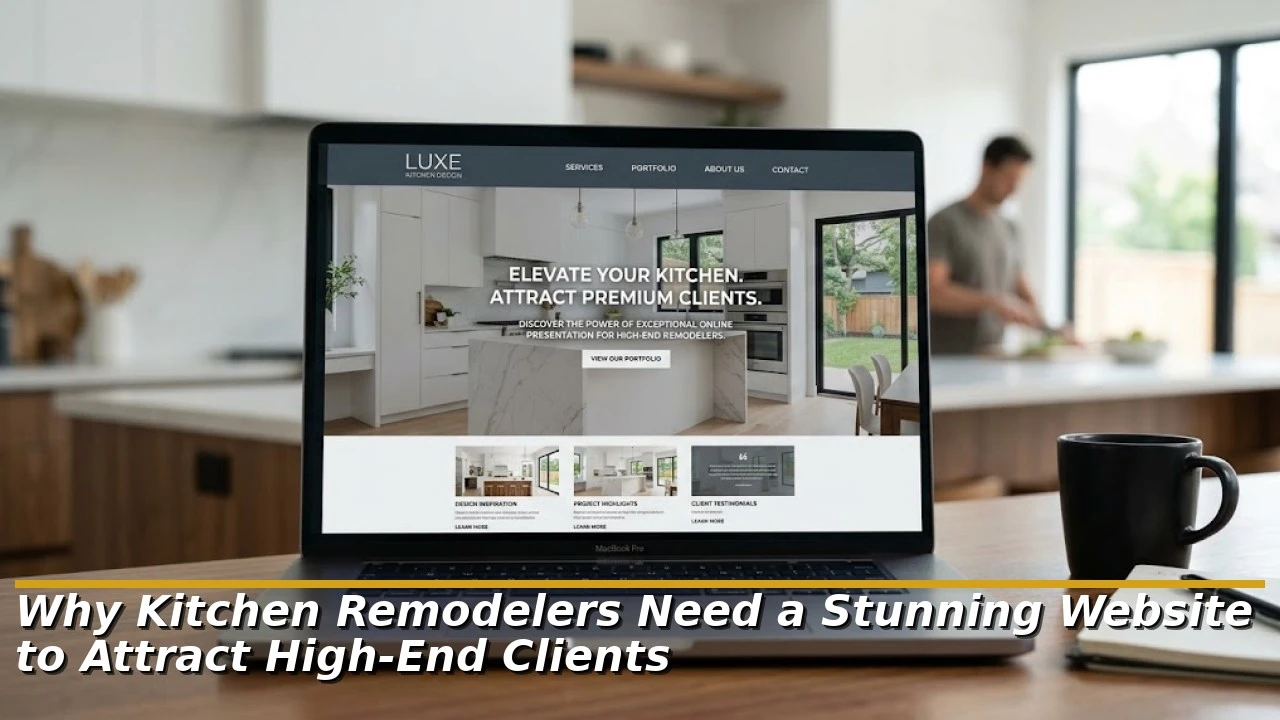
Why Kitchen Remodelers Need a Stunning Website to Attract High-End Clients
A homeowner is planning to fully renovate their kitchen. Budget: $80,000. She spends two hours reviewing five contractor websites before making the first call. Two sites use stock photos and lack pricing context. One loads slowly and shows a cluttered gallery with no project descriptions. The fourth has a polished layout, professional photography of real […]
5. How Social Media and a Website Work Together

The most effective kitchen remodelers utilize social media and a website as a system, not competing channels. Social media serves the top of the funnel: Instagram and Facebook content creates awareness, builds familiarity, and drives traffic toward specific portfolio entries or cost guides on the website. The website serves the bottom of the funnel: it converts that interest into a consultation through trust signals, pricing transparency, and frictionless contact options.
In practice, this means every social post with real project content should link to a dedicated portfolio page on the website, not just a homepage. Clients saving a Reel of a Shaker kitchen renovation should be one tap away from a page that shows more projects like it, includes reviews from similar clients, and explains the firm’s process and pricing range. That path from inspiration to consultation is what social media alone cannot provide.
6. Two Remodelers, Same Market, Different Foundations

Both serve the Minneapolis metro. Both produce high-quality work. Both are active on Instagram with engaged followings.
Remodeler A has no website. All their online presence lives on social platforms. Lead flow comes from DMs and occasional Facebook recommendations. Inquiries are inconsistent and largely from early-stage browsers. When a Minnetonka homeowner researches kitchen contractors before a $50,000 renovation, they do not appear. The project goes to a competitor with a website.
Remodeler B runs the same social accounts but added a professional website with suburb-specific service pages, a portfolio organized by kitchen style, 60 detailed reviews, and transparent cost guides. Their social content drives traffic to those pages. Their website ranks in the MapPack for their top three suburbs. AI search recommendations include their firm by name. Lead quality improved immediately: homeowners arrive having already reviewed the portfolio, pre-sold on the firm before the first call.
Social media gave both remodelers visibility. The website gave one of them to customers.
 Related article
12 Trust Signals Every Home Improvement Contractor Website Needs to Convert Visitors into Clients
Trust is the most valuable tool for any home improvement contractor. For years, the goal was to appear up on the first page of Google. Today, we have entered the age of AI search. People now ask tools like ChatGPT and Gemini for direct advice on who to hire. These programs not only rank websites […]
Conclusion
Social media is a genuine asset for kitchen remodelers. It builds brand familiarity, showcases craft visually, and reaches homeowners in the early stages of their renovation journey. But they are unable to replace a website as the foundation of a sustainable lead generation system. It cannot appear in Google search results. It does not rank in the Google MapPack. It does not earn AI search citations. It does not provide clients the depth of vetting they need before committing to a $40,000 project.
A professional website is the owned asset that converts social visibility into booked jobs. Every investment made in local SEO, review collection, and portfolio organization compounds in value month over month. Social media is the conversation. The website is where the contract gets signed.
Does your business exist where homeowners actually hire?
Search “kitchen remodeler near me” from your top target suburb right now. If your business does not appear in the MapPack, you are invisible to the homeowners who are ready to hire. Your Instagram followers cannot find you on Google. Start with three actions this week: claim or update your Google Business Profile, link it to even a basic website, and add two project photos. Those steps alone begin building the search visibility that social media cannot provide.
 Related article
Home Improvement Contractor Website Structure: Pages That Rank and Convert Local Homeowners
The way homeowners find contractors online is changing rapidly. For years, the goal of a construction company was simple: show up on the first page of Google. But today, we are in the thick of the era of AI search. People are no longer just sorting through a list of links. They are asking smart […]
FAQs About Why Social Media Alone Isn’t Enough: The Case for a Website for Kitchen Remodelers
1. Do kitchen remodelers need both a website and social media?
Yes, and the roles are distinct. Social media creates awareness and drives discovery among homeowners in the early inspiration phase. Your website handles the conversion: it is where homeowners verify credentials, compare portfolios in depth, verify price ranges, and make the decision to call. According to home improvement marketing research, 83% of homeowners use search engines to formally vet a contractor before hiring. Without a website, you are invisible at the moment that matters most. Social media without a website is marketing without a destination.
2. Can high-ticket kitchen remodeling clients be won through Instagram alone?
Rarely, and not predictably. Homeowners planning a $30,000 to $55,000 kitchen renovation spend an average of 2.5 hours researching before making contact. They expect a professional website including detailed case studies, verifiable credentials, transparent pricing context, and a clear process description. A social media profile cannot support that depth of vetting. It can introduce a remodeler. It cannot close the research phase for a high-stakes financial commitment.
3. What is the biggest risk of building a business on social media alone?
Platform dependency. Your Instagram account, Facebook page, and TikTok profile are assets you do not own. Platforms can restrict, suspend, or algorithmically suppress a business account without warning. Contractors who experienced this lose years of content, follower relationships, and lead history overnight, with no recourse. A website is an asset you own outright. The content, rankings, and authority built through it persist regardless of what any individual platform decides.
4. How much does a professional kitchen remodeling website cost?
A template-based site with basic customization typically runs $3,000 to $6,000, sufficient for smaller or newer firms. For established remodelers targeting high-income suburbs with $20,000-plus average projects, a custom-built site with suburb-specific service pages, portfolio organization, and local SEO architecture runs $6,000 to $12,000. The more useful benchmark is cost per lead. Well-optimized websites generating organic leads at $74 each, compared to aggregator platforms at $135 per shared lead. This pays for itself within a single season for most active firms.
5. How do I use social media to support my website rather than replace it?
Treat every social post as a signpost rather than a destination. When you publish a before-and-after of a Shaker kitchen renovation, link the post to the dedicated portfolio page on your site for that project type. When a tip about quartz countertop maintenance, link to the FAQ section of your kitchen services page. This approach turns social engagement into website traffic, which builds SEO authority, earns MapPack rankings, and enables the kind of lead capture that a social DM cannot. Your social following becomes fuel for a website as opposed to a substitute.