






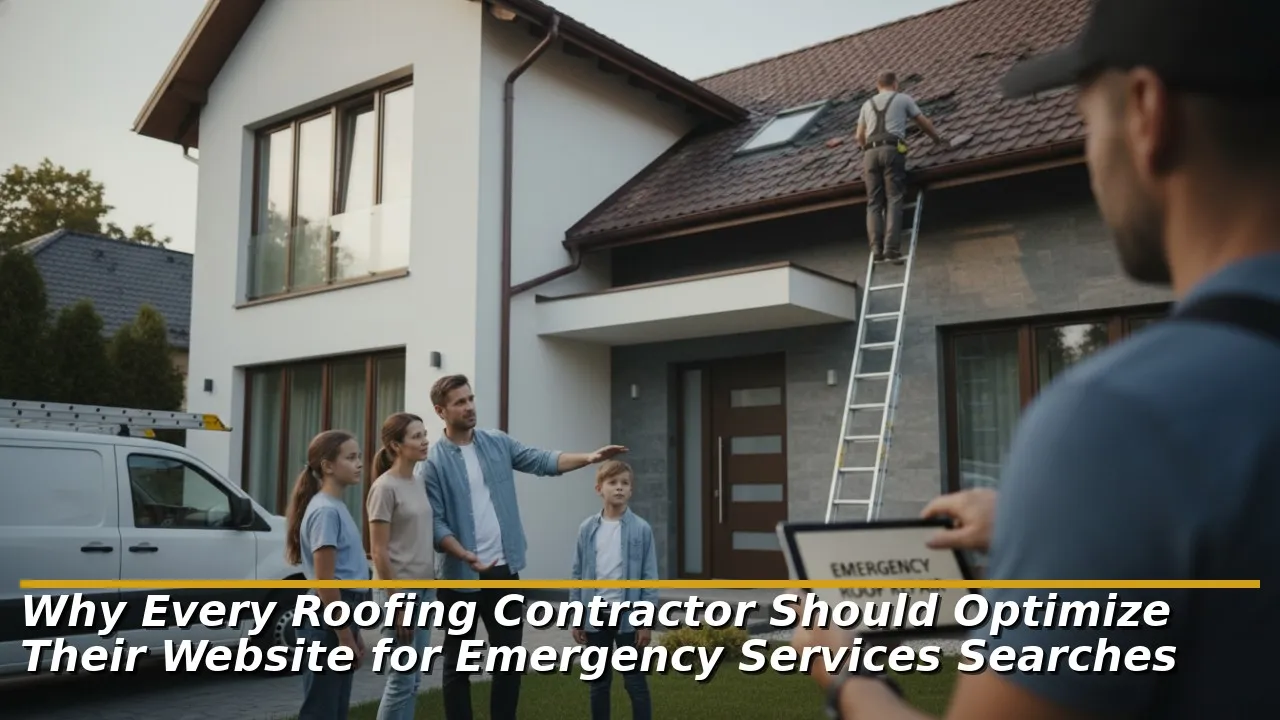
At 11 PM on a Thursday, water is dripping through a homeowner’s kitchen ceiling. She opens Google, types “emergency roofer near me,” and calls the first result showing a 4.9-star rating, 24/7 badge, and phone number that loads before anything else. The entire decision takes under four minutes. The contractor who appears in that Map Pack secures a $14,000 job. The contractor ranked fourth never knows it was available.
Emergency roofing searches are the highest-converting query type in the home services sector. When water is entering a home, price comparison stops and urgency floods in. Research shows that 40% of homeowners hire the first trustworthy roofer they find online during a crisis, and 78% hire the first company that responds. Optimizing specifically for emergency search queries is not a specialty tactic for large firms. It is the single highest-ROI digital investment available to any roofing contractor, regardless of size.
Key Takeaways
- Emergency roofing leads convert at 15% to 25% on mobile, more than double the 6 to 12% for planned replacement searches
- Google actively hides businesses without verified open hours for urgent queries, making accurate 24/7 GBP hours mandatory
- 40% of homeowners hire the first trustworthy roofer they find online during a crisis: appearing first IS winning the job
- Dedicated emergency service pages with structured schema give AI platforms the content they need to recommend you for urgent queries
- A 1-second mobile load delay drops conversions by 20%: in a crisis search, every second is a measurable lead loss
1. Emergency vs. Planned: Two Completely Different Search Experiences
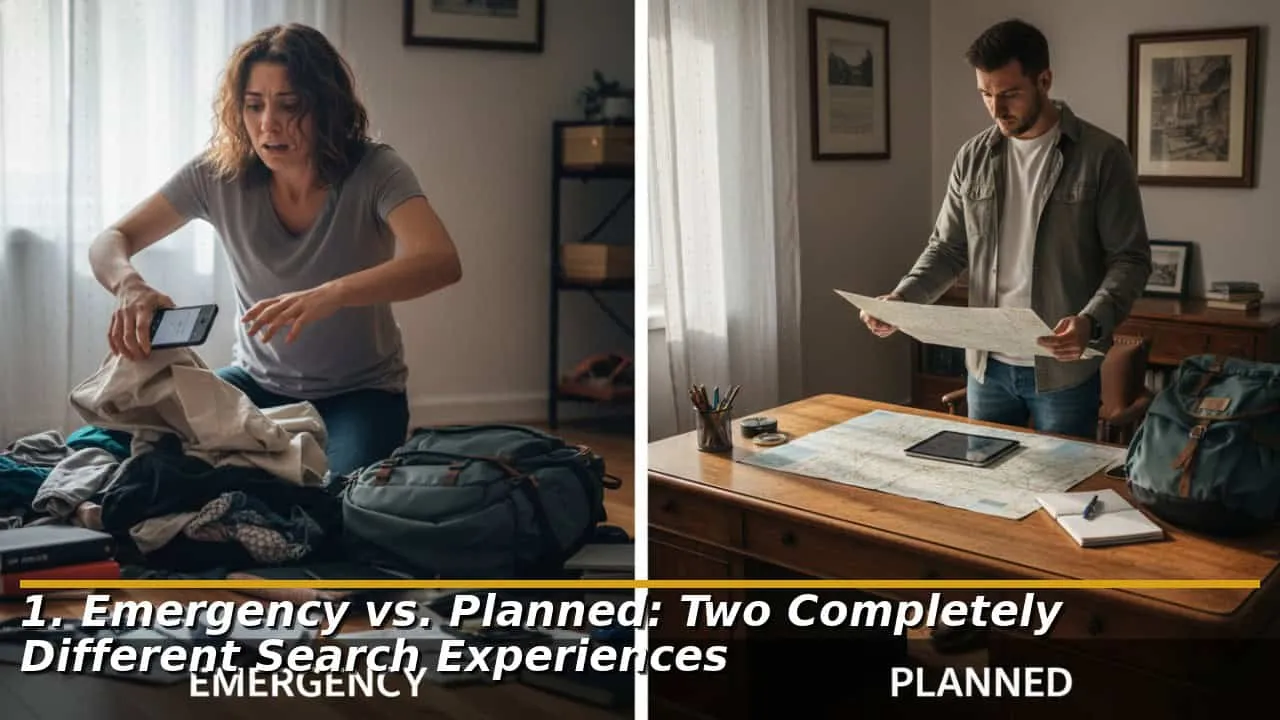
A homeowner researching roof replacements in April is a researcher. They have weeks, multiple quotes to compare, and no immediate pressure. A homeowner with water on their ceiling late at night is in crisis. They have minutes, one decision to make, and zero tolerance for friction. These two visitors require entirely different content, page architecture, and conversion paths.
The critical insight is that most roofing websites are built for the researcher and completely fail the crisis caller. Long service descriptions, detailed material comparisons, and portfolio galleries requiring scrolling all serve a visitor with time and patience. The emergency visitor needs three things visible before anything else loads: you are available right now, located nearby, and other people trust you. Everything else on the page is noise to them.
| Search Type | Decision Window | Mobile Conversion | What They Need First |
|---|---|---|---|
| Planned replacement | 3 to 14 days | 6% to 12% | Portfolio, pricing, process |
| Emergency repair | 3 to 10 minutes | 15% to 25% | 24/7 availability, local proof, one-tap call |
 Related article
How Local SEO Helps Roofing Companies Dominate “Roof Repair Near Me” Searches in Minnesota
A hailstorm moves through the western Twin Cities suburbs on a Tuesday afternoon. By evening, homeowners in Maple Grove, Rogers, and Plymouth are searching their phones for “roof repair near me.” The three roofing companies that appear at the top of the Map Pack take calls for two weeks. Those not appearing watch a season’s […]
2. Why Google Treats Emergency Searches Differently
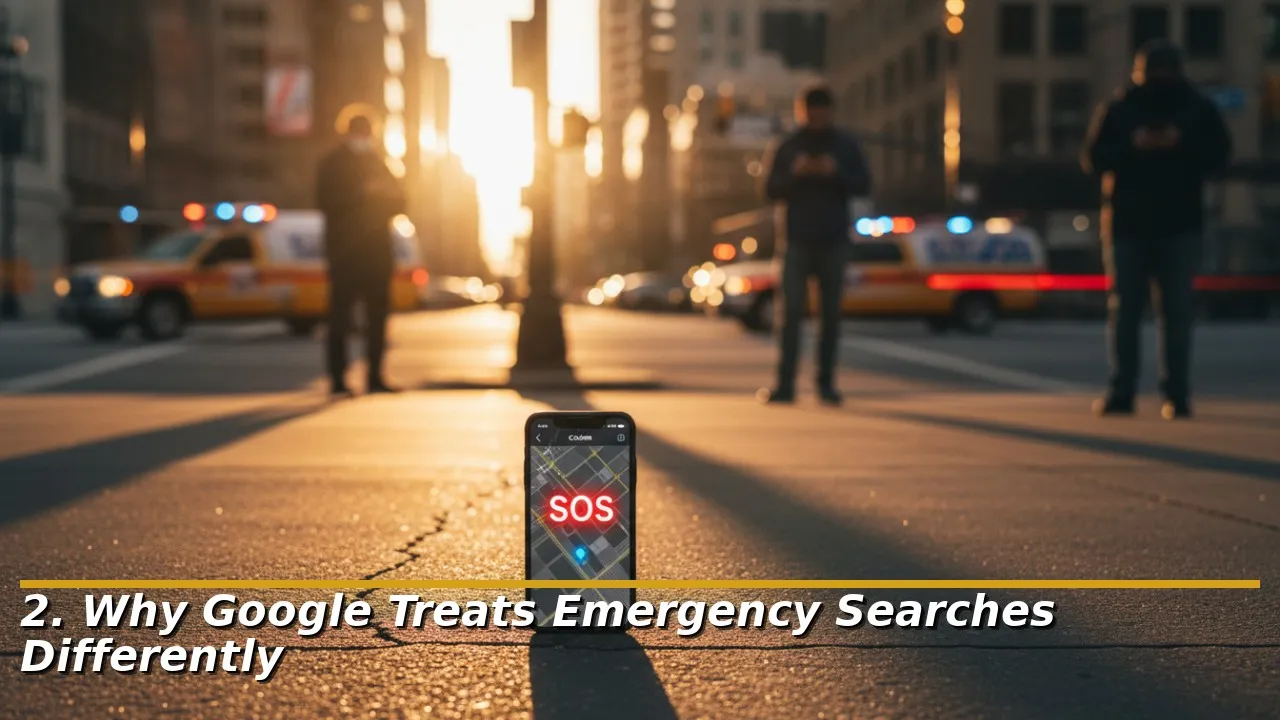
Google’s local algorithm weights the openness signal heavily for urgent, time-sensitive queries. For searches including “emergency,” “24 hour,” or “open now,” the search engine actively filters out businesses whose Google Business Profile shows them as closed at the time of the search. A roofing contractor with exceptional reviews and a well-optimized site can become completely invisible in the Map Pack for post-storm evening searches if their GBP hours show they close at 5 p.m.
This is among the most under-addressed optimization gaps in the roofing industry. Resolving takes minutes: update your GBP to reflect your genuine emergency availability, add a secondary after-hours phone number (if applicable), and ensure all website emergency messaging matches verbatim what the GBP states. Inconsistency between the two signals reduces the confidence score Google uses to rank you for urgent queries.
AI search platforms apply a similar logic. When a homeowner asks ChatGPT or Google Gemini “who is the most reliable emergency roofer open right now in Plymouth?”, the AI synthesizes GBP data, website content, and review substance to generate a recommendation. Contractors whose emergency availability is clearly stated on both their GBP and their dedicated emergency service page is the one the AI recommends. One without that structured alignment is invisible to the recommendation engine entirely.
 Related article
How a Roofing Website Builds Trust with Homeowners After Storm Damage
A hailstorm passes through a Minneapolis suburb on a Friday afternoon. Once evening rolls around, the homeowner has water staining on her ceiling and an insurance claim she does not know how to file. On her phone, she frantically researches, “emergency roofer near me” and opens the first two results. One shows a stock photo, […]
3. Seven Optimization Strategies for Emergency Roofing Searches
- Create a dedicated emergency services page. A standalone page titled “Emergency Roof Repair” or “24/7 Storm Damage Response” with question-based headings, including“How fast can a roofer respond to a leak?” earns AI citations and ranks for emergency-intent keywords that your main services page cannot capture. Structure the page with LocalBusiness and FAQPage schema markup so engines can extract and recommend your emergency availability by name.
- Verify accurate 24/7 hours on your GBP, then match them on your site. This single change can dramatically increase your visibility for after-hours storm searches, the highest-converting queries a roofer can capture. Your GBP hours and emergency availability statement must say the same thing. Contradiction between the two reduces your entity confidence score.
- Target emergency-intent keywords with their own content. Notable keywords of, “emergency roof repair near me,” “24-hour roofer,” and “hail damage repair open now” carry different intent than “roof replacement cost.” Each deserves a page or section designed for that searcher’s specific urgency. Include response time claims, availability language, and insurance claim assistance messaging in that content.
- Place a 24/7 emergency badge in the hero section, above the fold. Someone discovering a leak at midnight and landing on your homepage needs to see immediately that you are available. Not in the footer or a dropdown. A bold badge or header line in the hero section, before any scrolling, is the fastest trust signal your site can deploy for crisis visitors.
- Achieve a sub-2-second mobile load time. Each additional second of load time lowers conversions by 20%, according to HubSpot research. For an emergency searcher operating on a 4-minute decision window, a 4-second load means they have already called the next result. Compress images to WebP format, install a caching plugin, and use a CDN. Speed is not a technical nicety for emergency optimization. It is the first conversion requirement.
- Build suburb-specific emergency landing pages. A page titled “Emergency Roof Repair in Maple Grove, MN” with a local storm response review, a mention of the area’s most common weather damage types, and accurate response time language outranks a generic emergency page for suburb-level searches. They also earn AI citations for location-specific emergency queries.
- Operationalize emergency-specific review prompting. After every emergency job, ask the client to note response speed, the specific damage type, and their suburb in their review. Reviews describing, “same-day emergency repair after the Rogers hailstorm, crew arrived in under 90 minutes” signals emergency reliability to both Google’s algorithm and AI recommendation engines. Ones mentioning speed and responsiveness carry outsized weight for emergency search rankings.
 Related article
Digital Marketing for Roofing Contractors: Website Features That Drive More Calls
Two roofing contractors each spend $2,000 a month on Google Ads. Both target the same keywords, serving the same market. One averages 22 booked jobs a month. The other,11. This difference is not their ad spend, bid strategy, or service area. It is what happens after someone clicks their ad. One contractor’s website converts. The […]
4. The Three Mistakes That Make Roofers Invisible in Emergency Searches
- GBP hours that say “closed” during peak storm search times. Post-storm searches spike in the evening and at night, when most residential roofing GBP listings show as closed. Workers willing to take emergency calls at 10 p.m. but whose GBP hours end at 5 PM are invisible for the highest-converting query window of the day. Update GBP hours to reflect genuine availability.
- No dedicated emergency page with structured schema. Someone whose entire emergency offering is a bullet point on their main services page is competing against firms with standalone emergency pages, schema markup, and answer-first FAQ content. AI search platforms cannot recommend you for emergency queries they cannot verify from structured data.
- Doorway pages with copy-pasted emergency content. Creating suburb-specific emergency pages by simply swapping the city name while leaving the body text identical triggers duplicate content penalties. Each page must contain unique local references: a recent local storm event, review(s) from client(s) in that neighborhood, or a callout about the area’s most common roofing damage patterns.
5. Same Storm, Two Different Digital Positions
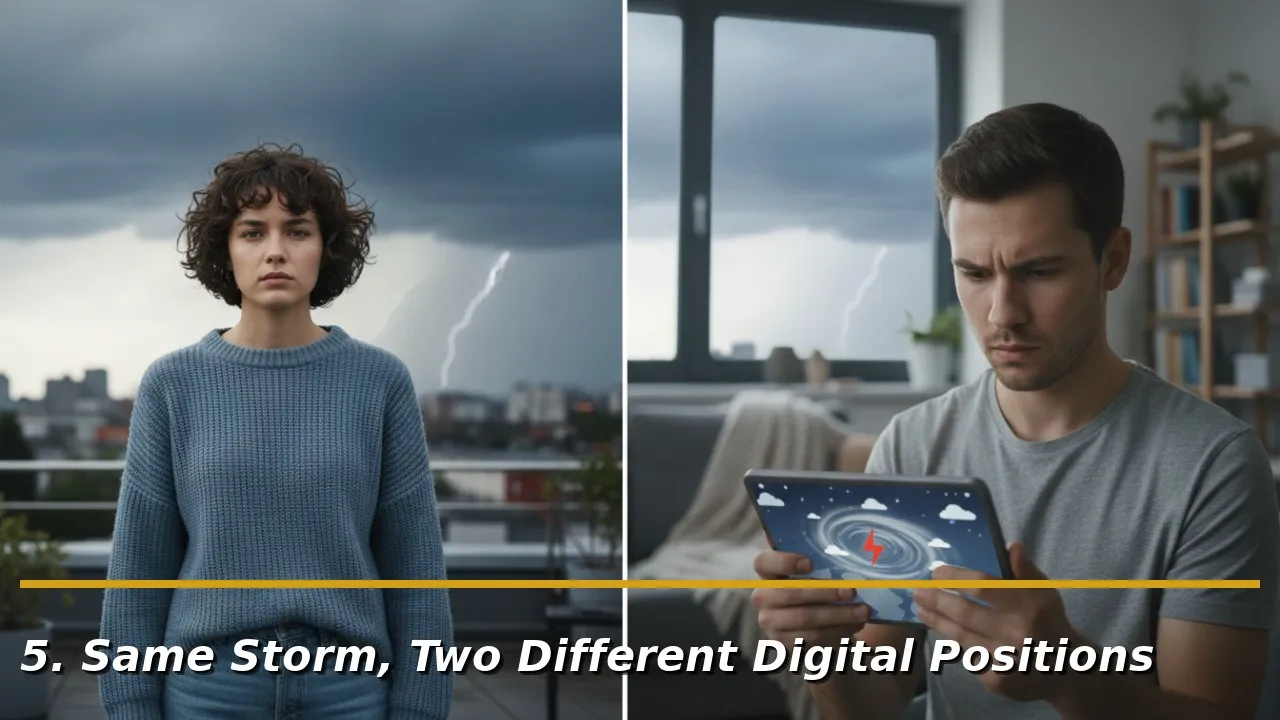
A hailstorm moves through the north metro on a Tuesday afternoon. Two contractors serve the same suburbs.
Roofer A has a 2019 website. One services page, no emergency-specific section. GBP hours show closed after 5 p.m. Eight reviews, none mentioning response time. Load time: 4.5 seconds. In the post-storm evening search surge, they are invisible in the Map Pack at all. The calls go to competitors.
Roofer B has a dedicated emergency page with FAQPage schema and response time commitments. GBP shows 24/7 availability. Fifty-two reviews, 30 of which mention emergency response or same-day service. Load time: 1.7 seconds. A sticky header carries a click-to-call button and a “24/7 Storm Response” badge. They pop up in the Map Pack for every post-storm evening search in the affected suburbs. They book eleven jobs in four days.
The storm was the same. The optimization was not. Every emergency job Roofer B books is a job Roofer A never knew was available.
Conclusion
Emergency roofing searches are coveted for their high conversion and value query type in local home services. Homeowners searching at midnight after a storm are not comparison shopping. They are calling the first contractor who looks reliable, is verifiably available, and appears nearby. Whether that outreach goes to you or a competitor is determined entirely by optimization decisions made months before the storm arrived.
Every emergency page built, every GBP hour corrected, every response-time review collected, and every suburb-specific emergency landing page published is an investment that compounds across every storm that follows. The contractors who build this infrastructure before they need it fill their schedules after every major weather event. Those who build it after are already too late for that season.
Is your business visible when the next emergency search happens?
Open your Google Business Profile right now and check three things: do your hours show 24/7 or emergency availability? Does your website have a dedicated emergency services page? Do any of your top ten reviews mention response speed or same-day service? Those three checks take five minutes and will show you exactly where your emergency optimization is missing. Fix your GBP hours first. That single change can move you into the Map Pack for post-storm evening searches before the next weather event arrives.
 Related article
Which Website for Roofing Contractors Generates More Leads: DIY or Pro?
The roofing industry is one of the most competitive spaces in local home-related website searches. For a roofing contractor, the digital landscape has shifted from a simple list of links to a complex ecosystem where AI companions now provide direct recommendations. Homeowners facing a sudden leak or storm damage no longer just browse; they ask […]
FAQs About Why Every Roofing Contractor Should Optimize Their Website for Emergency Services Searches
1. How should roofing contractors use Google Ads to complement emergency SEO?
Emergency SEO and paid search serve different timelines. Organic emergency optimization takes three to six months to build Map Pack authority. Google Ads and Local Service Ads (LSAs) can capture emergency queries immediately, before organic rankings are established, and fill in any gaps in Map Pack coverage. The most effective approach is to run emergency-keyword ad campaigns, like “emergency roof repair near me” and “24-hour roofer [city],” with ad copy that mirrors your emergency page messaging: response time, availability, and insurance claim assistance. LSAs carry a Google Guaranteed badge that adds a platform-verified trust layer particularly effective for emergency searchers who have seconds to evaluate options. Use paid ads as a bridge while SEO builds, then scale back paid spend as organic visibility compounds.
2. What response time should a roofing contractor state on their emergency page?
Specificity converts better than vague availability language. “We aim to respond quickly” is forgettable. “Emergency response within 90 minutes in the Twin Cities metro” is a commitment that a stressed homeowner can anchor to. If your actual response time for emergency calls is reliably under two hours, state it explicitly on your emergency page and emergency badge. Research on home service marketing consistently shows that specific response time claims outperform generic “24/7” messaging in conversion testing. The claim must be honest: overpromising and underdelivering produces the negative emergency reviews that are the hardest to overcome, both algorithmically and reputationally.
3. How can roofing contractors compete against storm chasers in emergency search results?
Storm chasers, out-of-state contractors who follow weather events and operate temporarily in affected markets, often attempt to rank for local emergency queries by building fast temporary landing pages. Local contractors have a structural advantage they rarely use fully: permanence. A permanent local roofer has a verified physical address, history of local reviews, community citations from local organizations, and Google Business Profile with consistent activity over years. These signals cannot be fabricated quickly. Strengthen them before storm season by earning links from local chambers and trade associations, accumulating reviews that mention specific local neighborhoods, and publishing content that references local building codes and weather patterns. That local authority compounds each season and becomes increasingly difficult for a temporary storm chaser to displace.
4. Should roofing contractors offer automated response tools for emergency after-hours inquiries?
Yes, and it directly affects conversion rate. Research on home service businesses found that the speed of first response dramatically influences whether a lead converts: calling back within one minute increases conversion rates significantly compared to calling back ten minutes later. For emergency inquiries that arrive after business hours through a contact form or chat widget, an automated SMS or email response that acknowledges the inquiry, states your response time, and provides an emergency phone number keeps the lead warm until a team member can call. AI chatbots configured for emergency triage, qualifying the damage type and location before routing to an on-call technician, are increasingly common among high-volume roofing firms, reducing the gap between inquiry and qualified call-back to under five minutes.
5. How does optimizing for emergency searches affect a contractor’s planned replacement lead flow?
Positively, and in a compounding way. Emergency optimization improves the same technical signals supporting all local roofing rankings: Map Pack prominence, GBP activity, review velocity, and page speed. A contractor who dominates emergency search queries in their market builds the local authority that also lifts them in planned replacement searches over time. Additionally, emergency calls frequently convert into full replacements: those calling for an emergency repair on a 15-year-old roof learns during the assessment that a full replacement is the better financial decision. Contractors establishing the emergency relationship first capture the replacement job that follows, often without competing with other firms at all. The emergency optimization investment has two revenue streams: the immediate repair revenue and the downstream replacement revenue from the same client relationship.