








The way homeowners find contractors online is changing rapidly. For years, the goal of a construction company was simple: show up on the first page of Google. But today, we are in the thick of the era of AI search. People are no longer just sorting through a list of links. They are asking smart tools like ChatGPT, Gemini, and Perplexity for direct help. They ask questions like “Who is the most trusted roofing contractor near me that offers a 20-year warranty?” or “How much does a kitchen remodel cost in my city?”
To be the business that AI recommends, your website must be re-thought and must be built like a data hub. It is no longer enough to have a pretty site with a few photos (even photos of your beautiful family). You need an organized site, so that both people and machines can understand your expertise. If your site is messy or thin with content, AI tools will not cite you as an authority. Let’s fix that! This guide will show you how to structure your service pages to rank for local searches, so you can turn that traffic into high-value customer leads.
Key Takeaways
- AI Discovery is Key: About 65% of search questions now go through AI companion tools as they provide answers. Your website must be structured so these tools can find and suggest your business.
- High Local Demand: “Remodeling contractors near me” is searched for approximately 22,200 time per month. A proper site structure captures this intent-driven traffic.
- Entity over Keywords: Modern search engines look for verified entities. What is an entity? A real business with consistent data across the web.
- Conversion Power: Top-performing contractor sites convert 11 percent of visitors into leads, while basic sites often convert less than three percent.
- Mobile Speed Matters: More than 60 percent of local online searches happen on smartphones. Even a one-second delay in page load can drop your incoming call volume significantly.
1. Why Website Structure Matters More Than Ever

The structure of your website is its foundation. Just like a house with a bad foundation will crack, a website with a poor structure will fail to bring in leads. Search engines use small programs to “crawl” your site and read the information. These programs look for a logical flow. They want to see a clear connection between what you do (services) and where you do it (locations).
Remember the stat above about 22,200 searches for “remodeling contractors near me”? There are another 4,400 searches monthly for “home repair contractors near me.” These users have high intent. They are not just browsing for ideas: they have a problem and are ready to pay a professional to solve it. This is your opportunity!
In the age of AI search, structure is even more vital. Tools like Google AI Overviews do not just spit out a list of websites: they summarize them into the best answer. To be the company mentioned in that summary (which is your goal), your content must be organized in a way that an AI can easily grab the data. This is often called “Answer Engine Optimization.” Without a clear structure, your brand effectively disappears when a homeowner is choosing between finalist vendors.
 Related article
12 Trust Signals Every Home Improvement Contractor Website Needs to Convert Visitors into Clients
Trust is the most valuable tool for any home improvement contractor. For years, the goal was to appear up on the first page of Google. Today, we have entered the age of AI search. People now ask tools like ChatGPT and Gemini for direct advice on who to hire. These programs not only rank websites […]
2. The Core Pages Your Website Must Have

A professional contractor website needs more than just a home page and a phone number. To build trust with both homeowners and AI engines, your site should follow a specific blueprint. Each of these pages serves a purpose in your sales funnel:
- Homepage: This is your digital front door. It should tell visitors exactly what you do and where you service customers within the first five seconds.
- Individual Service Pages: These are the most important pages for your rankings. Each big job you do (like kitchens, decks, or siding) needs its own deep-dive page.
- Location-Specific Pages: If you serve multiple towns, you need unique pages for each one. This helps you show up for “near me” searches in different markets.
- About Us Page: This is where you prove you are a real person. Share your company history, show photos of your team, and list your licenses.
- Project Portfolio: People want to see proof. An impressive photo gallery of your past work shows the quality and style of your construction projects.
- FAQ Page: Answering common questions directly on your site helps you win AI citations and voice search results.
- Contact Page: Make it very easy for people to reach you. This page should have your phone number, an email form, and a map, along with social media information.
A high-authority contractor website structure requires a clear order that separates services and locations. Search engines and AI assistants prioritize websites that use specific pages for each service and organized question-and-answer sections. This format provides the exact data bits needed for AI tools to recommend a business to local users based on their specific needs.
 Related article
Why Home Improvement Contractors Need a Website to Stand Out Locally in Minnesota
Search “roofing contractor Maple Grove” on your phone right now. The first three results in the Map Pack receive the overwhelming majority of calls. Slotted below, a contractor with no website, reviews, and local pages sits invisible. They may be the most skilled roofer on the list. This does not matter. In an oversaturated market […]
3. Building Service Pages that Rank in “Near Me” Searches
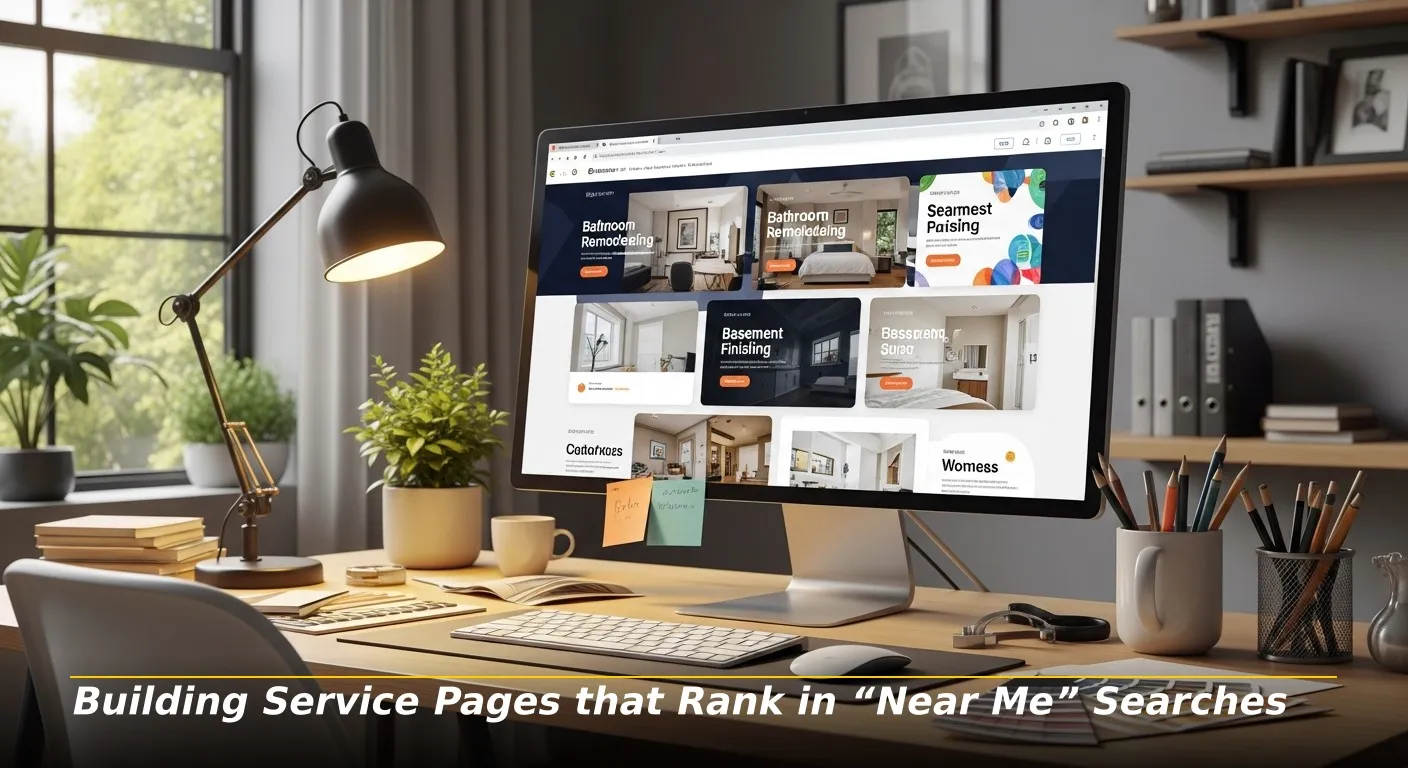
Service pages are the heart of your business. These pages tell what you do and how you do it. Most contractors make the mistake of putting all their services on one long page. This is a mistake because search engines want to see depth on a single topic. To rank for terms like “licensed electrician” or “kitchen remodeler,” every service area needs its own page on your site.
- Target One Service per Page: Instead of a general “remodeling” page, make a page for “Bathroom Remodeling” and a different one for “Basement Finishing.”
- Add Your City Name: Include your city or county in the main titles. For example: “Expert Roofing Services in [City Name].” This is the kind of data that AI likes to grab.
- Provide Real Detail: Aim for around 1,000 words each on your main service pages. Explain your process, the materials you use, and how you solve problems for homeowners.
- Use Clear Headings: Use titles and subtitle to organize the pages. Use questions as your subtitles, if possible, because that is how people talk to Siri or ChatGPT.
- Use Hidden Labels (Schema): There is a special kind of code called “schema markup” that tells search engines exactly what you offer. It acts like a digital label on a box, so the computer knows what is inside.
- Use Your Own Photos: Show pictures of your actual work, not stock photos. Name the photo files correctly, such as “new-deck-installation-city-name.jpg,” and add a one sentence description.
 Related article
How Local SEO for Plumbers Drives More “Plumber Near Me” Calls
It’s 9 PM on a Tuesday. A homeowner’s kitchen drain backs up. They grab their phone and type: “plumber near me“. The search results appearing in the next three seconds determine which plumber gets the call greater than any accolades or ads being run. More than 800,000 people search “plumber near me” on Google every […]
4. The Power of Location Pages
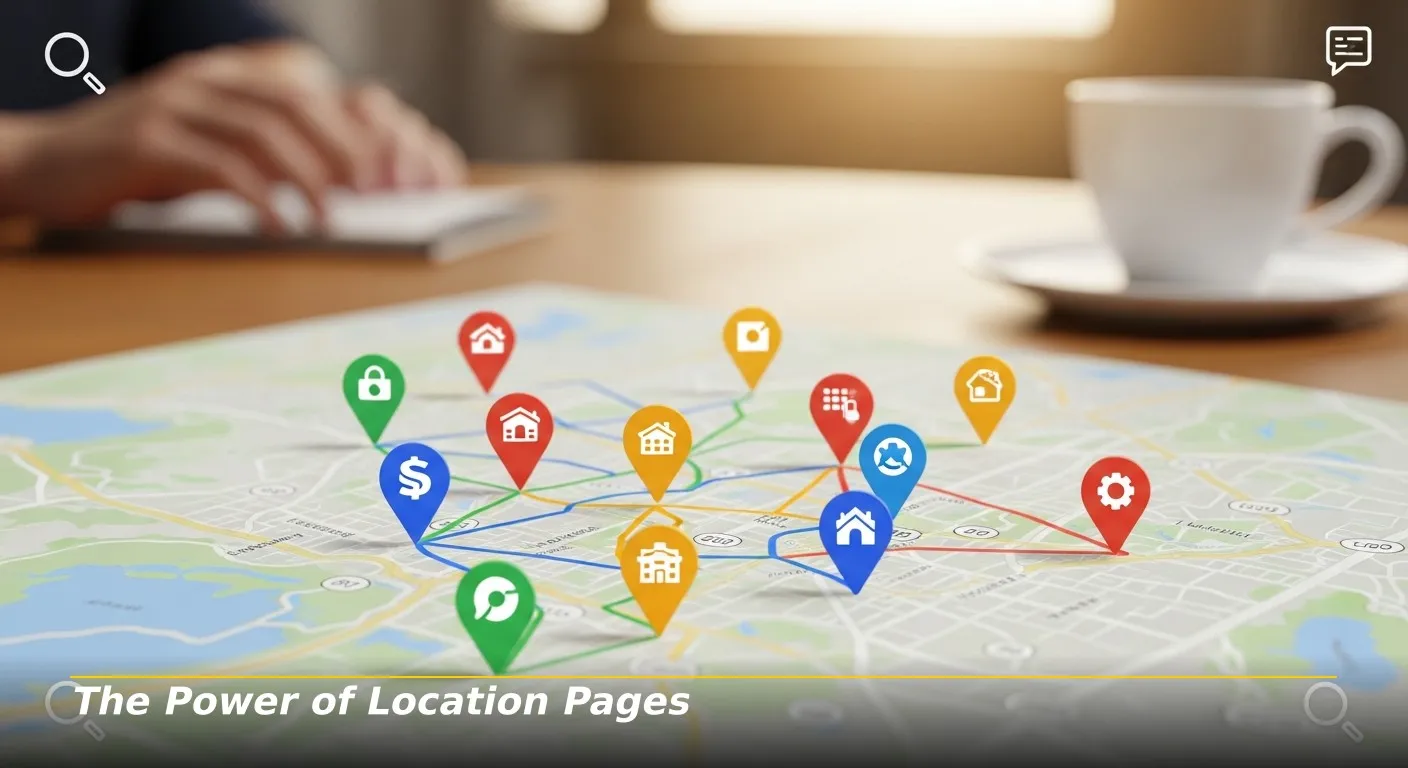
Local relevance is the most important factor Google looks for when suggesting a contractor. Location pages can even help you show up in searches from towns near you, even if your office is not in that specific city. These are often called “Service Area Pages.”
To make location pages work, you must avoid “doorway pages.” This happens when you use the exact same website copy on every page, just changing the city name on each page. Google is very smart and will punish your site for this kind of “website laziness.” Instead, make each page different. Talk about local building rules or the styles of houses in that specific neighborhood. For example, a page highlighting work for an older neighborhood should talk about how you handle repairs for historic homes.
Connecting these pages is also very important. Your main service pages should link to your town pages, and your town pages should link back to your services. This creates a seamless flow of information that tells Google and AI tools exactly which neighborhoods you serve and what jobs you do there.
5. Topic Clusters and Internal Linking Strategy
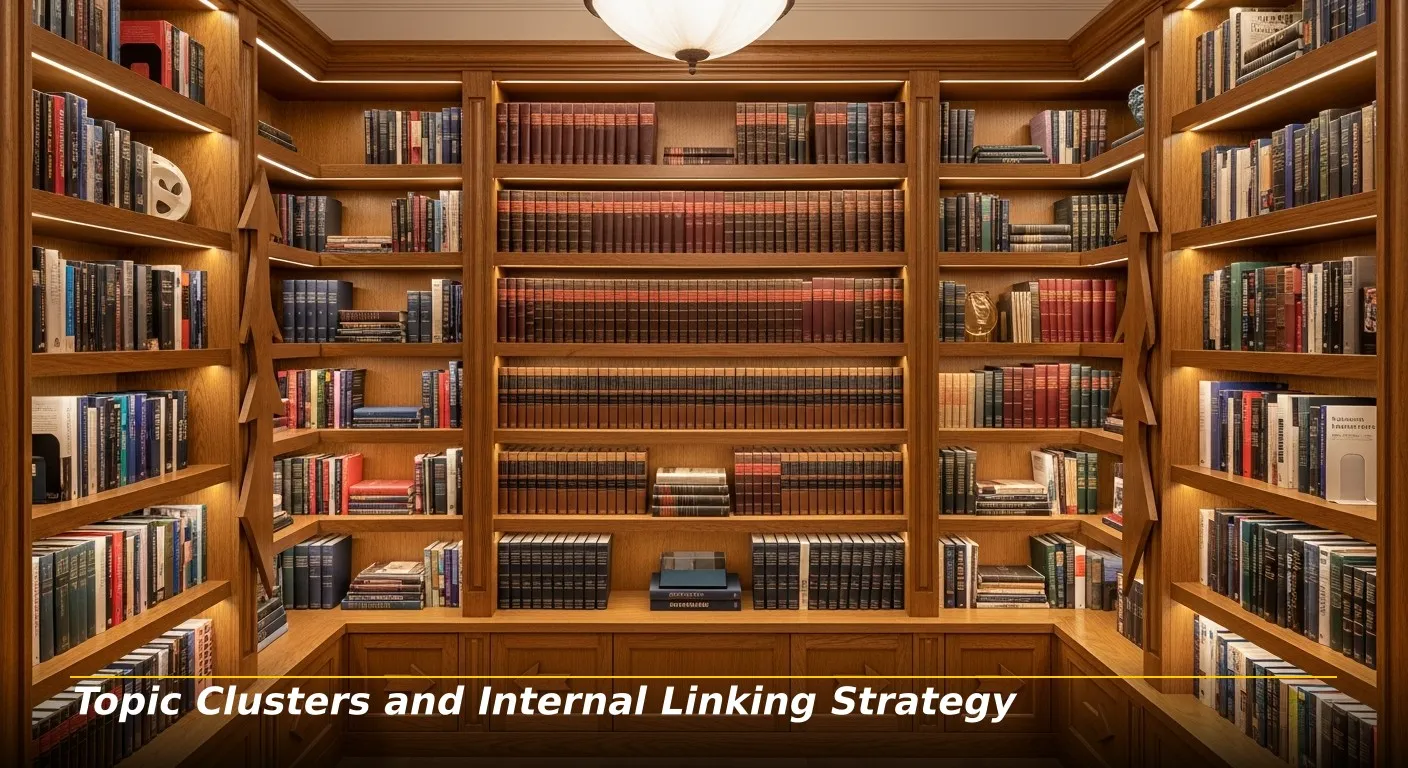
A topic cluster is simply a way to organize your website content into a “hub and spokes” system. This is a very powerful way to show that you are an expert on a subject. The structure looks like this:
- Pillar Pages: This is your main “hub” page. For a remodeler, this might be a big page called “The Complete Guide to Kitchen Remodeling.” It covers the big picture.
- Cluster Content: These are smaller, detailed articles that cover specific parts of the main topic. For example, “How to Pick Countertops” or “Small Kitchen Layout Ideas.”
- Internal Linking: All these pages must link to each other. The small articles link back to the big guide, and the big guide links out to the small articles.
Think of it like a library. The pillar page is the main shelf, and the internal links are the books that are all related to that shelf. This tells AI tools like Perplexity that you are a subject matter expert. It helps the AI understand how your ideas are connected so it can give the best answer to a user, building your credibility and visibility.
 Related article
How a Website Builds Trust + Credibility for Remodeling and Renovation Contractors
A homeowner shortlists three kitchen remodeling contractors. All three come recommended by neighbors. Each holds a sound reputation in the community built over years of good work. She searches each one on her phone. The first has no website. Option #2 has a site that loads in five seconds and only shows stock photos. The […]
6. Turning Service Pages into Lead-Generating Assets

Showing up in a search result is only the first step. Once a potential customer is on your page, you now have to convince them to call you. High-performing pages use specific elements to build trust and move people to act.
- Show Your Credentials: Put your license number, insurance info, and professional logos where people can see them (the About Us page). This proves you are a real professional.
- Before-and-After Photos: This is the best proof you can give. Homeowners love to see a total transformation of a space.
- Customer Reviews: Post several reviews that talk about the specific service on that page. If it is a bathroom page, use reviews from customers who had their bathrooms done by you.
- Offer a Guarantee: Tell people about your guarantees, warranties, or your “fix it right” promise. This makes customers feel safer about hiring you.
- One-Tap Calling: Since most people use smartphones, your phone number should be a button they can tap to call you instantly – and it should show up in multiple places throughout your site pages.
- Easy Contact Forms: Keep your forms short and quick. Asking for just a name, phone, and project type will get you more leads than a long, complex form.
7. Common Website Structure Mistakes Contractors Make

Experienced contractors are rarely website pros and often make mistakes that hurt their business online. Here are the most common ones to avoid:
- One-Page Websites: Trying to fit everything on your homepage makes it impossible for search engines to know what you are truly an expert in. Avoid this!
- Thin Content: Pages with only a few sentences and one photo are seen as low quality by modern algorithms and AI assistants. They don’t give AI the “meat” they need to promote you!
- No Internal Links: If your pages are not connected by links, search engines cannot find all your helpful information, and users will get lost. Remember the hub and spoke!
- No FAQ Section: If you do not answer common questions on your site, it is much harder for you to show up in AI search summaries. Give answers!
- Confusing Menus: If a user cannot find your contact info or your work gallery in less than three clicks, they will leave and call your competitor. Make it easy!
 Related article
Kitchen Remodeling Website Ideas: How to Showcase Projects, Styles, and Budgets to Pre-Qualify Leads
The way homeowners find kitchen remodelers has changed forever. For years, the key ingredient was showing up on a list of links on Google. But this year, people are using smart AI tools like ChatGPT, Gemini, and Perplexity to do their homework. Instead of clicking on ten different websites, they ask, “Who is the best […]
8. Real-World Website Comparison: Structured vs. Basic

The difference between an organized site and a basic site is probably best seen in your bank account.
| Metric | Organized Authority Site | Basic Brochure Site |
|---|---|---|
| Search Rank | Top of Page 1 for many jobs | Only found by your name |
| Number of Leads | 15-30 good leads a month | 2-5 weak leads a month |
| Sales Success | At least 10% | Around 2% |
| AI Visibility | ChatGPT, Gemini, etc. | Invisible to AI tools |
| Revenue Impact | Steady growth all year | Peaks and valleys |
An organized site brings in much better leads because it gives homeowners the details they are looking for while they do their research. It builds trust before you ever meet them in person.
Conclusion: The foundation of your success online, which translates into your bottom-line success, is your website structure. In this new world of AI search and hyperlocal competition, you cannot afford to have a disorganized or flimsy website. Your site needs to be a source of facts that both people and machines can trust. By building a clear system of detailed service pages, unique town pages, and connected articles, you make sure your business is the one everyone recommends. Setting your site up correctly today is the best way to make sure your company keeps growing for years to come.
Is your website structure holding your business back? Are your competitors taking over the local market? Then it’s time to build out your core service pages, add unique pages for the towns you serve, and start connecting your content with internal links. If you’re ready to invest in a professional search strategy to make sure you are found by both Google and AI, call our Minnesota contractor website design team today at (612) 590-8080.
 Related article
The Minnesota Contractor’s Spring Website Checklist: 15 Updates That Turn Spring Searchers into Booked Jobs
In Minnesota, late February marks the end of the deep freeze and the beginning of the most competitive search cycle of the year. Crews may not break ground until May, but the digital race for those projects is already underway. 84% of homeowners use Google to find and validate a contractor before outreach, and the […]
FAQs About Contractor Website Structure
1. How many service pages should a contractor have?
You should have a separate page for every main service that makes money for your company. For most contractors, this means between 5-15 individual service pages. This lets you target specific jobs people are searching for, like “bathroom remodeling,” instead of broad terms that are hard to rank for.
2. Do I need a separate page for every single tiny thing I do?
No. You should group small, related tasks under one big service. For instance, you do not need a whole page for “fixing a light switch,” but you should have a page for “Home Electrical Repairs” that mentions switches. Focus on the jobs that bring in the most profit first, but group jobs in the same service area.
3. Should I make a page for every city I work in?
Yes, but write something unique for each one. Google and AI do not like copycat pages that look the same. Pick your favorite cities to work in and build great pages for them with local photos and reviews from people who live there.
4. How long should each service page be?
To rank well in local and AI search, try to write around 1,000 words for each main service page. This gives you enough space to explain your process and show your local knowledge. AI assistants like long, detailed guides and are more likely to mention your site if you provide a lot of good info.
5. How does linking between my pages help my site’s rank?
Internal links are like a map for Google and AI. They help machines understand which pages on your site are the most important. When you link a blog post about “leaky roofs” to your “Roof Repair” service page, you are telling the search engine that you are an expert on that topic.
6. What is the most important thing for AI search?
The most important thing for AI is entity consistency. This means your business name, address, and phone number must be identical everywhere they appear online. If your website says one thing but your Yelp page says another, AI tools will not trust you enough to recommend you.