







Mastering insurance restoration in Minnesota requires navigating strict state consumer protection laws while building digital trust with storm-impacted property owners. To operate legally, contractors must provide itemized estimates, disclose statutory cancellation rights, and avoid the illegal practice of paying or waiving deductibles. Success hinges on positioning your business as a transparent local guide. By launching an authoritative, credentials-verified website, claiming a local search footprint, and educating clients on policy rules (including the state’s unique material-matching regulations), you can capture premium insurance projects directly, bypass transient storm chasers, and secure high-margin replacements that convert at much higher rates.
Key Takeaways
- Under Minnesota law, offering to pay, waive, or rebate any part of a homeowner’s insurance deductible is a violation carrying up to $10,000 in fines.
- Contractors are strictly prohibited from interpreting policy coverages or adjusting claims unless they hold a valid public adjuster license.
- Homeowners retain a statutory 72-hour right to cancel home repair contracts if their insurance carrier denies the storm claim.
- Minnesota’s matching regulations require insurers to provide a reasonable aesthetic match for siding and shingle replacements when partial damage occurs.
- Authoritative, local websites act as powerful trust filters that pre-sell skeptical homeowners and convert high-intent traffic into exclusive leads.
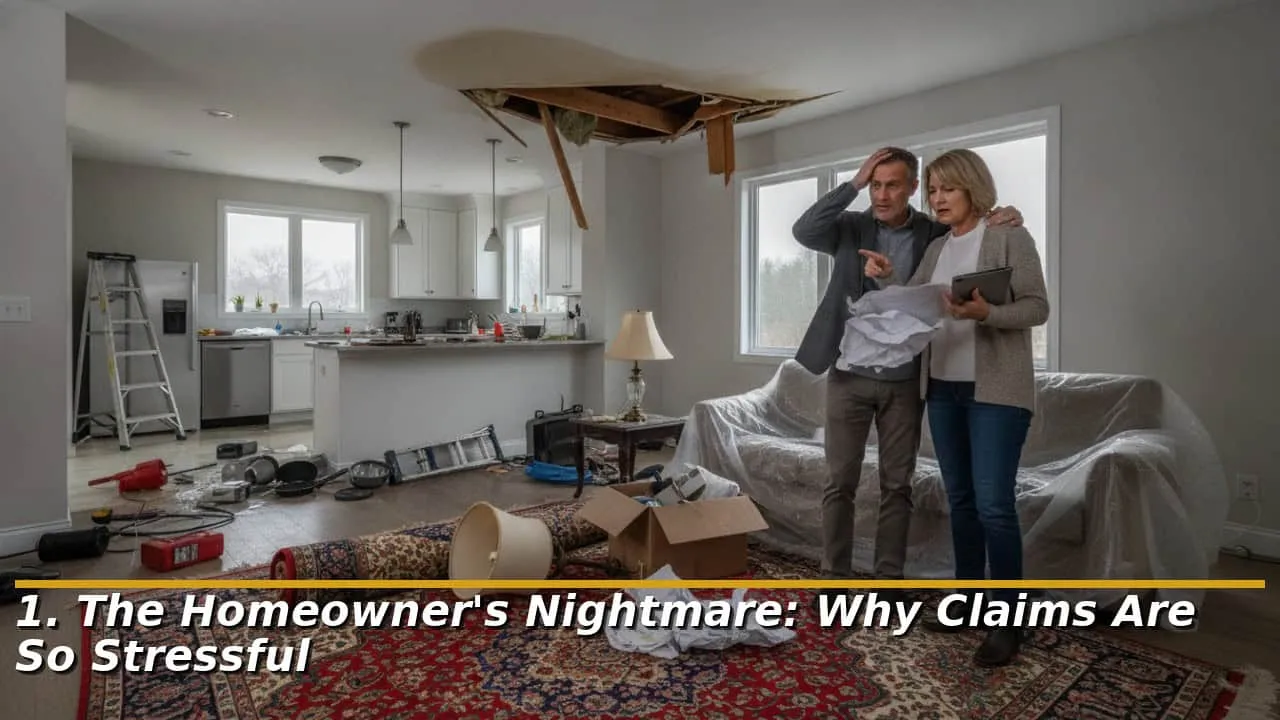
Part I: The Homeowner’s Nightmare: Why Claims Are So Stressful
1. The Storm Chaser Threat
In the wake of severe weather, out-of-state storm chasers flood local neighborhoods. These transient operators use aggressive door-knocking tactics to pressure homeowners into predatory contracts before insurance adjusters can even inspect the property. They promise free roofs, demand upfront insurance check endorsements, and disappear once the money clears, leaving homeowners with shoddy installs and unhonored warranties. This pattern has made local property owners deeply skeptical of all contractors, extending a trust deficit to legitimate local businesses.
2. The Fear Factor and Trust Deficit
Most homeowners have never filed a property insurance claim. They operate under a cloud of doubt, unsure whether their policy covers storm damage, how to document losses, or what adjusters look for during inspections. This confusion often leads to delayed filings or accepting low-ball settlements. National consumer data found that over 60% of contractor fraud cases involve unlicensed or unverified operators. To win jobs, local contractors must actively prove their legitimacy, knowledge, and permanence from the very first interaction.
 Related article
How a Roofing Website Builds Trust with Homeowners After Storm Damage
A hailstorm passes through a Minneapolis suburb on a Friday afternoon. Once evening rolls around, the homeowner has water staining on her ceiling and an insurance claim she does not know how to file. On her phone, she frantically researches, “emergency roofer near me” and opens the first two results. One shows a stock photo, […]
Part II: The Legal Landscape: What Minnesota Law Requires

Operating in the insurance restoration space means adhering to strict state statutes. Failing to comply can result in severe state audits, massive civil fines, and the complete rejection of your estimates by insurance carriers.
Prohibition #1: No Paying or Waiving Deductibles
Under Minnesota Statutes section 325E.66, residential contractors are prohibited from offering to pay, waive, rebate, or absorb any part of a homeowner’s insurance deductible as an inducement to sell goods or services. This ban covers all marketing and sales tactics, including providing referral bonuses, advertising free upgrades, or offering gift cards in exchange for roof inspections. Violators face public enforcement actions by the Department of Labor and Industry (DLI), with fines reaching up to $10,000 per violation.
Prohibition #2: No Unauthorized Adjusting or Policy Interpretation
Unless you hold a valid license as a public adjuster under Minnesota law, you cannot interpret insurance policy provisions, advise homeowners on specific coverages, or adjust claims on their behalf. You are legally permitted to inspect the roof, document damage with photos, and provide detailed repair estimates, but you must never cross the line into legal or policy interpretation.
Requirement #1: Written Deductible Notification
Minnesota law requires all residential contractors to include a mandatory written disclosure regarding the deductible prohibition alongside their initial project estimate. The DLI recommends the following specific disclosure language:
“State law (Minn. Stat. § 325E.66) prohibits contractors from offering to pay a customer’s insurance deductible or offering anything of value as an inducement to enter into a contract for home repairs that are to be paid for as a part of an insurance claim. Contractors making such an offer are subject to public enforcement action by the Minnesota Department of Labor and Industry, including fines of up to $10,000 per violation.”
Requirement #2: Mandatory Itemized Good Faith Estimates
Workers must provide a detailed, itemized good-faith estimate of total project costs before clients put pen to paper. This estimate must break down the specific costs of materials and labor. If you fail to supply, the homeowner’s property insurer is legally released from any obligation to consider or pay your estimate.
 Related article
Digital Marketing for Roofing Contractors: Website Features That Drive More Calls
Two roofing contractors each spend $2,000 a month on Google Ads. Both target the same keywords, serving the same market. One averages 22 booked jobs a month. The other,11. This difference is not their ad spend, bid strategy, or service area. It is what happens after someone clicks their ad. One contractor’s website converts. The […]
Part III: Homeowner Rights in Minnesota

Educating homeowners on their statutory rights establishes your authority and separates you from fly-by-night operators.
1. The Right to Cancel (The 72-Hour Denial Rule)
Under Minnesota Statutes section 326B.811, if a homeowner signs a contract for repairs to be funded by insurance proceeds and the insurance company subsequently denies the claim, they have the right to cancel the contract. This cancellation right remains active for 72 hours after the person receives written notice of the claim denial. Upon receiving a written cancellation notice, the contractor has exactly 10 business days to return all deposits and notes of indebtedness.
2. The Right to Choose and Verify
Homeowners are never required to use the preferred contractors recommended by their insurance carriers, as they retain the absolute right to select their own independent contractor. They also have the right to request proof of licensing and insurance. Displaying your active DLI license number, commercial liability policy, and workers’ compensation coverage openly on your digital platforms provides the high-level validation clients require.
 Related article
How Local SEO Helps Roofing Companies Dominate “Roof Repair Near Me” Searches in Minnesota
A hailstorm moves through the western Twin Cities suburbs on a Tuesday afternoon. By evening, homeowners in Maple Grove, Rogers, and Plymouth are searching their phones for “roof repair near me.” The three roofing companies that appear at the top of the Map Pack take calls for two weeks. Those not appearing watch a season’s […]
Part IV: How a “Speaks Insurance” Contractor Operates

An expert local contractor understands the technical mechanics of the insurance claims process, protecting both the homeowner’s property and the business’s bottom line.
- Filing Windows: Most in-state policies impose a strict one-to-two-year limit from the date of the storm to file a claim.
- On-Site Adjuster Support: Meeting the adjuster on-site allows the contractor to point out latent structural issues, attic ventilation flaws, and valley damage, ensuring the carrier’s scope of work is accurate.
- Mortgage Check Escrow: Because mortgage companies are listed as loss payees on insurance checks, contractors must guide clients through the escrow draw process to avoid project delays.
- Material Matching Projections: Expert contractors document shingle and siding discontinuation to invoke Minnesota’s matching regulations, often expanding localized repair claims into comprehensive, high-margin full-surface replacements.
Compliant vs. Prohibited Claims Practices
| Operational Area | Compliant Practice | Prohibited Practice | Statutory Penalty |
| Deductibles | Require payment of full deductible; provide detailed cost estimates | Waiving, reimbursing, or absorbing deductibles as a sales inducement | Up to $10,000 fine per violation and voided estimate |
| Policy Scope | General education; document on-site damage with photos | Advising on coverage limits or negotiating claim payouts directly | Chapter 72B public adjuster licensing violations |
| Contract Cancellation | Detach 10-point bold Notice of Cancellation in duplicate | Charging cancellation fees within 72 hours of a claim denial | Administrative sanctions and license suspension |
| Billing Estimates | Itemized, detailed labor and material cost projections | Non-itemized, general “price agreeable” lump-sum agreements | Insurer released from obligation to consider estimate |
 Related article
Which Website for Roofing Contractors Generates More Leads: DIY or Pro?
The roofing industry is one of the most competitive spaces in local home-related website searches. For a roofing contractor, the digital landscape has shifted from a simple list of links to a complex ecosystem where AI companions now provide direct recommendations. Homeowners facing a sudden leak or storm damage no longer just browse; they ask […]
Part V: Transforming Your Website into a Claims Trust Filter

Your website is the most powerful tool for proving you are a legitimate, expert local contractor rather than an out-of-state storm chaser.
1. Proving Regional Authority
Homeowners use your website to verify credentials. To build instant credibility, display your DLI license number, your $15,000 roofer surety bond, and general liability limits prominently. Publish a gallery of real, local projects with photos of recognizable Minnesota neighborhoods, and back them up with verified local testimonials.
2. Structured Educational Content
An authoritative website pre-sells prospects by demystifying the claims process. Publish plain-language guides explaining how to spot wind creasing, ice dam formation, and how the adjuster meeting works. Providing this clarity positions you as a trusted guide, converting skeptical visitors into exclusive leads. Improving your digital footprint’s conversion rate from 2% to 6% effectively triples your lead volume without increasing your ad spend:

Conclusion: Lead with Clarity and Control Your Pipeline
Relying on insurance referrals or general contractor hand-offs keeps your brand invisible and caps your revenue. By launching an educational, compliance-optimized website and optimizing your Google Business Profile, you build an independent lead generation engine. You transition from a subcontractor executing someone else’s storm into an authoritative business owner who commands premium margins, operates in complete legal compliance, and controls their own future.
 Related article
How Local SEO Helps Home Improvement Businesses Get More Qualified Leads in Minnesota
A roofing contractor in Maple Grove spends $2,000 a month on a lead aggregator. Each week, the same leads go to six other contractors simultaneously. The race to respond first turns into a sprint for the lowest price. Half the calls go nowhere. A third of the jobs that do close barely cover the cost […]
FAQs About The Minnesota Insurance Claims Blueprint
1. How does Minnesota’s matching regulation (Minn. Stat. § 65A.28) apply to discontinued roofing materials during a storm claim?
Under Minnesota Statutes section 65A.28, property insurance carriers are statutorily required to provide a reasonable match in fit, style, and appearance when repairing or replacing damaged siding or roofing. If a portion of a roof is damaged in a hailstorm and the existing shingles are discontinued (making an aesthetic match impossible), the insurer must pay to replace adjacent undamaged slopes to ensure a uniform appearance. A matching principle, reinforced by the Minnesota Supreme Court precedent in the Cedar Bluff case, often drives complete roof replacements for older, discontinued systems. Contractors must document the shingle’s specifications and verify its discontinuation with the manufacturer to successfully present this matching argument to adjusters.
2. How do mortgage companies legally handle insurance checks, and how does this affect contractor payment draws?
Mortgage companies hold a secured interest in the property and are legally listed as loss payees on property insurance checks. When a claim check is issued, it must be sent to the mortgage servicer for endorsement. Mortgage companies hold the funds in an escrow account and release payments in structured draws (such as one-third at contract signing, one-third mid-project, and one-third upon final inspection and the submission of contractor lien waivers). To prevent cash flow bottlenecks, contractors must understand this draw timeline, provide detailed good-faith estimates, and secure structured project milestone agreements with the homeowner before commencing work.
3. What are the precise DLI notification standards regarding the deductible prohibition in the initial estimate?
Under Minnesota Statutes section 325E.66, any contractor providing residential roofing, building, or remodeling services to be paid via property insurance proceeds must provide a written summary of the deductible law with their initial estimate. This estimate includes any preliminary price-agreeable contract or damage assessment form. Such notification must explicitly state that offering to pay, rebate, or absorb a deductible is illegal and subjects the contractor to public enforcement actions and administrative fines of up to $10,000 per violation. Failure to provide this disclosure legally releases the property insurer from any obligation to consider the contractor’s repair estimates.
 Related article
How Your Contractor Website Should Prepare for Minnesota’s Spring Search Surge: A Seasonal SEO Checklist
Minnesota’s construction season is compressed into roughly six months, meaning the digital competition for spring projects is heavily front-loaded. By the time the ground thaws in April, the most in-demand contractors are already booked. Homeowners who fill those schedules started their search in February, and the contractors who captured them had websites that were optimized […]
4. How does the 14-factor independent contractor test impact storm-restoration crews operating as subcontractors in Minnesota?
Effective March 1, 2025, Minnesota enforced a strict 14-factor test under Minnesota Statutes section 181.723 to govern independent contractor status in the construction industry. Any subcontractor crew you hire to assist with storm restoration is legally presumed to be your employee unless they operate as a registered, independent business entity that maintains its own tools, holds active workers’ compensation and liability insurance, files self-employment taxes, and operates under a signed, dated written contract executed within 30 days of work commencing. Misclassifying crews to avoid payroll taxes or insurance premiums carries a mandatory $2,000 administrative penalty per worker and up to $10,000 in civil fines. Furthermore, if a subcontractor fails to meet even one of the 14 factors, the upstream general contractor can be held liable for all employee misclassification penalties and face immediate DLI project stop orders.
5. What municipal solicitor permit rules and cooling-off laws must storm-canvassing sales reps follow in Minnesota?
Door-to-door storm canvassers must comply with local municipal transient merchant or solicitor ordinances, which frequently require registration, background checks, and physical permit badges. Additionally, under the Minnesota Home Solicitation Sales Act, if the initial contact with a homeowner occurs at their residence, the customer possesses an absolute three-business-day right to cancel the transaction. Salespeople are legally required to orally inform the homeowner of this right at the time of signing and provide them with fully completed “Notice of Cancellation” forms in duplicate. This cooling-off period operates independently of, and in addition to, the 72-hour cancellation right tied to insurance claim denials.