








Many new Minnesota roofing contractors fail not from poor craftsmanship, but instead, predictable business traps. Expanding overhead too quickly, managing operations from memory, overcomplicating client communication with technical jargon, and mismanaging seasonal cash flow are all common examples. Transitioning from a hands-on installer to a business owner requires keeping overhead lean by utilizing subcontractors, implementing software-driven workflows, communicating as a clear customer guide, and maintaining separate cash reserves for the winter off-season. Since Minnesota roofers are excluded from the state’s Contractor Recovery Fund, maintaining strict financial control and a pristine local reputation is the only safety net for long-term business survival.
Key Takeaways
- Prematurely hiring employees and buying assets based on temporary storm-season cash spikes is the fastest route to off-season bankruptcy.
- Subcontractors provide operational flexibility, allowing new owners to scale labor expenses directly with seasonal demand.
- Running jobs from memory causes missed leads and broken trust; roofers must adopt software systems to organize customer data.
- Homeowners value plain-language guidance over technical jargon, which often alienates clients and drives them to competitors.
- Because residential roofers are excluded from the state’s Contractor Recovery Fund, their direct civil liability is significantly higher.
Trap #1: Building Too Fast, Too Soon
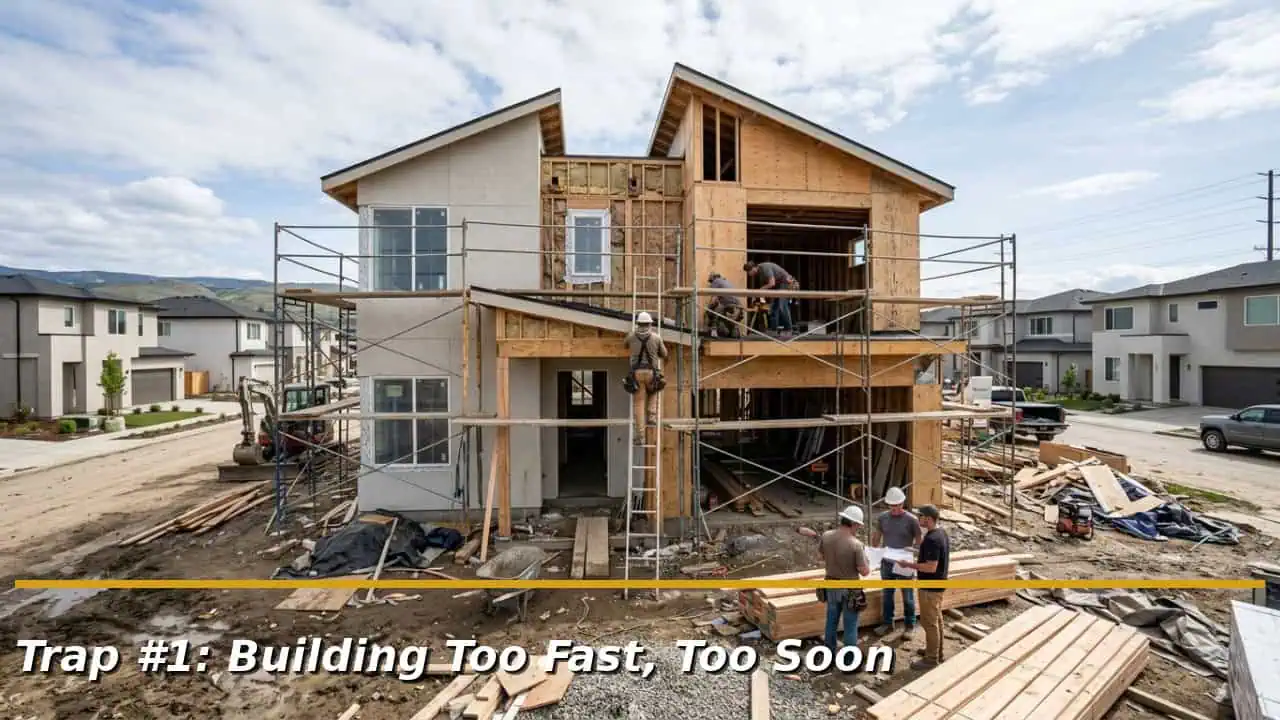
Storm season creates a dangerous illusion of permanent wealth. When a major weather event hits Minnesota, new roofing business owners are often overwhelmed with immediate demand. In response, many rush to hire full-time crews, purchase additional trucks, and lease expensive office space. However, when the storm-restoration work is regulated, the high overhead remains. Carrying fixed payroll and equipment payments into the winter off-season drains cash reserves rapidly, putting a fresh company under severe financial pressure.
To protect your business from this cycle, start with subcontractors rather than employees. Subcontracting allows you to scale labor expenses directly with demand. If there is no active project, there is no payroll expense. Keep your fixed overhead minimal and only bring on permanent staff once you have established a predictable, year-round lead flow.
 Related article
Digital Marketing for Roofing Contractors: Website Features That Drive More Calls
Two roofing contractors each spend $2,000 a month on Google Ads. Both target the same keywords, serving the same market. One averages 22 booked jobs a month. The other,11. This difference is not their ad spend, bid strategy, or service area. It is what happens after someone clicks their ad. One contractor’s website converts. The […]
Trap #2: Running Your Business From Memory

Transitioning from a subcontractor to a prime contractor means you are now responsible for the entire customer pipeline. Relying on your memory to track project details, client names, and estimates does not scale. When paperwork is disorganized, critical steps are missed, calls go unanswered, follow-up emails are delayed, and job details are forgotten.
Disorganized sales processes frustrate homeowners and ruin conversion rates. Roofers must implement simple, structured workflows using industry-specific digital tools. Logging every lead, conversation, and photo in a single, accessible database keeps your pipeline visible while ensuring no profitable opportunity slips through the cracks.
Trap #3: Trying to Sound Like a Veteran Instead of Being a Guide

New business owners often overexplain technical details to prove their expertise. They use complex industry jargon, reference obscure building codes, and lecture homeowners on roofing specifications. Adversely, homeowners do not want to be impressed by technical vocabulary. They want clear, plain-language guidance.
Overexplaining creates confusion, and confused buyers rarely sign contracts. Speak plainly, use clear analogies, and focus strictly on the customer’s primary concerns of leaks, durability, timelines, and costs. Use your digital platforms to educate homeowners in terms they easily understand, positioning yourself as a trusted local advisor rather than an intimidating technician.
 Related article
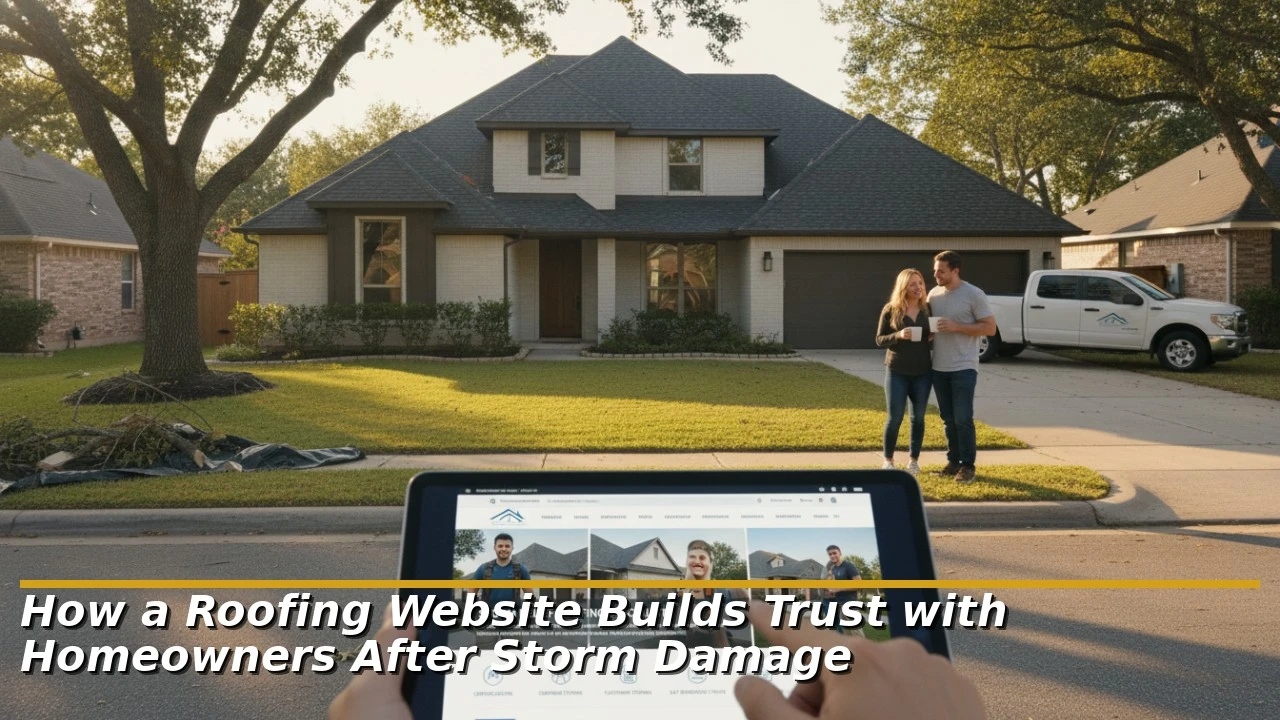
How a Roofing Website Builds Trust with Homeowners After Storm Damage
A hailstorm passes through a Minneapolis suburb on a Friday afternoon. Once evening rolls around, the homeowner has water staining on her ceiling and an insurance claim she does not know how to file. On her phone, she frantically researches, “emergency roofer near me” and opens the first two results. One shows a stock photo, […]
Trap #4: Ignoring Cash Flow Until It’s Too Late

Roofing cash flow is highly volatile. Your bank balance can look incredibly healthy during peak summer production, but that balance is deceptive. It frequently includes unearned deposits, unpaid subcontractor fees, and material costs that are not yet invoiced.
The delay between completing a job and receiving final insurance or mortgage checks creates a structural cash deficit. You must pay crews weekly and cover material bills within thirty days, while insurance payouts can take up to ninety days to clear. Failing to forecast these gaps will stall operations. Track profitability on every job, negotiate longer payment terms with suppliers, and deposit a fixed percentage of summer revenue into a dedicated reserve to survive the winter freeze.
Bonus: The Minnesota Contractor Recovery Fund Warning

A critical legal reality that new roofing owners overlook is their relationship with the Minnesota Contractor Recovery Fund. Under state law, licensed Residential Roofers are excluded from the recovery fund. While the fund compensates homeowners for losses caused by fraudulent or non-performing general builders and remodelers, it offers no protection for roofing-only contracts.
Because of this, your direct personal and business liability is significantly higher. Homeowners securing a civil judgment against you can target your assets directly. This makes comprehensive liability insurance, strict code compliance, and organized business practices your only line of defense.
 Related article
Which Website for Roofing Contractors Generates More Leads: DIY or Pro?
The roofing industry is one of the most competitive spaces in local home-related website searches. For a roofing contractor, the digital landscape has shifted from a simple list of links to a complex ecosystem where AI companions now provide direct recommendations. Homeowners facing a sudden leak or storm damage no longer just browse; they ask […]
The 4 Traps at a Glance
| Trap | The Mistake | The Fix |
| Building Too Fast | Hiring full-time staff during seasonal spikes | Utilize subcontractors and keep overhead variable |
| Running from Memory | Tracking leads and project details in your head | Implement digital tools to centralize customer data |
| Sounding Like a Veteran | Overcomplicating proposals with technical jargon | Act as a clear guide and speak in plain English |
| Ignoring Cash Flow | Treating your raw bank balance as clean profit | Forecast payment lag and build winter cash reserves |
Conclusion: Build a Business That Survives
Installing a flawless roof is minor to the grand scheme of running a successful roofing company. Thriving contractors are those who master business operations. By starting lean, organizing files, simplifying sales messages, and protecting current cash flow, you build a resilient enterprise. Minnesota has an abundance of roofing projects; by avoiding these common traps, you ensure your business is one of the few that endures.
Tying your local hands-on expertise to a high-converting digital platform allows you to screen incoming leads, identify high-margin replacements, and bypass seasonal traps. Improving a digital footprint’s conversion rate from 2% to 6% effectively triples your lead volume without increasing your ad spend.
 Related article
Why Every Roofing Contractor Should Optimize Their Website for Emergency Services Searches
At 11 PM on a Thursday, water is dripping through a homeowner’s kitchen ceiling. She opens Google, types “emergency roofer near me,” and calls the first result showing a 4.9-star rating, 24/7 badge, and phone number that loads before anything else. The entire decision takes under four minutes. The contractor who appears in that Map […]
FAQs About Dodging the 4 Traps of New Roofing Businesses
1. How does the 14-factor worker classification test affect a new roofing owner’s use of subcontractors?
Effective March 1, 2025, Minnesota replaced its old nine-factor test with a strict 14-factor test under Minn. Stat. § 181.723 to govern independent contractor status in construction. Under this law, any subcontractor you hire is legally presumed to be your employee. This doesn’t apply if they operate as a separate, registered business entity that owns its own equipment, maintains active workers’ compensation and unemployment accounts, files self-employment taxes, and operates under a signed, dated, and fully executed written contract. Misclassifying workers to avoid payroll taxes or insurance premiums carries a mandatory $2,000 administrative penalty per violation, up to $10,000 in civil penalties, stop-work orders, and potential individual liability for business officers.
2. What are the specific sales and use tax requirements for Minnesota roofing contractors?
Under Minnesota Department of Revenue guidelines, roofing contractors are considered the final consumers of all materials, supplies, and equipment used to complete a construction contract. You must pay sales or use tax on these items at the time of purchase. When invoicing homeowners for real property improvements, you may pass the sales tax cost onto your customer as part of the overall materials charge, but cannot itemize the sales tax separately on the customer’s invoice. Itemizing sales tax on a construction contract is a compliance error that can trigger state audits and result in reassessments.
3. What municipal and statutory rules govern door-to-door storm canvassing in Minnesota?
Door-to-door sales operations must comply with both local municipal permit ordinances and the Minnesota Home Solicitation Sales Act. Cities have the authority to regulate and license transient merchants, requiring solicitor permits and background checks. Furthermore, if your sales representatives make the initial contact with a homeowner at their residence, contracts must include a prominent, statutory notice of their three-business-day right to cancel. You must also provide the customer with duplicate, easily detachable “Notice of Cancellation” forms.
4. What are the statute of limitations and statute of repose timelines for roofing defect claims in Minnesota?
Under Minn. Stat. § 541.051, construction defect claims are subject to a strict two-year statute of limitations and a ten-year statute of repose. The two-year limitations period begins to run immediately upon the discovery of the injury or defect (the “discovery rule”). However, the ten-year statute of repose serves as an absolute outer limit, completely extinguishing any legal claims ten years after the substantial completion of the roofing project, regardless of when the defect was discovered.
5. Why are licensed Residential Roofers excluded from the Contractor Recovery Fund, and how does the roofer surety bond protect homeowners?
Under Minn. Stat. § 326B.89, the Contractor Recovery Fund only compensates homeowners suffering financial losses due to the misconduct of licensed residential building contractors or remodelers. Because Residential Roofers do not contribute to or participate in the fund, they are statutorily required under Minn. Stat. § 326B.86 to post and maintain a $15,000 surety bond. If a homeowner obtains a civil judgment against a roofer for failure of performance, they must collect from this surety bond rather than a state fund. If the surety company pays a claim, you are legally obligated to indemnify the surety for the full amount.