




Mastering the physical craft of roofing is only half of what goes into building a successful business. Transitioning from a subcontractor to a licensed contractor in Minnesota enables roofing professionals to contract directly with homeowners, escape low-margin scraps, and secure full project margins. To achieve this independence, workers must navigate the Department of Labor and Industry’s licensing landscape, choose between three specific license classes, designate a Qualifying Person to pass a code-based exam, and register their business entity. Compliance requires securing a $15,000 surety bond alongside statutory general liability and workers’ compensation insurance to protect property owners and satisfy state regulators.
Key Takeaways
- Direct contracting with Minnesota homeowners requires state licensure, while subcontractors only need basic registration.
- A Residential Roofer license strictly limits work to roofing, prohibiting profitable additions like gutters, downspouts, soffits, and fascia.
- Obtaining a Residential Remodeler or Building Contractor license provides maximum long-term flexibility, including exterior remodeling and new construction.
- Licensing requires passing a code-based open-book exam, posting a $15,000 surety bond, and maintaining general liability insurance.
- The $15,000 annual gross receipts licensing exemption is calculated before expenses, making it impractical for growing contracting businesses.
1. Who Needs a License in Minnesota?
In Minnesota, any individual or company contracting directly with an owner of residential real estate (containing one to four units) to provide roofing services must hold an active license. The Department of Labor and Industry (DLI) issues these licenses under three classifications: Residential Roofer (RR), Residential Remodeler (CR), or Residential Building Contractor (BC).
If you operate strictly as a subcontractor for a licensed general contractor holding the direct contract with the homeowner, you are exempt from licensing but must register with the state through the Construction Contractor Registration Program. However, the moment you sign a direct agreement with a property owner, state licensure becomes legally mandatory. While MN offers a licensing exemption for contractors earning less than $15,000 in annual gross receipts, this limit is calculated using total revenue before any operating deductions, still requires an annual Certificate of Exemption, and is impractical for any business focused on real growth.
 Related article
The Boardroom Blueprint: Dodging the 4 Traps of New Roofing Businesses
Many new Minnesota roofing contractors fail not from poor craftsmanship, but instead, predictable business traps. Expanding overhead too quickly, managing operations from memory, overcomplicating client communication with technical jargon, and mismanaging seasonal cash flow are all common examples. Transitioning from a hands-on installer to a business owner requires keeping overhead lean by utilizing subcontractors, implementing […]
2. The Three License Types: Side-by-Side Comparison
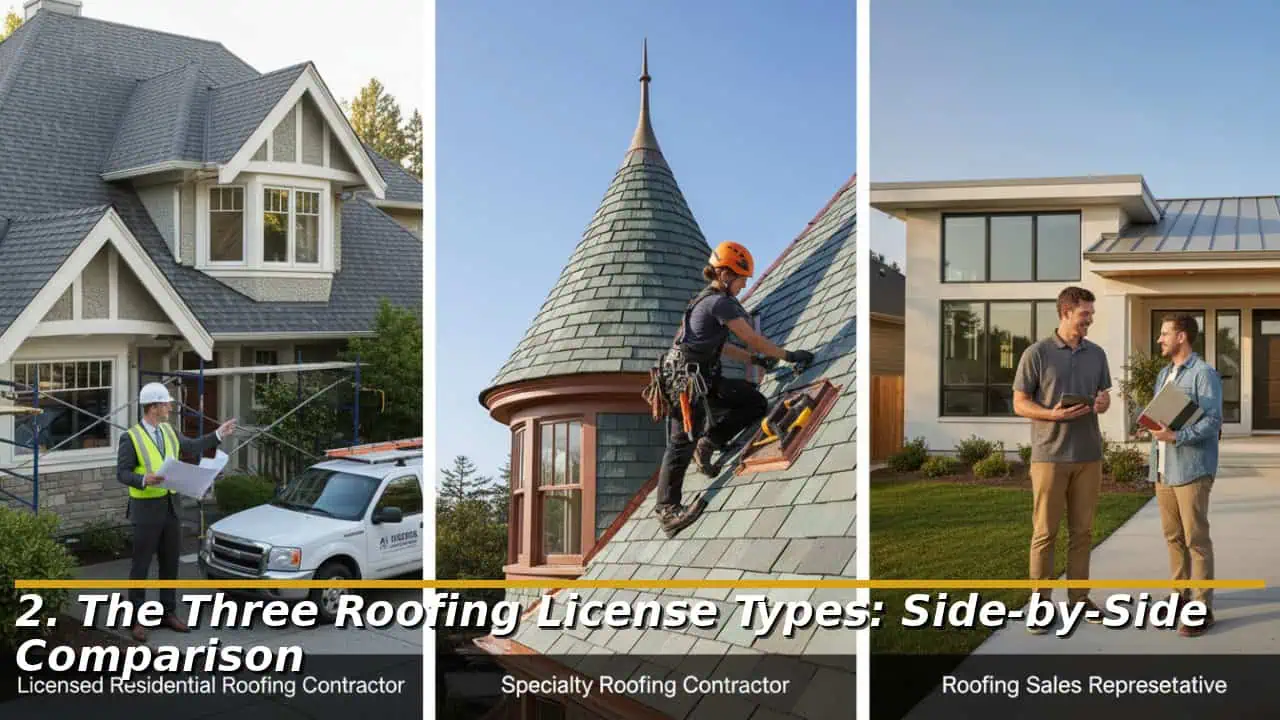
Selecting the wrong license can legally restrict you from performing work you are qualified for. Understanding the specific scope of each license class is critical.
| License Type | Permitted Scope | Pre-licensing Exam | Initial Fee | Biennial Renewal Fee |
| Residential Roofer (RR) | Exclusively roofing work; no gutters, siding, or trim. | Qualifying Roofer (QR) Exam | $180 | $180 renewal plus $5 continuing education fee |
| Residential Remodeler (CR) | Roofing plus exterior finishing (gutters, siding, trim) on existing structures only. | Qualifying Remodeler (QC) Exam | Tiered: $320 to $520 based on receipts | Tiered: $505 to $705 based on receipts |
| Residential Building Contractor (BC) | Comprehensive scope: new construction, remodeling, roofing, and all specialty skills. | Qualifying Builder (QB) Exam | Tiered: $320 to $520 based on receipts | Tiered: $505 to $705 based on receipts |
The “gutters gotcha” is the most common pitfall for new contractors. Residential Roofer licenses do not permit the installation of gutters, downspouts, soffits, or fascia. If you contract to install a new roof and include gutters, you are violating state law without a CR or BC license. Because the initial application fees, insurance requirements, and bonding structures are comparable across all classes, pursuing the Residential Building Contractor license offers the best long-term flexibility.
 Related article
Which Website for Roofing Contractors Generates More Leads: DIY or Pro?
The roofing industry is one of the most competitive spaces in local home-related website searches. For a roofing contractor, the digital landscape has shifted from a simple list of links to a complex ecosystem where AI companions now provide direct recommendations. Homeowners facing a sudden leak or storm damage no longer just browse; they ask […]
3. The Qualifying Person: Your Company’s Designated Expert

Minnesota requires every licensed contracting business to designate a single individual as its Qualifying Person (QP). This serves as the company’s designated technical expert and is responsible for passing the pre-licensing exam and maintaining active continuing education credentials.
The designation of a QP depends on your specific business structure:
| Business Structure | Who Can Be Qualifying Person |
| Sole Proprietorship | The proprietor or a managing employee |
| Partnership | A partner or a managing employee |
| LLC | A chief manager or a managing employee |
| Corporation | A chief executive officer or a managing employee |
Critical rules govern this role/ The QP must be an active employee or officer of the business, not an independent contractor. Additionally, an individual may only act as the QP for multiple companies if there is at least 25% common ownership among those entities. If they leave the business, you must notify the DLI immediately and designate someone new to prevent license suspension.
 Related article
How a Roofing Website Builds Trust with Homeowners After Storm Damage
A hailstorm passes through a Minneapolis suburb on a Friday afternoon. Once evening rolls around, the homeowner has water staining on her ceiling and an insurance claim she does not know how to file. On her phone, she frantically researches, “emergency roofer near me” and opens the first two results. One shows a stock photo, […]
4. The Exam: What You Need to Know

To secure your license, the designated QP must pass the state’s technical pre-licensing examination. Fortunately, the state does not impose prior experience or educational requirements to schedule the test.
| Feature | Detail |
| Format | 110 multiple-choice questions |
| Passing score | 70% (77 correct answers) |
| Time limit | 5.5 hours |
| Content | Roughly 60% Minnesota Residential Building Code, 40% statutes and rules governing residential construction |
| Materials provided | Minnesota State Residential Code (2020 edition) and DLI Reference Manual |
The specific exam required depends on your chosen path. The Qualifying Roofer (QR) exam for the RR license, the Qualifying Remodeler (QC) exam for the CR license, and the Qualifying Builder (QB) exam for the BC license. Exams are administered at the DLI’s St. Paul offices on Tuesdays, Wednesdays, and Thursdays. If a candidate fails, they must wait 30 days before submitting a new application and fee to retest.
 Related article
How Local SEO Helps Roofing Companies Dominate “Roof Repair Near Me” Searches in Minnesota
A hailstorm moves through the western Twin Cities suburbs on a Tuesday afternoon. By evening, homeowners in Maple Grove, Rogers, and Plymouth are searching their phones for “roof repair near me.” The three roofing companies that appear at the top of the Map Pack take calls for two weeks. Those not appearing watch a season’s […]
5. The Application Process: Step-by-Step
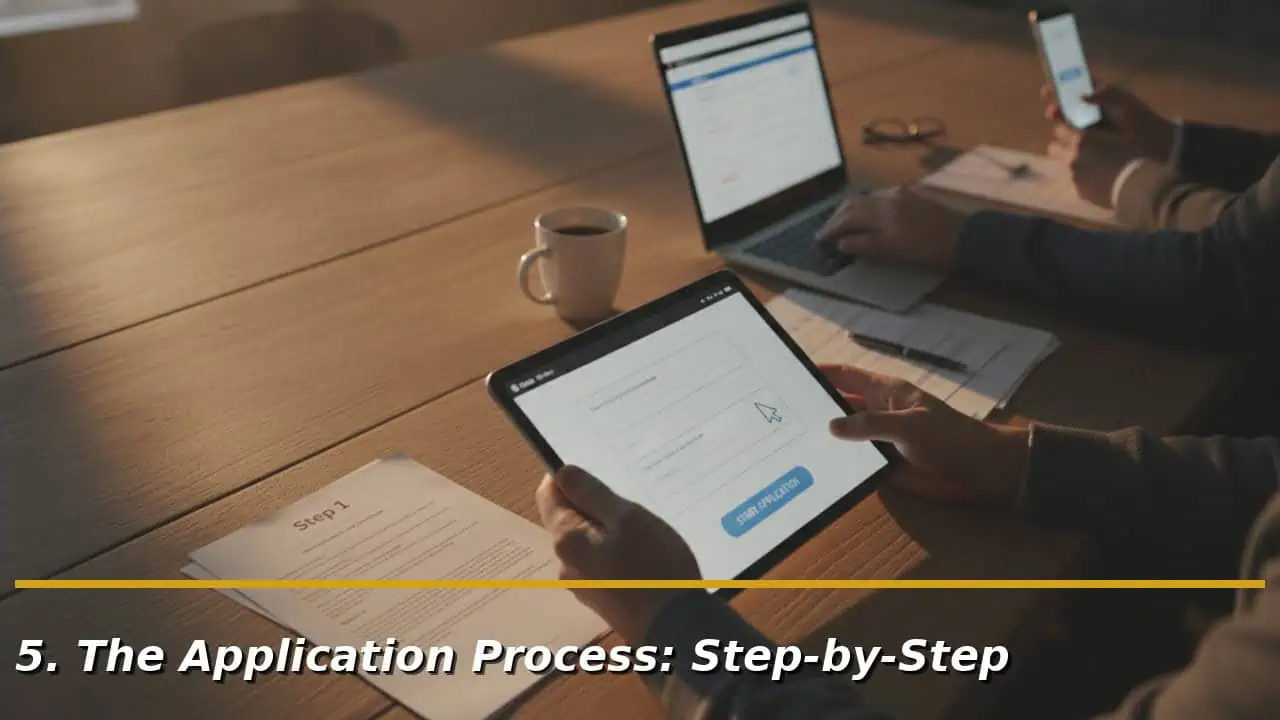
Once your designated QP passes the exam, you must complete the following regulatory steps:
- Register Your Business: File your LLC or Corporation with the Minnesota Secretary of State. If operating under an assumed name (including a DBA), file an Assumed Name certificate. Your business name must appear identically on all state documents and insurance filings.
- Secure Your Bond: Licensed Residential Roofers must post and maintain a $15,000 surety bond with the state. This must be signed and sealed by a licensed corporate surety, signed by the business owner, and notarized.
- Bind General Liability Insurance: Obtain general liability coverage meeting the statutory minimum of $100,000 per occurrence, $300,000 aggregate for bodily injury, and $25,000 in property damage (or a single-limit policy of at least $300,000 per occurrence and aggregate). DLI must be listed as the certificate holder.
- Obtain Workers’ Compensation: Submit a Certificate of Compliance with Minnesota Workers’ Compensation laws if you have employees. Sole proprietors with no employees may file an exemption statement.
- Submit the DLI Packet: Complete the license application, submit the Bureau of Criminal Apprehension (BCA) criminal background check forms for all owners and officers, pay the non-refundable license fee ($180 for Residential Roofer), and upload your forms online via the DLI’s integrated iMS portal.
All residential contractor licenses expire annually on March 31.
 Related article
Digital Marketing for Roofing Contractors: Website Features That Drive More Calls
Two roofing contractors each spend $2,000 a month on Google Ads. Both target the same keywords, serving the same market. One averages 22 booked jobs a month. The other,11. This difference is not their ad spend, bid strategy, or service area. It is what happens after someone clicks their ad. One contractor’s website converts. The […]
6. Subcontractor Registration: What You Need If You’re Not Licensed Yet
If you work as a subcontractor and are not yet ready to transition to direct consumer contracts, you must still maintain compliance. Any individual or business performing construction or improvement services in Minnesota without a trade license must register with the state through the Construction Contractor Registration Program.
This registration is not a license. This does not authorize you to contract directly with property owners, nor does it allow you to perform specialized trades like plumbing or electrical work. It is a state tracking mechanism to prevent tax evasion and worker misclassification. Under Minnesota law, unregistered subcontractors are treated as employees of the hiring contractor.
7. Which License Should You Choose?
Choosing the correct license depends on your long-term business goals:
- Residential Roofer (RR): Ideal if you are absolutely certain you will only perform roof work and will never offer gutters, downspouts, siding, or soffit.
- Residential Remodeler (CR): Best if you want to provide comprehensive exterior packages (roofing, gutters, and siding) on existing residential homes.
- Residential Building Contractor (BC): Recommended for maximum commercial flexibility. It permits remodeling, roofing, and specialty exterior work, plus new construction, framing, detached garages, and spec homes.
Because the initial costs, insurance filings, and bonding rules are similar across all three classes, the Residential Building Contractor (BC) license is the smartest play for most roofers, ensuring your business is future-proof as you grow.
 Related article
Why Every Roofing Contractor Should Optimize Their Website for Emergency Services Searches
At 11 PM on a Thursday, water is dripping through a homeowner’s kitchen ceiling. She opens Google, types “emergency roofer near me,” and calls the first result showing a 4.9-star rating, 24/7 badge, and phone number that loads before anything else. The entire decision takes under four minutes. The contractor who appears in that Map […]
8. Common Mistakes and How to Avoid Them
- Assuming Registration is a License: Subcontractor registration does not allow you to sign direct-to-consumer contracts. Doing so can lead to massive civil penalties and an inability to collect unpaid invoices.
- Performing Unlicensed Gutter Work: Attempting to install rain carrying systems or soffits under a Residential Roofer license is a regulatory violation.
- Discrepancies in Business Names: If your Secretary of State filing, insurance certificate, and surety bond do not match exactly down to the punctuation, the DLI will reject your application, delaying licensure.
- Allowing the QP Status to Lapse: Ensure your designated QP completes their 14 hours of mandatory biennial continuing education to prevent automatic license suspension.
Conclusion: The License is Just the Beginning
Securing a Minnesota roofing license is the legal foundation of your independence. It allows you to bypass general contractors, keep full project margins, and build your own brand equity.
However, a license alone will not generate roofing clients. Once licensed, you must deploy a professional roofing website to capture direct consumer demand. Tying your localized roofing expertise to a high-converting website establishes authority, filtering out price shoppers and attracting premium homeowners who value local reliability. Enhance your digital footprint’s conversion rate from 2% to 6% effectively triples your lead volume without spending more on marketing.
 Related article
SEO vs. Angi vs. HomeAdvisor vs. Thumbtack: Which Generates Better Leads for Contractors?
For years, third-party lead aggregators (Angi, HomeAdvisor, and Thumbtack) dominated the home services market, acting as the primary bridge between homeowners and contractors. As we move into the AI age, that dominance is being challenged. Rising platform costs, deteriorating lead quality, and the compounding value of organic search have shifted the calculus. This analysis cuts […]
FAQs About Minnesota Roofer’s License Guide: From Subcontractor to Prime Contractor
1. How does a change in business structure (such as moving from a sole proprietorship to an LLC) impact an active Minnesota roofing license?
Under DLI regulations, residential contracting and roofing licenses are non-transferable. If your business undergoes a legal structure change (like transitioning from a sole proprietorship to a corporation or forming a new LLC), your existing license becomes invalid for the new entity. You must file the new business entity with the Secretary of State, obtain a $15,000 surety bond and liability insurance certificate reflecting the exact new corporate name, and submit a completely new license application and fee through the iMS portal. Your designated Qualifying Person can be transferred to the new license, provided they submit a new Qualifying Person designation form.
2. What are the specific continuing education (CE) requirements for a Qualifying Person to maintain their active Q registration?
To keep a company’s license active, the designated Qualifying Person must complete 14 hours of DLI-approved continuing education during each two-year renewal cycle. Under state rules, this coursework must include at least one hour dedicated to the Minnesota Energy Code alongside at least one hour covering business management strategies. It is critical to monitor your QP’s “Q registration” expiration date independently, as it often does not align with the company’s business license expiration date. If a QP registration lapses for more than two years, the individual must retake and pass the state licensing exam to be reinstated.
3. What are the strict legal boundaries and penalties regarding insurance deductibles under Minnesota law for residential contractors?
Under Minnesota Statutes § 325E.66, residential contractors performing home repairs funded by property insurance proceeds are prohibited from offering to pay, rebate, or absorb any portion of the homeowner’s deductible. Contractors are also barred from offering any financial inducement (such as free material upgrades, referral credits, or gift cards) in exchange for signing a contract. Licensed contractors must include an explicit written notification of this deductible restriction within their initial project estimate. Violating this statute can result in DLI administrative fines of up to $10,000 per violation and legally releases the property insurer from any obligation to honor the contractor’s estimates.
4. Under what exact conditions can a Minnesota homeowner cancel a residential roofing contract, and what is the return timeline?
Under Minnesota Statutes § 326B.811, a property owner entering into a written contract for roofing goods or services to be paid via an insurance claim has a statutory right to cancel the agreement within 72 hours of receiving written notice from their insurer that the claim has been denied in whole or in part. To comply, contractors must provide the homeowner with duplicate copies of a bold, “Notice of Cancellation” form physically attached to the contract. If the homeowner exercises this cancellation right, the contractor must return all payments and notes of indebtedness within 10 business days, though they remain entitled to reasonable compensation for any emergency services already performed.
5. Why are licensed Residential Roofers excluded from the Contractor Recovery Fund, and how does their financial compliance differ from remodelers?
Unlike licensed Residential Building Contractors and Residential Remodelers, licensed Residential Roofers are legally exempt from paying assessments into the Minnesota Contractor Recovery Fund. Because they do not participate in the fund, consumers cannot seek recovery from the state for losses caused by roofing-only licensees. To offset this, state law requires all licensed Residential Roofers to post and continuously maintain a $15,000 surety bond with the DLI to secure compliance and protect the public. Remodelers and builders, who pay tiered recovery fund assessments of $320 to $520 based on gross receipts, face automatic license suspension if a consumer claim is paid from the fund, requiring them to repay twice the disbursed amount plus interest and post a $40,000 bond for reinstatement.