


Minnesota Electricians Capture More Panel Upgrade, EV Charger, and Generator Leads!
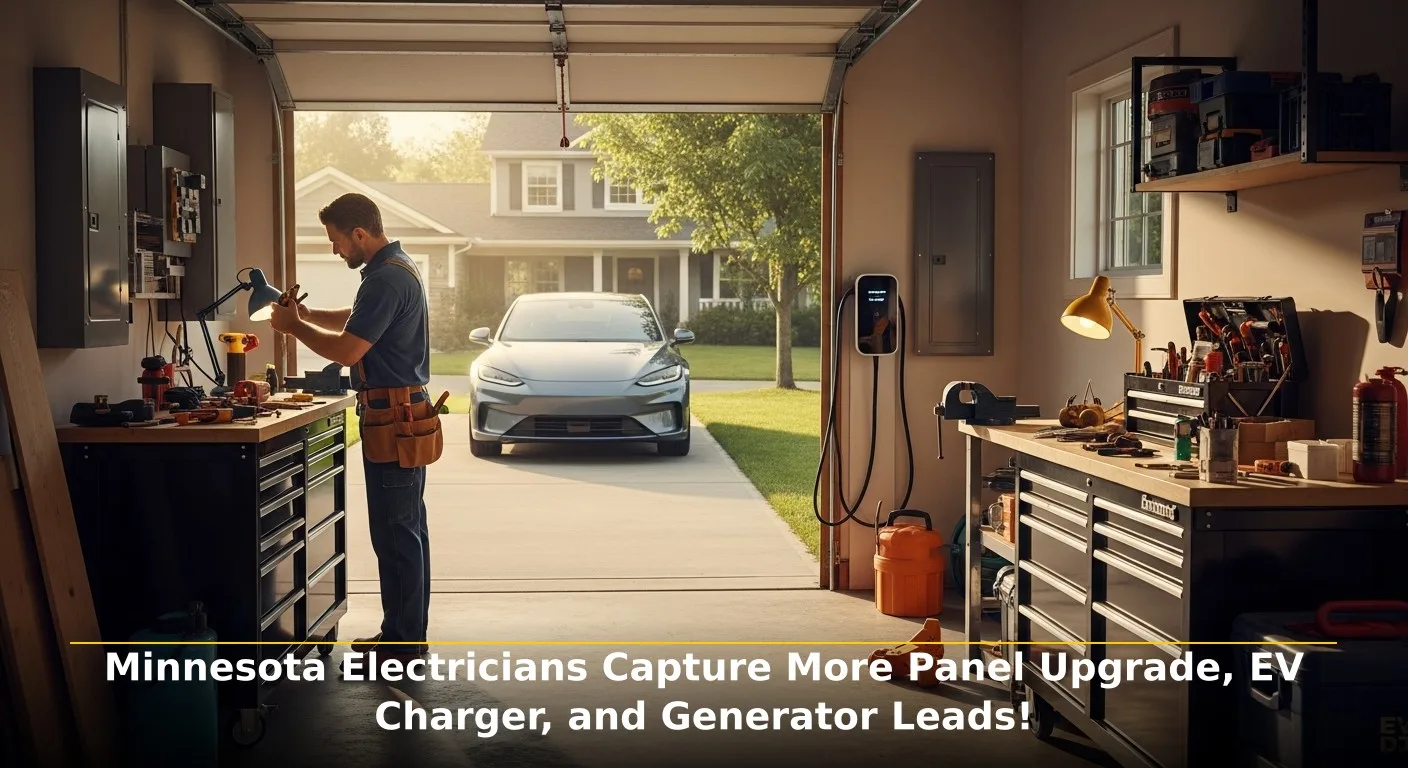
Minnesota homeowners are no longer calling an electrician simply to swap a fixture. Instead, North Star State residents are modernizing aging infrastructure to support electric vehicles, whole-home backup power, and higher-amp service panels. Each of those projects represents thousands of dollars in high-margin electrical contractor work, and every project begins with an online search.
This year, 84% of homeowners will use search or AI answer engines to validate a contractor before making contact, and 30% will not consider a business that doesn’t have a professional website. For Minnesota electricians, the three highest-value residential services – panel upgrades, EV charger installations, and standby generators – happen to be the three most actively searched projects. The contractors who capture those leads are those whose websites are built to rank, convert, and establish trust before a homeowner even calls.
Key Takeaways
- 84% of homeowners use online search before hiring an electrician, and 92% read reviews or a company’s website before choosing a provider.
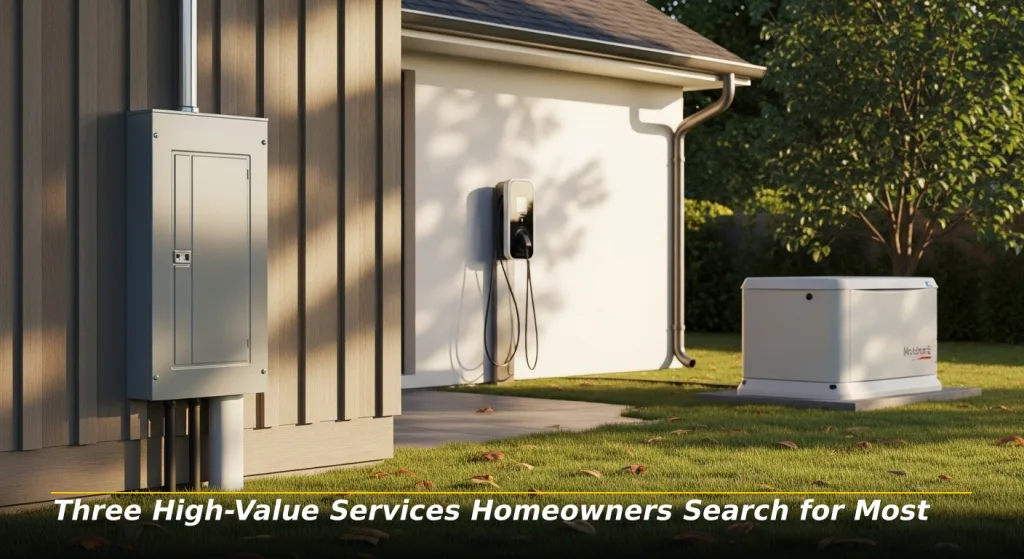
- Whole-home standby generator installations range from $8,000-23,000. EV charger installs average $1,500-3,000 and are often completed in a single day.
- Xcel Energy offers up to $1,500 in rebates for panel upgrades. Federal and state programs add further incentives for EV charger and heat pump installations.
- Minneapolis and St. Paul homes commonly run 60-100-amp service, creating a large and growing base of panel upgrade demand.
- Dedicated service pages for each high-value trade convert at up to 40% because they match specific search terms precisely.
1. Why Electrical Demand in Minnesota Is Different
A. Aging Housing Stock and Insufficient Panels
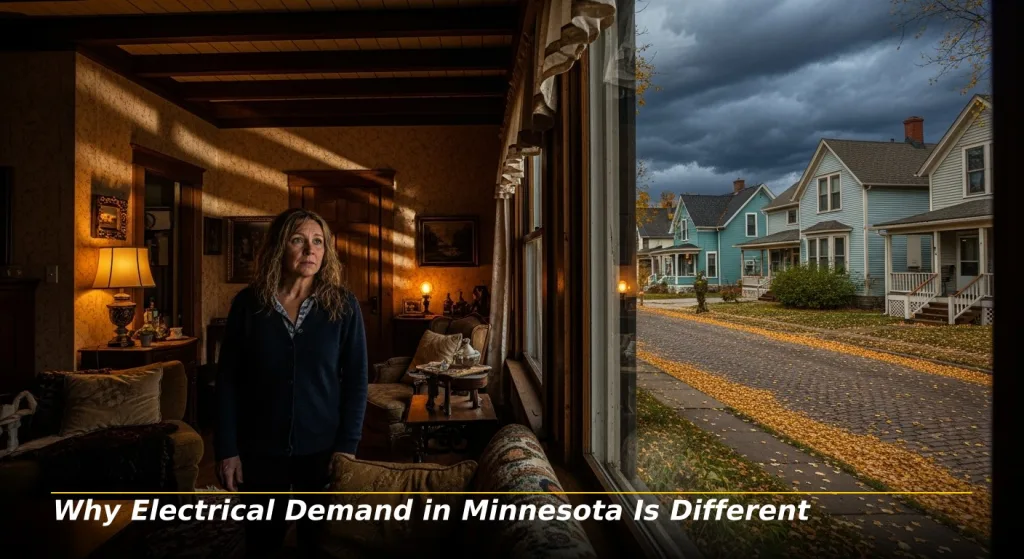
Historic neighborhoods in the Twin Cities, including Northeast, Powderhorn, and Como, feature housing stock built when 60 or 100-amp service was standard. Modern loads, including central HVAC, electric ranges, and Level 2 EV chargers require a 200-amp baseline to operate safely. The mismatch between old wiring and new technology creates real safety risks, including overheating and fire hazards in panels that were never designed for today's demands. Homeowners researching these warning signs, or dealing with flickering lights, warm panel surfaces, or a persistent burning smell represent high-intent, ready-to-book leads for qualified specialists.
B. Severe Weather and the Case for Backup Power
Minnesota's climate produces some of the most volatile weather conditions in the continental United States, from vicious winter ice storms to violent spring thunderstorms with damaging winds. Between 2008-2013, Minnesotans spent 46 hours without power thanks to weather-related outages, affecting hundreds of thousands of households. That history has shifted homeowner thinking: standby generators are increasingly viewed as essential utility infrastructure rather than a luxury. Your most profitable leads in this category will come from homeowners researching preparedness before weather events, not during them. A website with educational content on automatic standby systems, fuel logistics, and transfer switch installation can cement a buying mindset before a crisis creates urgency.
C. The EV Charging Infrastructure Gap
More than 10,000 EVs were sold in Minnesota in the first half of 2024 alone, surpassing the total of the previous six years combined. MnDOT set a target of 20% electric light-duty vehicles by 2030, and with 80% of EV charges happening at home, the demand for Level 2 residential charger installations is accelerating across the Twin Cities. As of early 2025, Minnesota had 920 public charging stations, which pales in comparison to the estimated need of 47,000 Level 2 public ports by 2035. That gap ensures residential installation demand remains strong for the foreseeable future, and electricians who position themselves as EV-ready can capture leads the moment a homeowner signs a vehicle purchase agreement.
2. Three High-Value Services Homeowners Search for Most
| Service | Typical Job Value | Key Homeowner Concern | Top Conversion Signal |
|---|---|---|---|
| 200-amp panel upgrade | $3,000-$8,000+ | Safety and code compliance | Xcel rebate of up to $1,500 |
| Level 2 EV charger install | $1,500-$3,000 | Charging speed and load safety | EV brand certifications displayed |
| Whole-home standby generator | $8,000-$23,000 | Reliability during outages | Local project photos and reviews |
A. Panel Upgrades: Foundation for Every Other Upgrade
A 200-amp panel is the minimum prerequisite for both EV chargers and whole-home generators. Without sufficient power, neither system can be installed safely. Service-specific pages that explain this dependency, alongside Xcel Energy's rebate offer up to $1,500 for panel upgrades, convert prospects at significantly higher rates than generic service lists on your website. Demonstrating expertise in load calculations and utility coordination reduces the perceived risk that causes homeowners to delay or seek multiple bids.
B. EV Charger Installation: Your High-Margin Same-Day Job
A Level 2 charger draws as much power as a central air conditioning unit, so every installation begins with a load audit of the existing panel. Modern load management software can sometimes allow a charger installation without a full panel upgrade, a nuance that sets informed electricians apart from competitors that quote a panel replacement by default. Websites explaining this process and listing specific permit requirements for cities like Bloomington or Maple Grove signal their local authority to both homeowners and search algorithms. Including recognized EV charger brand certifications builds the trust needed to close these sales without a lengthy in-person consultation.
C. Standby Generators: The Golden Ticket Residential Job
Permanent standby systems activate automatically when grid power fails, protecting sump pumps, furnaces, and medical equipment without any homeowner action required. Professional installation labor alone can run up to $5,000, with total project costs exceeding $20,000 for large whole-home systems. Unlike portable generators, standby installations are permanent home improvements that can increase resale value and reduce insurance premiums in some jurisdictions. Websites that include before-and-after photos of generator pads and transfer switch wiring, alongside content comparing natural gas fuel logistics to its propane counterparts, give hesitant homeowners the confidence to commit before a storm forces rushed decisions.
3. Dedicated Service Pages Outperform Generic Listings

AI answer engines (like Gemini and Perplexity) can synthesize information from multiple specialized sources to produce a single local recommendation. A generic "Our Services" page listing EV chargers, generators and panel upgrades in a single paragraph doesn’t give these engines anything specific enough to cite. Each service needs its own URL, its own pricing context, its own FAQ section, and its own local project photography.
Dedicated pages also match search goals with precision. A homeowner searching "200-amp panel upgrade Minneapolis" is not merely browsing. They have a specific problem and are evaluating specific solutions. A page built around that exact query, with a clear process explanation, a rebate callout, and a visible call to action, converts at up to 40% because every element on the page addresses what that visitor acutely needs.
Internal linking between related pages reinforces topical authority for searchers. A blog post titled "Is a 100-amp panel enough for a Tesla home charger?" that links to both the panel upgrade page and the EV charger page builds the content cluster that AI models use to determine which local electrician knows this subject best.
4. What does a High-Performing Electrician Website Require?
A. Mobile Speed and Frictionless Contact
Did you know that 70% of home service inquiries originate on mobile phones, and 53% of mobile visitors abandon a page that takes longer than 3 seconds to load? Websites loading immediately convert at three times the rate of sites taking five seconds or more. Every phone number must be a tappable click-to-call button, keeping mobile in mind. Every service page needs a prominent contact form or scheduling link before the scroll. These are not enhancements; they are the baseline for capturing any high-intent traffic at all.
B. Visual Proof from Local Jobs
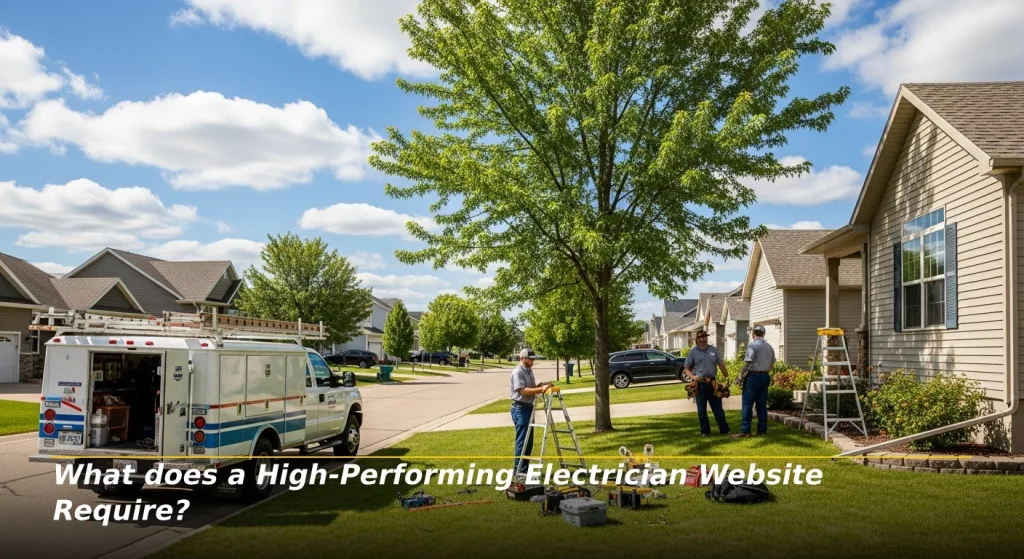
Original photography (not stock photos!) of branded trucks, crew members, and completed installations in recognizable Minnesota neighborhoods build trust. Before-and-after project galleries, showing the unsafe fuse box alongside the neatly labeled 200-amp replacement, function as proof points of technical competence. Sites with compelling original visuals are 40%+ more likely to generate quote requests and 35% more likely to receive clicks over competitors using generic imagery. Video walkthroughs of completed generator or panel installations extend that advantage further, increasing engagement and revenue potential meaningfully.
C. Structured Data and AI Visibility
LocalBusiness and Service schema markup tells AI assistants, including Siri, Alexa, and Gemini, exactly what services you offer, where you operate, and how to contact you. Without structured data, AI engines rely on interpretation and frequently recommend competitors whose sites are marked up correctly. FAQ schema specifically allows pricing answers and permit explanations to appear directly in search results, reducing friction for the homeowner and positioning your business as the most transparent and credible option before they even visit your site.
D. Review Velocity and Social Proof Integration
A full 87% of homeowners will not hire a business rated below four stars. Review velocity, which describes the consistency of a business earning new feedback, is a significant ranking factor for both traditional search and AI recommendations. A live Google Reviews feed on your website provides real-time validation to skeptical visitors. Responding to every review within 24 hours or less signals operational responsiveness to both homeowners and search algorithms. Soliciting a review from every completed EV charger or generator job within 48 hours, while satisfaction is at its peak, compounds authority steadily through the year.
Conclusion: The highest-value residential electrical jobs in Minnesota – panel upgrades, EV charger installations, and whole-home generators – are being researched and decided online before you are called. Today, the competitive advantage belongs to electricians whose websites are fast, locally specific, technically credible, and structured for AI discovery.
Dedicated service pages with rebate information and local project photos, combined with important schema markup, speed for mobile users, and active review generation, are the pages that convert online researchers into booked customers. Your website is not a digital business card. It is the salesperson that answers search queries at any hour, establishes trust before the call, and fills your schedule with the most profitable jobs in the market.
The homeowners searching for a panel upgrade or EV charger installer have already decided to hire someone. Make sure your website gives them every reason to choose you. Call our Minnesota digital marketing company today at (612) 590-8080 to make that happens.
FAQs About How Minnesota Electricians Can Capture More Panel Upgrade, EV Charger, and Generator Leads!
1. Do Minnesota electricians really need a website to get clients?
Yes. With a reported 84% of homeowners starting their research on Google, ChatGPT, Perplexity and with 30% of those homeowners eliminating businesses without a website from consideration, your digital presence is the necessary filter for new high-value projects. For panel upgrades, EV chargers, and generators specifically, residents conduct detailed online research before contacting anyone.
2. How do homeowners find EV charger installers in Minnesota?
Most use voice or typed searches for phrases like "licensed Level 2 charger install near me" or "EV charger electrician Twin Cities." They prioritize contractors with dedicated EV service pages, visible brand certifications, and strong proximity signals in the Google Map Pack. A generic services page rarely ranks for these queries.
3. What does a 200-amp panel upgrade cost in the Twin Cities?
Project costs vary based on site complexity, existing wiring condition, and utility coordination requirements, but Xcel Energy currently offers rebates of up to $1,500 for qualifying upgrades, denting total project cost. Displaying this rebate prominently on a dedicated panel upgrade page is one of the highest-converting pieces of content a Minnesota electrician's website can include.
4. Why are standby generators in such high demand in Minnesota?
Minnesota residents deal with an average 46.2 hours of weather-related power outages per year. Homeowners with sump pumps, furnaces, medical equipment, or home offices increasingly view automatic standby protection as essential, not optional. The most profitable leads come from homeowners researching preparedness during calm weather, not during an active outage when scheduling is chaotic and pricing is under pressure.
5. How can electricians attract more high-value installation leads online?
Follow these steps! First, build dedicated service pages for each high-ticket job type with local pricing context, rebate information, and original project photography. Then, implement LocalBusiness and FAQ schema markup and finally, maintain a current Google Business Profile with weekly posts and prompt review responses. Each of these elements compound over time, building the local authority that puts your business at the top of results when a homeowner searches for exactly what you do.

Phong Nguyen
Phong brings the perfect combination of business acumen and technical expertise to digital marketing. Armed with a Bachelor of Arts degree from St. Olaf College, a master’s in business administration in Marketing from the University of St. Thomas, and SEO/GEO from “The School of Hard Knocks,” Phong founded ProWeb365.com in 2009 to help Minnesota businesses and non-profit organizations succeed online.
For over 15 years, Phong and his team’s strategic approach has combined data-driven marketing with conversion-focused design, delivering measurable results that directly impact his clients’ bottom line. Are you ready to experience what innovative digital marketing can do for your business in the age of AI search engines? Contact Us today!