



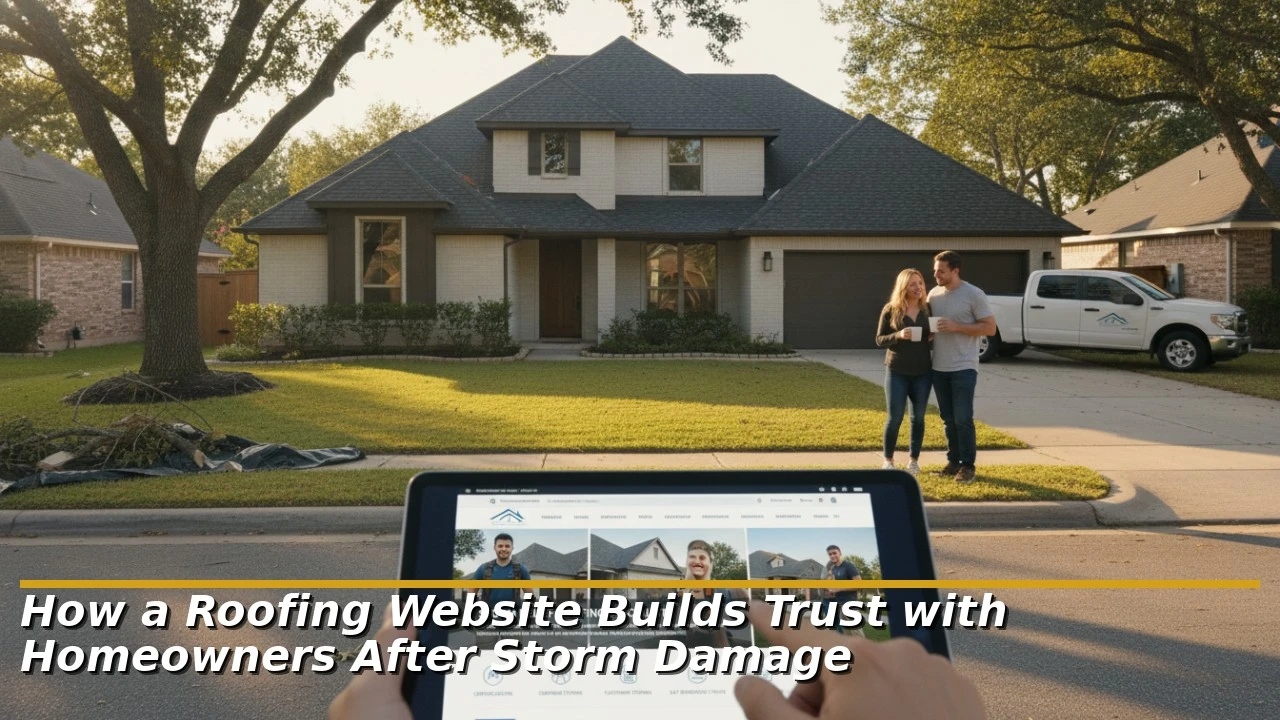
A hailstorm passes through a Minneapolis suburb on a Friday afternoon. Once evening rolls around, the homeowner has water staining on her ceiling and an insurance claim she does not know how to file. On her phone, she frantically researches, “emergency roofer near me” and opens the first two results. One shows a stock photo, buried contact information, and a page that takes four seconds to load. The other loads in 1.5 seconds, opens with a 24/7 emergency badge, real before-and-after photos from recent local jobs, and a paragraph explaining exactly how their team handles insurance claims from inspection to adjuster sign-off. She calls the second firm before considering the third option.
After a storm, homeowners are not selecting a roofer on craft alone. They are choosing the contractor who makes a frightening situation feel manageable. That decision is made in seconds, based almost entirely on what your website communicates before a single word is exchanged. This article explains what those trust signals are, why they work, and how to structure a roofing website that converts storm-damage searches into booked jobs.
Key Takeaways
- Storm-damage leads convert at 15 to 25% on mobile, far above the 6% to 12% for planned replacements, because urgency eliminates comparison shopping
- 78% of homeowners hire the first company that responds: your website must make that first response instant and credible
- Insurance claim assistance messaging, including Xactimate proficiency and adjuster coordination, directly addresses the homeowner’s primary financial fear
- 53% of mobile users abandon a page that takes over 3 seconds to load, which in a storm search means they call your competitor instead
- Detailed reviews mentioning specific storm events and suburbs are 6 times more valuable for AI search visibility than generic star ratings
1. Why Storm Damage Creates a Different Kind of Homeowner
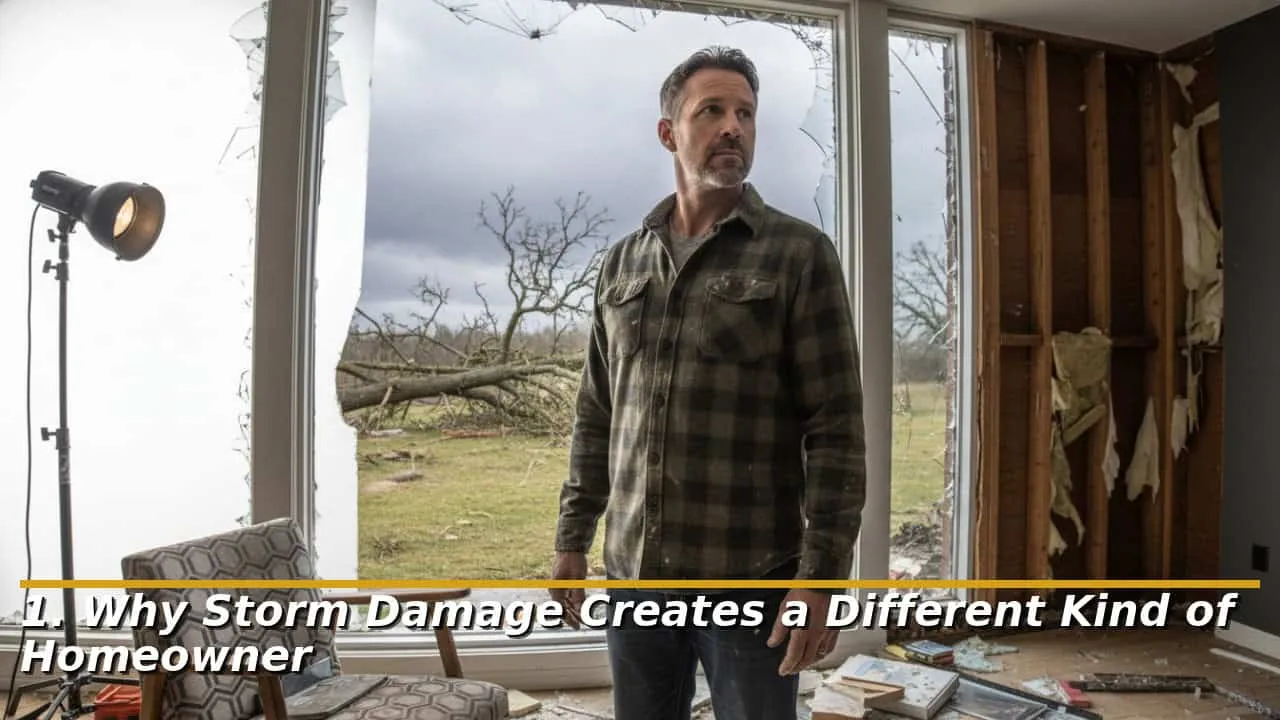
Someone researching a roof replacement in March is a planner. They have weeks to compare portfolios, read reviews, and collect quotes. Those who discovered water intrusion after a Friday evening hailstorm are operating in an entirely different psychological state. Stress has narrowed their decision-making window from days to minutes, and their primary need is not the best price. It is the quickest reliable solution.
Psychologists describe this as a perceived loss of agency: the home, which is supposed to be safe and predictable, has been violated by something uncontrolled. Financial fear sets in immediately alongside the physical concern. They are simultaneously worried about the damage itself, what their insurance will cover, whether they will be taken advantage of by an out-of-town storm chaser, and how long the repair will take. A website that addresses all four fears directly, not just the damage, converts at fundamentally higher rates than one that simply shows a portfolio and a phone number.
| Homeowner Type | Decision Window | Mobile Conversion Rate | Primary Website Need |
|---|---|---|---|
| Planned replacement | 3 to 14 days | 6 to 12% | Portfolio, pricing, process |
| Storm damage repair | 3 to 10 minutes | 15 to 25% | Emergency availability, claim help, trust signals |
 Related article
Digital Marketing for Roofing Contractors: Website Features That Drive More Calls
Two roofing contractors each spend $2,000 a month on Google Ads. Both target the same keywords, serving the same market. One averages 22 booked jobs a month. The other,11. This difference is not their ad spend, bid strategy, or service area. It is what happens after someone clicks their ad. One contractor’s website converts. The […]
2. What a Stressed Homeowner Needs in the First Ten Seconds
When a storm-damage homeowner lands on your website, they are not reading. They are scanning for three signals: Can you come now? Are you actually local? Can I trust you? Everything on your homepage should answer those three questions before any other content appears.
- 24/7 emergency availability, prominently stated in the hero section. Not in the footer, not in a dropdown. A clear badge or header stating “24/7 Emergency Storm Response” above the fold, before any scrolling, is the single most important element on a storm-damage landing page.
- A sticky click-to-call button in the header. On mobile, the phone number must be one tap away from any scroll position. Readers with water coming through their ceiling will not hunt for a contact page.
- Real project photos from local storms, with brief descriptions. Before-and-after photos from jobs in the same suburb, captioned with the type of damage and the outcome, extend credibility more than any amount of copy. They answer the proof question before the homeowner asks it.
- Insurance claim assistance messaging above the fold. A concise line stating “We work directly with your insurance adjuster” removes the client’s most immediate financial fear. Expanded content explaining your claim coordination process, Xactimate proficiency, and what to expect in the weeks following the call converts at significantly higher rates than portfolios alone.
- Load time under 2.0 seconds on mobile. Technical performance is a trust signal interpreted at the subconscious level. Slow sites signal a disorganized business. A fast site signals a contractor who is ready. 53% of mobile users leave a page that takes more than 3 seconds, and in a storm search, they immediately move to the next result.
 Related article
How Local SEO Helps Roofing Companies Dominate “Roof Repair Near Me” Searches in Minnesota
A hailstorm moves through the western Twin Cities suburbs on a Tuesday afternoon. By evening, homeowners in Maple Grove, Rogers, and Plymouth are searching their phones for “roof repair near me.” The three roofing companies that appear at the top of the Map Pack take calls for two weeks. Those not appearing watch a season’s […]
3. The 7 Trust Signals That Convert Storm-Damage Traffic
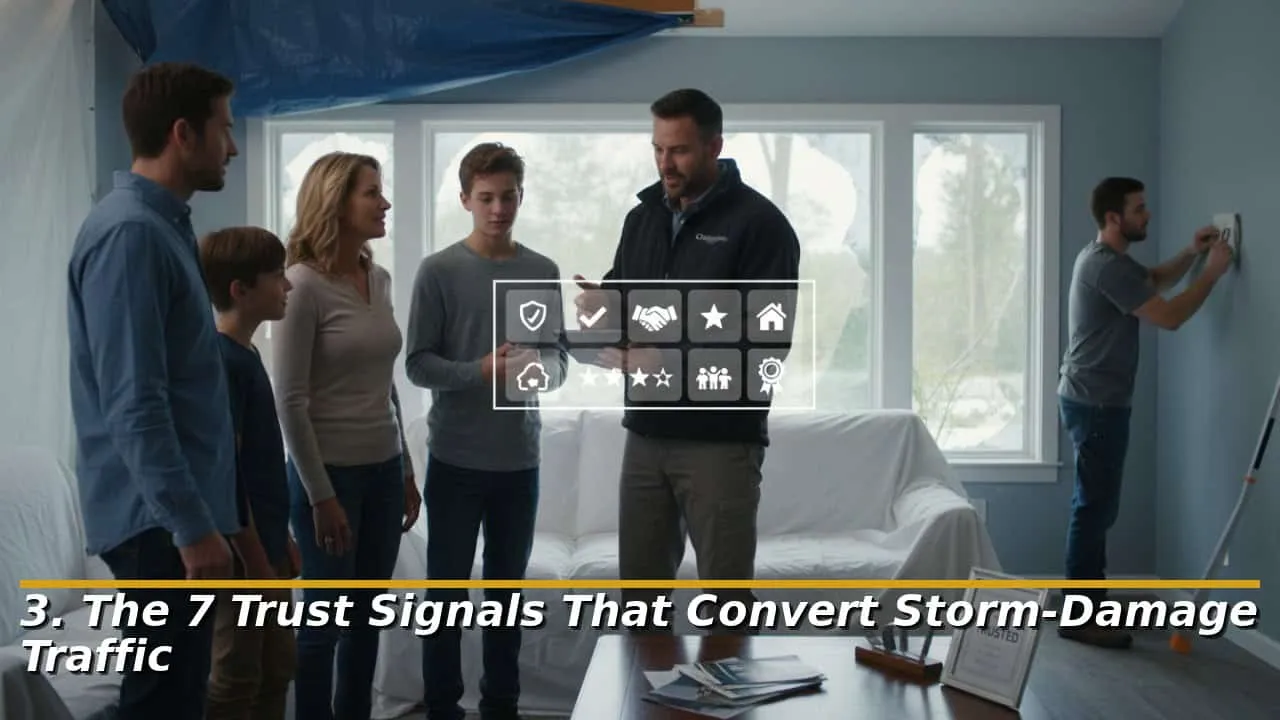
- Integrated Google review feed with storm-specific descriptions. Reviews mentioning specific storm events, services, and suburbs are 6 times more valuable for AI search visibility than generic star ratings. Display a live feed, not static screenshots, and prioritize reviews describing real claim outcomes.
- Before-and-after storm repair galleries using the Triage-Proof-Offer format. Outline the homeowner’s problem (hail impact on 30-year-old architectural shingles), show the visual proof (before and after), and state the outcome (fully covered by insurance, completed in two days). This format converts 86% better than undescribed photo grids, according to remodeling marketing research.
- Insurance claim coordination credentials. Xactimate software proficiency and documented experience working with adjusters from major carriers distinguish a restoration specialist from a replacement contractor. Displaying these on your emergency and insurance claim pages adheres to the consumer’s financial uncertainty.
- State license number and liability coverage, visible in the footer. Your Minnesota contractor license number and a reference to your liability coverage establish legal legitimacy. After a storm, people are acutely aware that out-of-state storm chasers operate without local accountability. Visible credentials answer that concern.
- GAF Master Elite or manufacturer certification badge. Manufacturer certifications, notably GAF Master Elite, which only 3% of roofing contractors nationally hold, signal technical competence and workmanship warranty eligibility. These act as third-party endorsements that self-promotional copy cannot replicate.
- Service area confirmation with local references. An embedded map and explicit suburb list confirms you are a permanent local business. Homeowners after a major storm are especially wary of out-of-area contractors who appear briefly and disappear after collecting deposits.
- Answer-first FAQ content with schema markup. Structured FAQ sections using natural-language question headings, like “How long does a storm damage roof repair take?” earn AI citations from ChatGPT and Google Gemini. AI-referred leads convert at 14.2%, five times higher than traditional organic traffic. Someone who finds your business recommended by an AI assistant arrives pre-qualified and pre-trusting.
 Related article
Which Website for Roofing Contractors Generates More Leads: DIY or Pro?
The roofing industry is one of the most competitive spaces in local home-related website searches. For a roofing contractor, the digital landscape has shifted from a simple list of links to a complex ecosystem where AI companions now provide direct recommendations. Homeowners facing a sudden leak or storm damage no longer just browse; they ask […]
4. Two Roofers, Same Storm, Different Websites
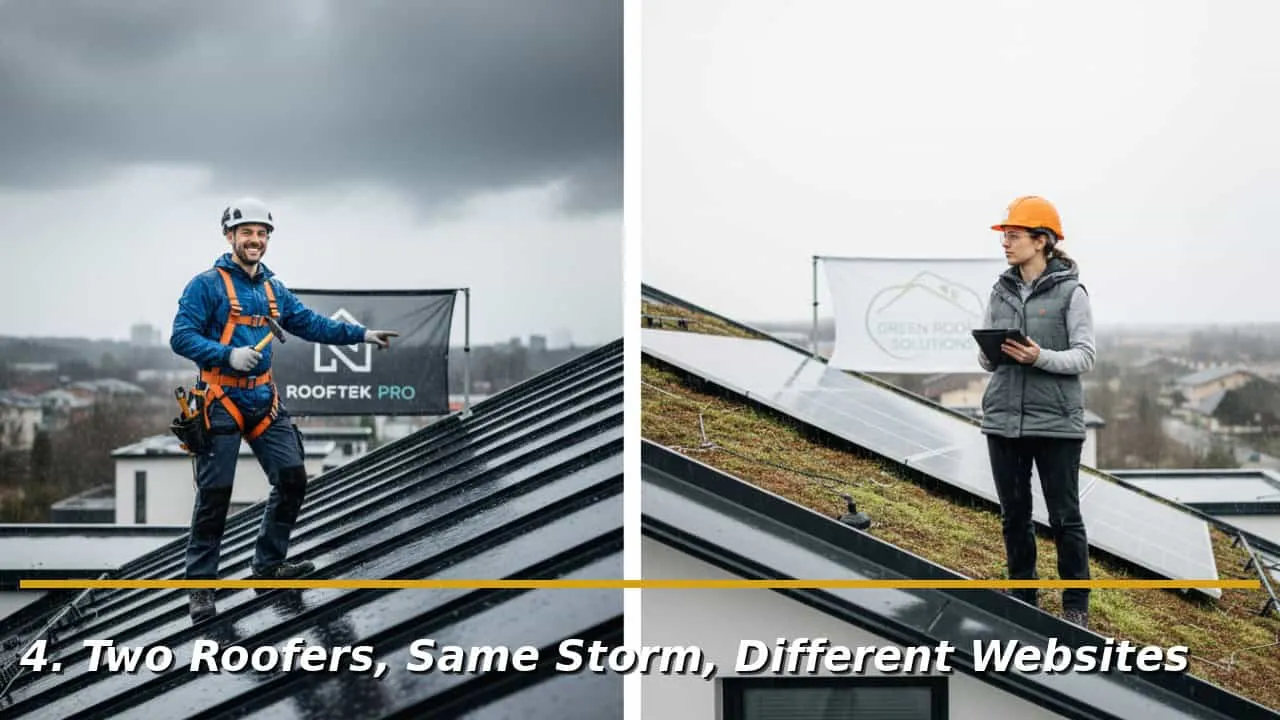
Both contractors serve the same neighborhood after a significant hail event. Both hold current licenses and carry adequate coverage.
Roofer A has a site built in 2019. Stock photos. Load time: 4.5 seconds. No mention of insurance claims. Phone number in the footer. Eight reviews from three years ago. Clients searching at 9 PM after the storm sees none of the reassurance she needs, hits the back button, and calls the next result.
Roofer B rebuilt their site around storm-damage trust architecture. Load time: 1.7 seconds. A 24/7 emergency badge in the header. A sticky click-to-call button. An insurance claim page explaining their adjuster coordination process. Fifty-four reviews averaging 4.9 stars, most describing specific storm outcomes in local suburbs. Genuine before-and-after photos with damage descriptions. The same homeowner contacts Roofer B within two minutes of landing on the page.
The storm gave both contractors the same opportunity. The website determined which one took it.
Conclusion
A roofing website establishing trust after a storm does more than look professional. It addresses the specific fears a homeowner carries in those first minutes: will this damage be covered, is this contractor legitimate, and can they actually come now? The trust signals that answer those questions, from insurance claim expertise to local project proof to sub-2-second load time, are the architecture converting a frightened viewer into a booked job.
Every element works together. The speed signals readiness. Reviews mean community trust. Claim process content showcases expertise. Local photos highlight permanence. None of these is optional when the homeowner has five alternatives and three minutes to decide. Roofing companies building this infrastructure before storm season arrives capture the jobs after every major weather event. Those who create it after are already too late.
Does your website earn trust in the first ten seconds?
Open your website on your phone right now as if you are a homeowner who discovered a leak an hour ago. Is there a 24/7 badge visible without scrolling? Is your phone number one tap away? Does your homepage mention insurance claim assistance? Those three questions identify the gaps that are costing you storm-damage calls. Fix the emergency badge and the sticky phone number this week. Those two changes take under an hour and will move the needle before the next storm arrives.
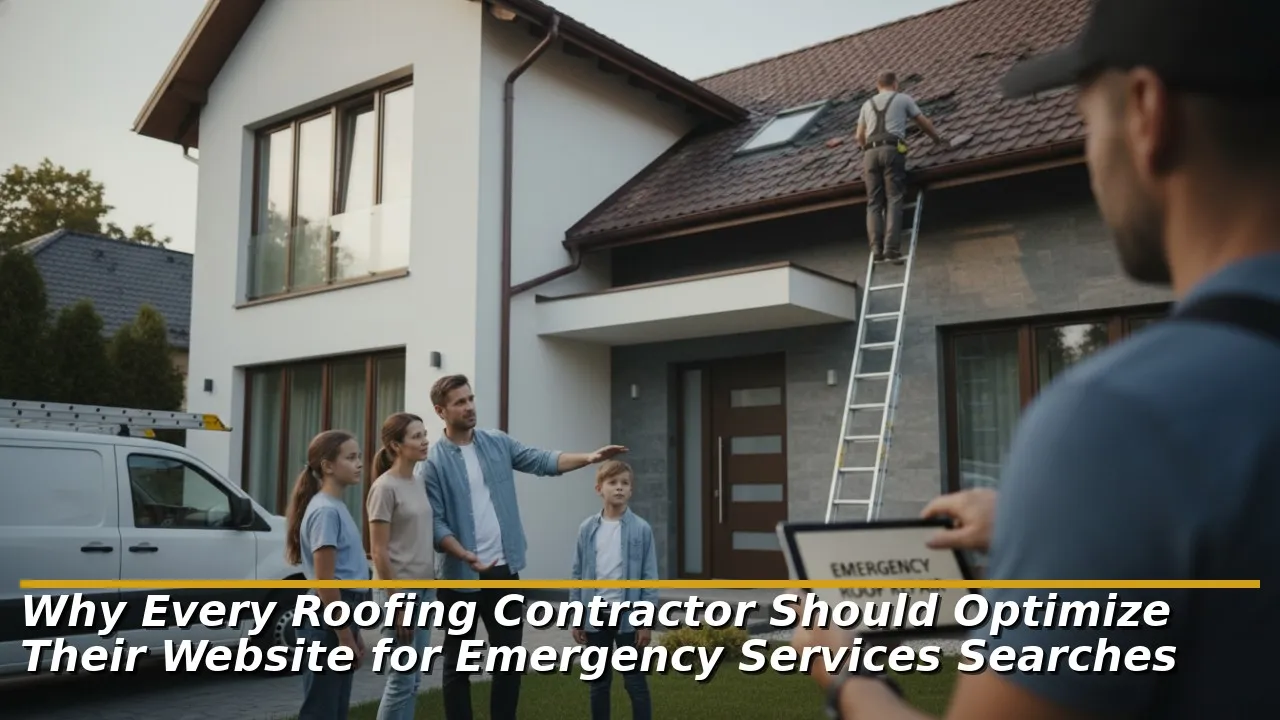 Related article
Why Every Roofing Contractor Should Optimize Their Website for Emergency Services Searches
At 11 PM on a Thursday, water is dripping through a homeowner’s kitchen ceiling. She opens Google, types “emergency roofer near me,” and calls the first result showing a 4.9-star rating, 24/7 badge, and phone number that loads before anything else. The entire decision takes under four minutes. The contractor who appears in that Map […]
FAQs About How a Roofing Website Builds Trust with Homeowners After Storm Damage
1. How can homeowners tell the difference between a legitimate local roofer and a storm chaser?
Storm chasers, out-of-state contractors who follow weather events and solicit work door-to-door before disappearing, are a genuine risk for in-state homeowners after major hail events. Legitimate local contractors have a permanent physical address in or near the service area, verifiable state licensing through the Minnesota Department of Labor and Industry, a documented history of completed local jobs with verifiable reviews, and liability insurance naming a local business entity. A roofing website prominently displaying all four of these elements, including the DLI license number, a service area map, and reviews referencing specific local neighborhoods, allows homeowners to verify legitimacy in seconds. This is one of the most persuasive trust signals a Minnesota roofing website can include after a storm.
2. What does Xactimate proficiency mean, and why does it matter to a homeowner filing a claim?
Xactimate is the software used by most insurance adjusters to estimate the cost of roof repairs and replacements. When a roofing contractor is proficient in Xactimate, they can produce an estimate using the same line-item structure the insurance company’s adjuster uses. Doing so reduces disputes over scope and pricing. Homeowners working with a contractor who does not understand Xactimate often receive a quote that does not align with the insurance estimate, creating a funding gap they must cover out of pocket. Roofing websites explaining this distinction in plain language, and that highlight their team’s experience reviewing and supplementing insurance estimates, build immediate credibility with homeowners who are confused and anxious about the claims process.
3. What does a GAF Master Elite certification actually require, and what does it mean for warranty coverage?
GAF Master Elite is a certification held by fewer than 3% of roofing contractors in the US. To achieve and maintain it, a contractor must be properly licensed, carry full insurance, demonstrate a proven warranty and customer satisfaction record, and complete ongoing training on GAF products and installation methods. The practical benefit for homeowners: Master Elite contractors can offer GAF’s System Plus and Golden Pledge warranties, which provide coverage extending up to 50 years on materials and 25 years on workmanship, and are backed by GAF directly rather than solely by the installing contractor. For customers making a $15,000 to $30,000 roofing investment after a storm, this warranty extension is a meaningful financial protection that generic contractors cannot offer.
4. How long does the full storm damage repair process typically take from inspection to completion?
The timeline from the initial inspection to a fully completed roof replacement after a hail or wind claim typically runs four to eight weeks in a normal season, longer during high-demand periods following a major regional storm event. The first week involves the inspection and damage documentation, followed by the insurance adjuster’s visit, which can take one to three weeks to schedule depending on claim volume. Once the claim scope is agreed, material ordering and scheduling add another one to two weeks. Installation itself lasts one to three days for a standard residential roof. Roofers who publish this realistic timeline on their website, rather than promising implausibly fast turnarounds, earn trust with homeowners who have been burned by vague commitments, and they attract clients whose expectations are aligned with operational reality.
5. Does Minnesota law restrict how roofing contractors can solicit homeowners after a storm?
Yes. Minnesota Statute §325F.69 governs deceptive trade practices, and the state’s home solicitation law provides homeowners a three-business-day right to cancel any contract signed at their home following unsolicited contact, including door-to-door visits after a storm. Additionally, Minnesota prohibits contractors from negotiating on behalf of homeowners in the insurance claims process without a public adjuster license. Roofing companies clearly outline these protections on their website, under a heading such as “Your rights as a Minnesota homeowner after storm damage,” position themselves as transparent and trustworthy. This content differentiates a permanent local contractor from a storm chaser and converts homeowners who are specifically trying to avoid bad actors.