








A hailstorm moves through the western Twin Cities suburbs on a Tuesday afternoon. By evening, homeowners in Maple Grove, Rogers, and Plymouth are searching their phones for “roof repair near me.” The three roofing companies that appear at the top of the Map Pack take calls for two weeks. Those not appearing watch a season’s worth of high-ticket jobs go to competitors they never knew were competing with them.
Minnesota sits in one of the most active hail corridors in the country. The average hail claim in the state has nearly doubled over the past decade to close to $30,000, according to the Insurance Federation of Minnesota. Demand for qualified local roofers is high and rising. Supply is constrained: the state has roughly 20% fewer roofers than it did several years ago, according to state labor data. For the contractors who are properly visible in local search, that combination creates a sustained lead flow that no paid ad campaign can match.
Key Takeaways
- Minnesota has 20% fewer roofers than several years ago, creating a supply gap that local SEO visibility directly captures
- The average Minnesota hail claim has nearly doubled to $30,000: roofers who publish insurance-navigation content earn high-intent leads at the research phase
- 76% of homeowners who search for a nearby business on their smartphone call or visit within 24 hours
- The Google Map Pack captures 44% of all local search clicks: ranking in it is the single highest-leverage action a roofing company can take
- AI search traffic converts at 14.2%, five times higher than traditional organic, and rewards structured storm-damage and service-specific content
1. Why Minnesota Creates Exceptional Local SEO Opportunity for Roofers
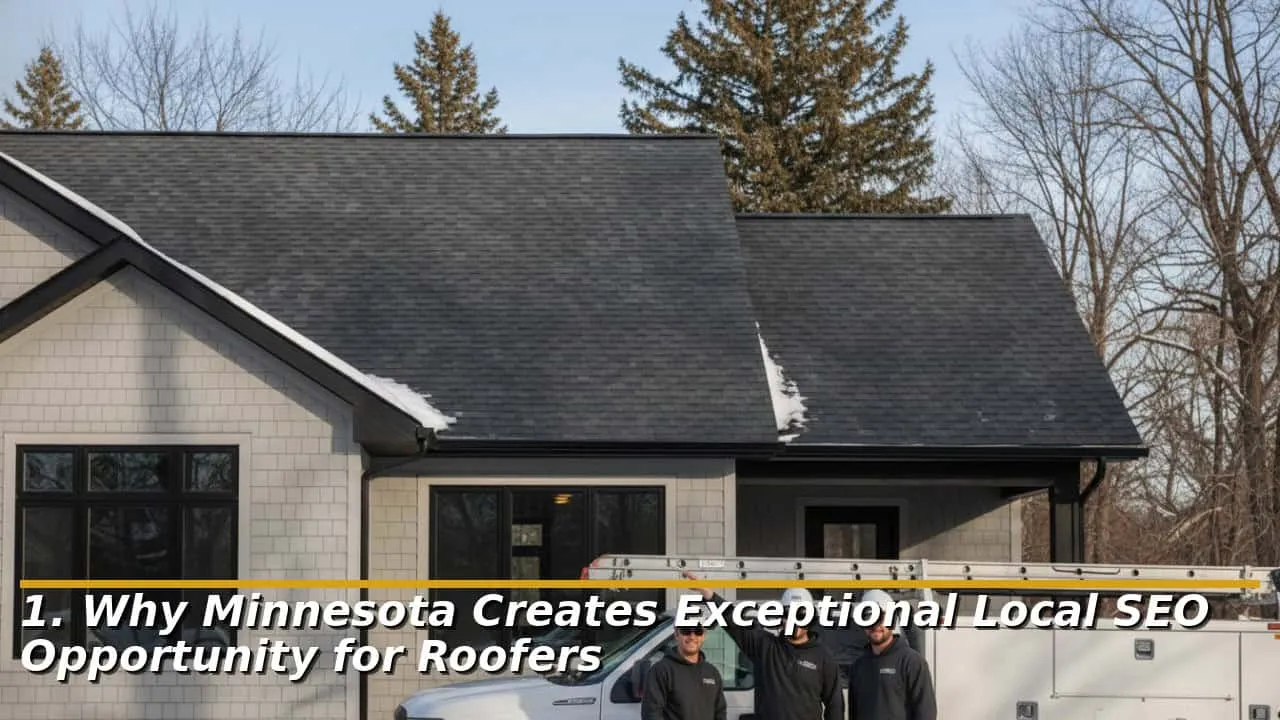
Most roofing markets have two demand drivers: age-driven replacement and storm damage. The North Star State has both operating simultaneously, at scale, with a constrained labor supply providing visible, well-reviewed roofing contractors a significant pricing and scheduling advantage.
Insurance premiums rose 34% in 2025, the highest increase in the nation according to Insurify, driven almost entirely by hail and wind claims. Insurers are responding by tightening coverage, raising wind and hail deductibles to 1% to 5% of home insured value, and transitioning older roofs from replacement cost to actual cash value payouts. Doing so enacts an urgent, education-driven demand signal. Homeowners who received a smaller-than-expected insurance payout are actively searching for roofers who understand the claims process and can help them navigate it.
A roofing company whose website includes a guide to Minnesota’s hail claim process, explains the difference between replacement cost and actual cash value policies, and addresses what to do when a claim is denied or underpaid captures that research-phase audience before a competitor’s ad ever appears. Content does not only earn SEO rankings. It resonates trust to viewers that are confused and motivated to act.
 Related article
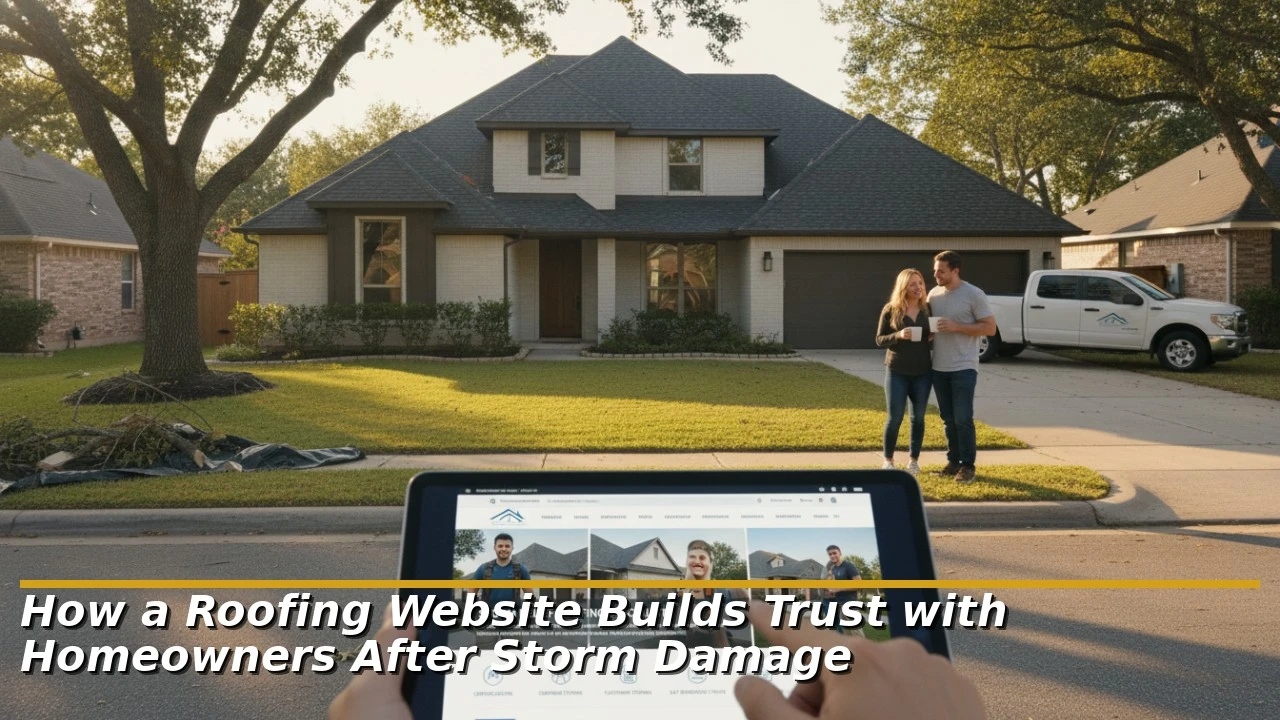
How a Roofing Website Builds Trust with Homeowners After Storm Damage
A hailstorm passes through a Minneapolis suburb on a Friday afternoon. Once evening rolls around, the homeowner has water staining on her ceiling and an insurance claim she does not know how to file. On her phone, she frantically researches, “emergency roofer near me” and opens the first two results. One shows a stock photo, […]
2. Why “Roof Repair Near Me” Converts Faster Than Any Other Roofing Query
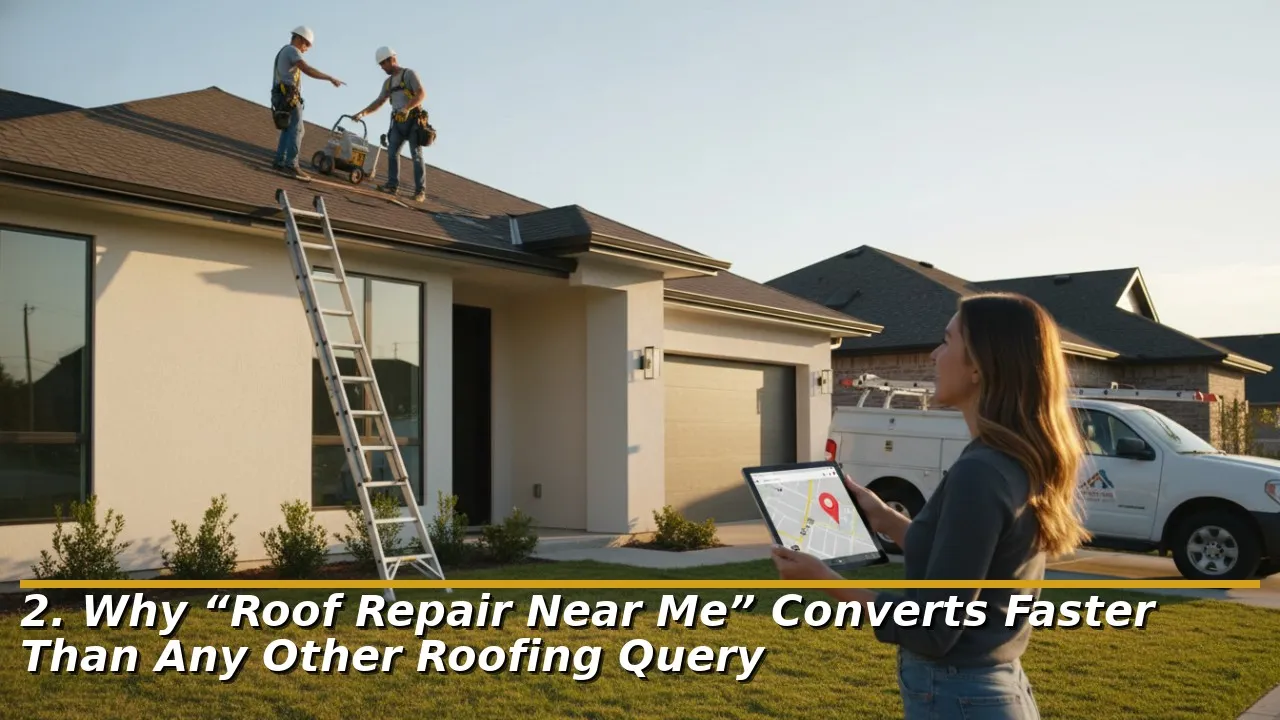
The phrase “roof repair near me” is bottom-of-funnel intent compressed into five words. Customers typing it has already identified the problem, determined they need professional help, and filtered for proximity. All that remains is selecting the most credible, immediately available option. That decision happens within minutes, often while water is actively entering the home.
Research found 76% of people who search for a nearby business on their smartphone visit or call within 24 hours. For roofing, which involves a damaged home and weather that will not pause, that window is even tighter. The contractors dominating the Map Pack for those queries receive the calls. Anyone ranking on page two of Google is an afterthought
Post-storm searches amplify this dynamic. After a significant hail event, searches for “hail damage roof repair,” “emergency roof leak,” and “roof inspection after storm” spike dramatically in the affected zip codes. Companies with suburb-specific service pages, storm-damage content pre-published, and an active GBP showing recent reviews from that area captures those leads in the hours and days following the storm, when demand is highest and competitors without digital infrastructure are still fielding calls manually.
 Related article
Digital Marketing for Roofing Contractors: Website Features That Drive More Calls
Two roofing contractors each spend $2,000 a month on Google Ads. Both target the same keywords, serving the same market. One averages 22 booked jobs a month. The other,11. This difference is not their ad spend, bid strategy, or service area. It is what happens after someone clicks their ad. One contractor’s website converts. The […]
3. Seven Local SEO Strategies That Fill a Minnesota Roofer’s Schedule

- Optimize your GBP with storm-season specificity. Set your primary category to Roofing Contractor and add secondary categories including Roof Repair Service and Siding Contractor. Use your business description to name specific services, the suburbs served, and emergency availability language explicitly. Upload authentic project photos, especially post-storm before-and-afters, weekly. Activity signals matter to the Map Pack algorithm.
- Build suburb-specific service pages for every market you actively serve. A page titled “Roof Repair in Maple Grove, MN” with a local project case study, review from a Maple Grove homeowner, and references to the area’s housing stock outranks a generic service page for suburb-level searches. Repeat for Rogers, Corcoran, Plymouth, Woodbury, Eagan, and every suburb where you want to win work.
- Target storm-driven and transactional keywords separately. Emergency queries like“emergency roof leak Minneapolis” capture homeowners in crisis. Post-storm queries such as “hail damage roof inspection Maple Grove” capture homeowners in the insurance process. Planning queries of “roof replacement cost Edina” capture homeowners preparing for a replacement. Each requires dedicated content.
- Publish storm-response content before storms happen. Have a guide to the Minnesota hail claim process, step-by-step post-storm inspection checklist, and a post explaining the difference between insurance replacement cost and actual cash value ready to publish or promote the morning after a major storm event. Roofing companies with this info indexed before demand spikes capture the search traffic that follows within 48 to 72 hours.
- Build review velocity with storm-specific prompting. Ask every storm-repair client to mention the specific event, their suburb, and the outcome in their review. A review describing “emergency hail repair in Rogers after the May storm, crew arrived the same day and the claim inspection passed for the first time” earns local rankings, AI search citations, and homeowner trust simultaneously. Target 15 to 20 new reviews per month across all completed jobs.
 Related article
Which Website for Roofing Contractors Generates More Leads: DIY or Pro?
The roofing industry is one of the most competitive spaces in local home-related website searches. For a roofing contractor, the digital landscape has shifted from a simple list of links to a complex ecosystem where AI companions now provide direct recommendations. Homeowners facing a sudden leak or storm damage no longer just browse; they ask […]
- Implement LocalBusiness and FAQPage schema markup. Structured data informs AI platforms exactly what services you offer, what areas you serve, and how to contact you. FAQ Page schema on your storm-damage and insurance navigation pages makes those answers eligible for AI citations from ChatGPT and Google Gemini. AI-referred leads convert at 14.2%, five times higher than traditional organic traffic.
- Maintain perfect NAP consistency and accurate emergency hours. One’s Name, Address, and Phone number must be identical across your website, GBP, and every directory. Equally important: the GBP must show accurate hours, including emergency availability. Google actively filters companies that appear closed at the time of a search. After a major storm, homeowners searching at 9 p.m. will not find you if your hours say business closes at 5.
| Strategy | Primary SEO Benefit | Minnesota-Specific Application |
|---|---|---|
| GBP with storm photos | Map Pack visibility signal | Post-storm before/afters; emergency availability in description |
| Suburb-specific pages | Local keyword ranking | One page per suburb: Rogers, Maple Grove, Plymouth, Eagan |
| Storm + transactional keywords | High-intent traffic by stage | Emergency, post-storm inspection, and replacement queries each need a page |
| Pre-built storm content | Surge traffic capture | Published before peak season to index before demand spikes |
| Review velocity + specificity | Prominence signal + AI visibility | Storm event, suburb, and outcome in every review prompt |
| FAQ schema markup | AI citation eligibility | Insurance navigation content earns 14.2% AI conversion rate |
| Accurate emergency hours | Openness ranking signal | Critical for post-storm searches after business hours |
 Related article
Why Every Roofing Contractor Should Optimize Their Website for Emergency Services Searches
At 11 PM on a Thursday, water is dripping through a homeowner’s kitchen ceiling. She opens Google, types “emergency roofer near me,” and calls the first result showing a 4.9-star rating, 24/7 badge, and phone number that loads before anything else. The entire decision takes under four minutes. The contractor who appears in that Map […]
4. Two Roofers, Same Storm, Different Outcomes
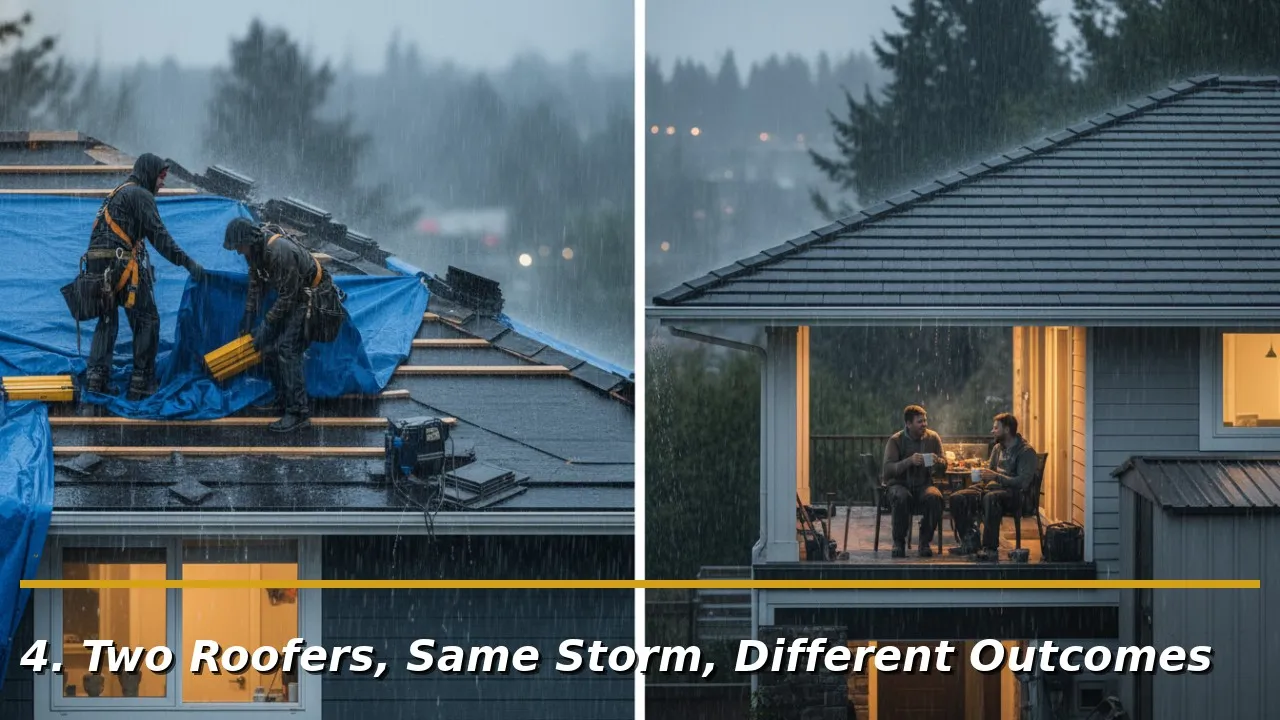
A significant hailstorm moves through a southwest Minneapolis suburb. Both contractors serve the area. Both have comparable crews and experience.
Roofer A has a 2019 website with no suburb-specific pages, eight reviews with no storm or location detail, and a GBP that shows closed after 5 PM. When consumers search for help the evening of the storm, Roofer A does not appear. Their calls come from door-knocking the next morning, competing on price with five other companies in the same neighborhood.
Roofer B has suburb-specific pages for four surrounding communities, 58 reviews averaging 4.8 stars with post-storm descriptions, a hail claim guide already indexed, and accurate emergency hours on their GBP. They appear in the Map Pack the evening of the storm. Twelve homeowners reach out before 10 p.m. They book eight jobs before competing roofers have arrived at the first door. Their average project value is higher because homeowners who called them did not have another contractor to compare.
The storm was the same for both companies. The digital infrastructure determined which one worked for weeks and which one worked for days.
Conclusion
Minnesota is one of the highest-demand roofing markets in the country: severe hail season, ice dam winters, aging housing stock, and a contractor shortage that has been building for years. The roofers capturing a disproportionate share of that demand are not running the most ads or knocking the most doors. They are the ones whose digital infrastructure, suburb-specific pages, storm-response content, consistent review velocity, and accurate emergency availability, makes them visible at the exact moment someone decides to call.
Every piece of local SEO works. A suburb page built today will rank for the next storm. A hail claim guide published this month will earn trust from every homeowner who receives an underpaid insurance settlement this season. Contractors who build that infrastructure before they need it own the market. The ones who build it after a storm passes are already too late for that event.
Is your business visible when the next Minnesota storm hits?
Search “roof repair near me” from within your primary service suburb right now. If your business is not in the top three Map Pack results, the next storm will send those leads to competitors who are. Start this week: add two post-storm project photos to your GBP, respond to your three most recent reviews, and check whether your site has a suburb-specific page for your highest-volume market. Those three actions begin building the visibility that fills the schedule after every major storm.
 Related article
Minnesota’s Building Season: 7 Months. Here’s How to Books Jobs Year-Round
Minnesota’s contractors work within one of the tightest build windows in the country. Exterior construction is effectively limited to May through October by frost depth, frozen ground, and road weight restrictions that delay material deliveries into mid-spring. That leaves just five months where physical work stalls but overhead keeps running, skilled workers look for stability […]
FAQs About How Local SEO Helps Roofing Companies Dominate “Roof Repair Near Me” Searches in Minnesota
1. How does Minnesota’s one-year hail claim deadline create SEO opportunity for roofers?
Minnesota law requires homeowners to file hail damage insurance claims within one year of the storm date, though some policies impose shorter deadlines. Many homeowners do not know until they have missed it. A roofing company publishing clear, plain-language content about this deadline, including how to identify damage that is not visible from the ground, consistently earns search traffic from homeowners who realize they need to act quickly. Doing so draws a research-phase audience at the exact moment they transition into hiring intent. According to Roofs R Us Minnesota’s claims guide, hail damage is often subtle, with granule loss and bruising that only becomes apparent during a professional inspection. Roofers positioning themselves as the educator on this issue own the trust relationship before the first call.
2. What is Minnesota’s Cedar Bluff matching rule, and how should roofers address it on their website?
The Cedar Bluff rule, established in Minnesota case law in 2014, requires insurers to replace undamaged sections of a roof when replacement shingles cannot reasonably match the existing material in color or style. Additionally, Minnesota Statute §65A.10 requires insurers to cover code-required upgrades to undamaged components when those upgrades are integral to a repair, meaning your insurer owes the cost of bringing the work up to current building code. Most clients have never heard of either provision. A roofing company that explains these rights in plain language on their website, under a heading like “What Minnesota law requires your insurer to cover,” earns the trust of those who feel underserved by their insurance company and converts a research visit into a consultation request.
3. How are Minnesota’s changing insurance deductibles affecting roofing demand?
Insurance carriers in Minnesota have been shifting from fixed-dollar deductibles to percentage-based wind and hail deductibles, commonly 1% to 5% of the home’s insured value. On a $400,000 home with a 2% deductible, the homeowner pays the first $8,000 of any storm claim themselves. Carriers are also increasingly moving older roofs, those over 10 to 15 years old, from replacement cost to actual cash value coverage. These changes are complex for many and represent a direct content opportunity for roofers: a guide titled “How Minnesota’s new hail deductibles affect your roof replacement cost” captures an audience that is both informed about the problem and actively seeking a contractor who understands it.
4. How does Minnesota’s ice dam season create a separate local SEO opportunity from hail season?
Minnesota roofers face two distinct emergency search cycles annually. Hail season runs roughly April through September, with surges following specific storm events. Ice dam season runs December through March, when rapid temperature swings cause snow to melt and refreeze at roof edges. This forces water under shingles and into walls. Ice dam removal is a high-urgency, immediately billable service that generates its own set of transactional search queries, including “emergency ice dam removal Minneapolis,” “ice dam repair Twin Cities,” and “ice dam prevention Minneapolis roof.” A dedicated ice dam service page, pre-built and indexed before December, captures that winter surge the same way a storm-damage page attracts post-hail demand. The two pages together ensure year-round visibility in the highest-intent roofing searches Minnesota generates.
5. How does the Strengthen Minnesota Homes program benefit roofers who market it?
The Strengthen Minnesota Homes program offers grants of up to $10,000 for those to retrofit their roofs to the IBHS FORTIFIED standard. This includes impact-resistant shingles designed to reduce hail damage. Someone who completes a FORTIFIED upgrade may also qualify for reduced insurance premiums from participating carriers. Roofing companies that obtain FORTIFIED contractor certification and prominently explain the grant program on their website, including eligibility requirements and how the application process works, attract a motivated, budget-ready segment of the market. People who only faced a significant hail claim and want to reduce their exposure for future storms resonates with their situation. This content serves both as an SEO asset and as a pre-qualification tool for high-value replacement projects.